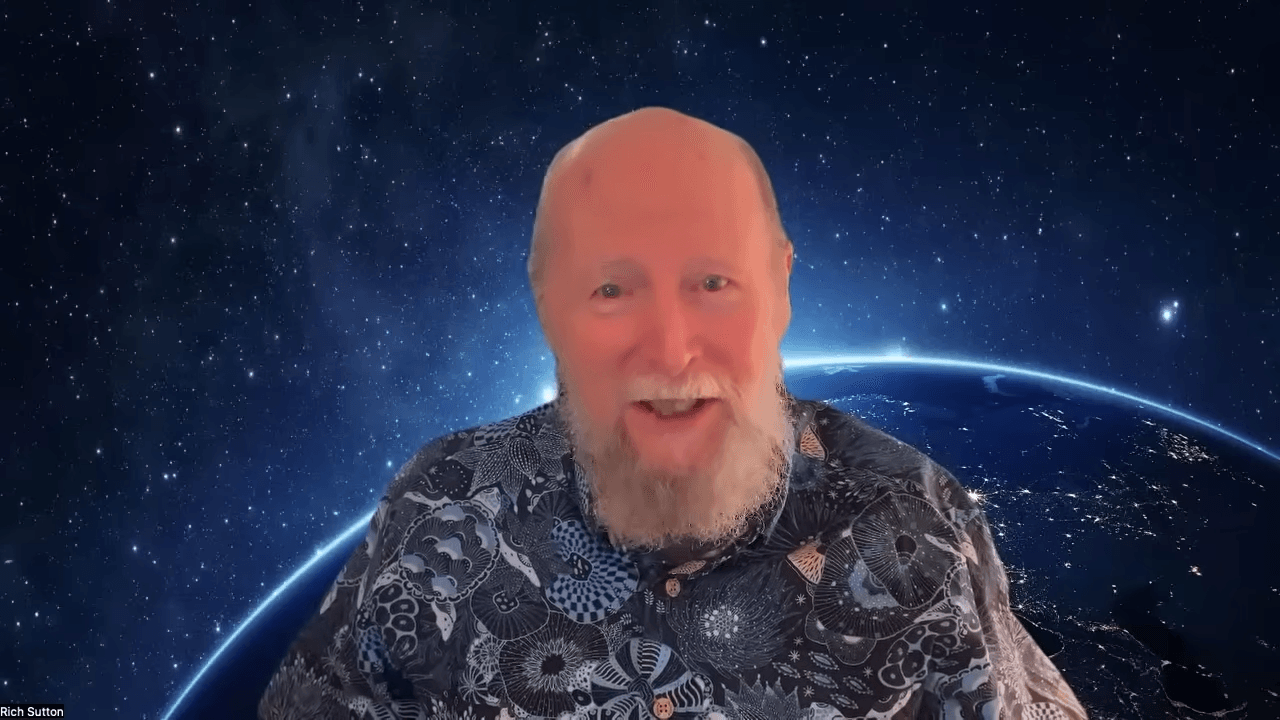
Sutton distinguishes between generative AI (which mimics patterns from training data) and systems capable of genuine discovery. Pure generative AI can produce novel outputs, but without testing and evaluation, it cannot determine which new ideas are actually valuable—a limitation he illustrates with a researcher's joke: 'the parts that are good are not novel, and the parts that are novel are not good.'
True discovery requires three steps: variation (generating different options), evaluation (testing them), and selective retention (keeping what works). Systems like AlphaGo, AlphaFold, Claude Code, and AlphaProof demonstrate this loop because they have clear feedback mechanisms—a Go move either increases winning chances or doesn't; code either passes tests or fails—whereas ordinary language and image models generate variants without external validation.
Sutton argues neural networks trained once from random initialization lose the ability to renew their internal structures over time. He calls for AI agents that continuously interact with their environment, learn from experience, and manage variation, evaluation, and selective retention on an ongoing basis rather than mimicking pre-existing knowledge.
Sutton recently criticized the AI industry for focusing on ever-larger language models that absorb vast knowledge during training but do not learn from their own experience over time, and he advocates instead for AI agents that build internal models of the world and plan new strategies.
Summaries like this, in your inbox every morning.
Pick your industry and the AI tools you use, and get news related to your work every day.
Free · 30 seconds with Google · unsubscribe anytimeWhat is AIToday? →
Ask AI anything about this article. The AI reads this article, earlier AIToday articles, and Wikipedia, and cites its sources. Q&As are published on this page for other readers too.

