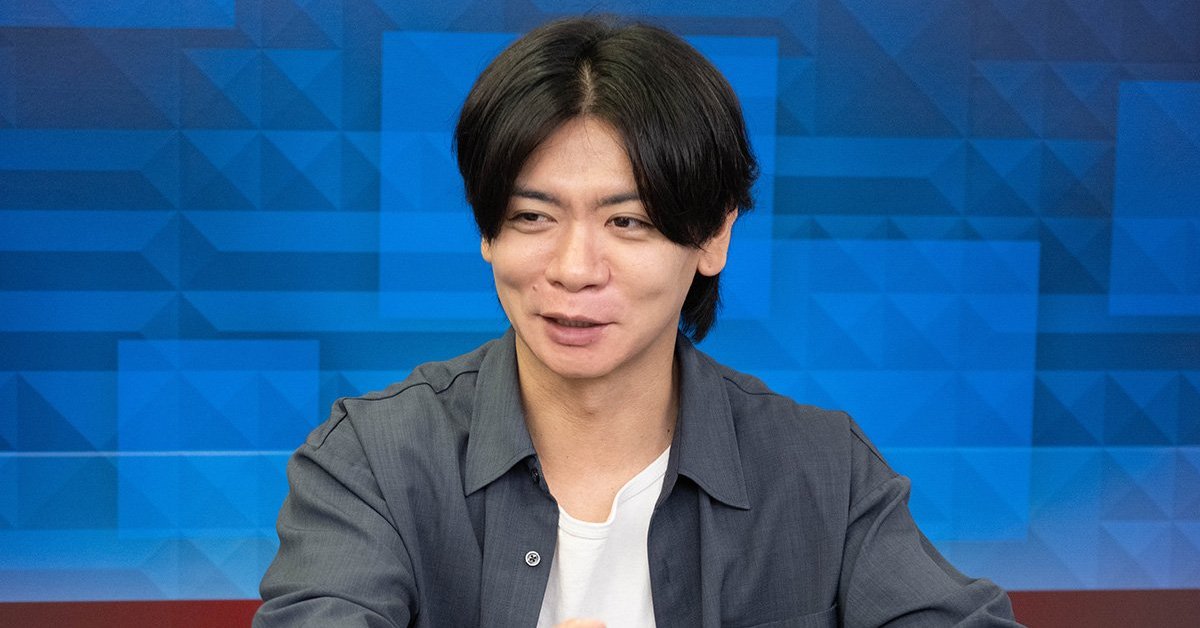
Comedian Noda Kurisutaru's AI-powered pet card game, "Pet Card Generator," achieved 1.3 million accesses and over 400,000 card generations on its launch day in December 2025, but was halted due to soaring AI API costs. After waiting for Google to offer free access to advanced Gemini models via Canvas, the service has been relaunched as "Uchi no Ko Card Densetsu" (Our Pet's Legend) with new AI-driven features including raid battles where each encounter generates a unique story based on AI reading of card contents, and collaborative cards where multiple players' pets appear together—experiences that would be difficult or impossible to implement in traditional game development.
Summaries like this, in your inbox every morning.
Sign up free →何が起きたか
お笑い芸人・野田クリスタルが Google の Gemini を使って開発した「ペットカードジェネレーター」が 2025年12月16日の公開初日に130万アクセス、カード生成40万枚超を記録しましたが、AI利用料の高騰により一時停止。約半年後、レイドバトルやカードコレクション機能を備えた大型リニューアル版「うちのこカード伝説」として復活しました。
なぜ重要か
AI生成の不確実性と高コストという課題に直面しながらも、Gemini の Canvas 機能とGoogle Cloud を活用して、「毎回違うストーリーを展開するバトル」や「複数のペットが1枚に収まるカード報酬」など、従来のゲーム開発では実現困難な体験を実装しました。インディーゲーム開発の現場でAIの限界に向き合いながら課題を解決する実例として、AI導入を検討する他の開発者やビジネス関係者にとって参考になる可能性があります。
注目点
リニューアルは Google が Canvas 上で最新モデルを無料提供できるようになったことで初めて可能になりました。野田は「バズるほど赤字」だった時点では従量課金の最新モデルを使用していましたが、モデルのバージョンを下げて運営した後、高速生成が無料で使えるようになるまで待ちました。現在は制限なく何回でもカード生成でき、バトル中のペット褒め実況も実装されています。
In late 2024, Noda Kurisutaru, the comedic half of the duo Magical Lovely and an accomplished indie game developer, partnered with Google to explore generative AI applications. When Google asked what he wanted to try with Gemini, Noda recalled his pet hamster, Hamham, which had passed away. He noticed that while photos remained in his camera roll, looking back at them felt sad, and friends didn't know how to respond. Inspired by games like Monster Farm and Barcode Battler—systems that digitize real-world objects into characters—Noda proposed a service that would turn pet photos into trading cards, allowing owners to celebrate their animals with a positive frame and even honor deceased pets on social media.
Electronic advertising company Dentsu joined early. The original plan was a video series showing Noda learning to use prompt engineering (AI-assisted coding) with Gemini. However, the resulting game demo was so polished that the team decided to make it publicly playable. On December 16, 2025, the Pet Card Generator launched and immediately achieved 1.3 million accesses and over 400,000 card generations. But success became a liability. Noda had deployed the then-latest Gemini model via API on a pay-per-use basis. As traffic surged, API charges climbed proportionally; the more users engaged, the more the service hemorrhaged money. Within hours, Noda paused the service.
The team restarted with a cheaper, older Gemini model, but quality suffered. Noda and Dentsu made a calculated decision: wait for the AI market to move toward free access for advanced models. Noda wagered that within six months, Google would offer the latest Gemini model free on Canvas—Google's platform for building generative AI applications without coding. The bet proved correct, and the team began building the successor.
The relaunched game, "Uchi no Ko Card Densetsu" (Our Pet's Legend), transforms the tool into a full narrative experience. Pets are imagined as having slipped into a fantasy world where they unknowingly solve problems and become legends; players collect cards documenting these adventures. Dentsu's engineering team handled prompt tuning to ensure pets' original poses remained recognizable even as AI painted them into elaborate fantasy backgrounds. They built a custom quality-assurance tool to stress-test countless animal and composition combinations at scale.
The centerpiece is the raid battle system, powered entirely by Gemini's generative capabilities. Rather than following fixed turn-based logic, Gemini reads each card's properties and improvises a unique scenario on the fly. A shy pet might cower in a corner; a sleepy one might doze through the fight; a social one might befriend the boss, spawning a new card that includes the boss alongside the player's pet. Up to three players can collaborate to defeat a single boss, and if they succeed, Gemini generates a single card containing all three of their pets—regardless of species combination. Between battle events, while cards are being rendered (a process that takes time), a language model continuously praises the player's pet, turning wait time into entertainment.
The backend combines Google Cloud Run Functions for logic orchestration and Google Cloud Storage for persisted data. Dentsu also reimagined user authentication: rather than collecting passwords (which introduces personal data liability for an indie operation), they derived a "key" from a player's username combined with hashes of the cards they had already generated, enabling password reset without storing sensitive information.
According to interviews, Google reported that the original Pet Card Generator was the highest-traffic service ever deployed on Canvas. Noda emphasized that he built the new version as an indie game, willing to accept unpredictable AI behavior as a trade-off for creative freedom. In his view, large game studios cannot take such risks because uncertainty threatens their quality gates and legal frameworks. Noda and Dentsu plan ongoing silent updates, monitoring social media reaction and rolling out improvements without explicit changelogs, maintaining an agile development rhythm even after launch. The project exemplifies how indie developers and small creative teams can move faster with AI than traditional studios, leveraging chaos as a feature rather than a flaw.
The Pet Card Generator's journey reflects a collision between viral success and the economics of AI inference. On launch day, 1.3 million accesses and 400,000+ card generations created a cost crisis: deploying a state-of-the-art generative model on a pay-per-use basis made Noda's operation proportionally more expensive the more users engaged with it. This is not a small-scale indie problem but a structural challenge for any AI-powered service relying on external model inference. Rather than abandoning the project, Noda's team made a deliberate gamble: they downgraded to a cheaper model to keep the service live and waited for the AI industry to move toward cheaper or free access to frontier capabilities. That bet paid off when Google began offering Canvas-based services with free access to advanced Gemini models, finally allowing the team to ship the experience they envisioned.
The relaunched game pushes Canvas—Google's no-code interface for building AI applications—to its limits. Noda noted that few developers have driven Canvas so far. However, Canvas alone lacked backend capacity for features like card collections and user data persistence, so the team layered Google Cloud Run Functions and Cloud Storage underneath to handle orchestration and storage. This hybrid architecture—lightweight frontend with heavy-lifting backend—mirrors how many production AI applications actually work in practice: the generative model and natural language understanding sit at the user-facing layer, while deterministic systems handle state and data integrity.
The most striking design choice is the raid battle mechanic, where AI reads the card's properties and improvises a unique story and outcome each time. This sacrifices the stability of traditional turn-based systems for expressiveness and replayability. Noda's framing—"indieGame developer" willing to accept "weird bugs" as a price of experimentation—captures why this kind of creative risk-taking is often easier in scrappy, small-team contexts than in corporate game development, where unpredictability in player experience can trigger legal and quality-assurance paralysis.
No comments yet. Be the first to share your thoughts!
Log in to join the discussion


Get curated AI news from 200+ sources delivered daily to your inbox. Free to use.
Get Started FreeFree · takes 30 seconds · unsubscribe anytime
1 minute a day. The AI essentials.
200+ sources · Email / LINE / Slack