
OpenAI has introduced Private Safety Processing, a new service that detects AI misuse by analyzing patterns across multiple customer conversations without storing any data — a direct response to Anthropic's controversial 30-day data-retention policy for its advanced models.
The move underscores intensifying competition between the two AI leaders, both preparing for public offerings, over how to balance enterprise customer privacy with safety oversight.
What happened
OpenAI announced Private Safety Processing, a new service for select customers that monitors for AI misuse across multiple sessions without retaining any customer data. The system uses automated agents to detect patterns of abuse (such as requests spread across conversations to evade detection) and sends only a narrowly defined signal to OpenAI if triggered, triggering human review only if the customer chooses to share data.
Why it matters
Anthropic's recently announced data-retention policy — which keeps user sessions and conversations for 30 days on its Mythos-class models — has alarmed enterprises handling sensitive data. OpenAI's approach directly addresses this competitive pressure by expanding its existing Zero Data Retention policy to catch abuse across longer time horizons without storing conversations, positioning itself as the privacy-friendly alternative.
What to watch
The two companies are in direct competition for enterprise customers; Anthropic's annualized revenue run rate is reportedly $65 billion and both are preparing IPOs. How quickly enterprises adopt Private Safety Processing, and whether other AI labs follow suit with similar privacy-first models, will signal whether data retention becomes a decisive competitive factor.
Ask the AI about this article →
OpenAI's announcement of Private Safety Processing marks a strategic escalation in the rivalry between the two leading AI companies. Anthropic's July introduction of a 30-day data-retention policy on its most capable models was presented as necessary for safety monitoring, but it created a vulnerability: enterprises handling confidential information — financial records, legal documents, proprietary research — balked at having their conversations warehoused by an external AI lab, even with human review safeguards. OpenAI seized on this opening by extending its existing Zero Data Retention framework to detect abuse across longer time horizons without storing data, narrowing the gap that Anthropic had tried to create on the safety dimension.
The technical innovation here is meaningful: Private Safety Processing can identify patterns of abuse that span multiple sessions (such as a bad actor spreading requests for malware creation across conversations to avoid triggering session-level alerts), while Anthropic's multi-session monitoring requires data retention as the prerequisite. For enterprises, the trade-off is now explicit — either accept data retention for comprehensive safety, or accept data deletion and rely on OpenAI's agent-based cross-session detection. The broader competitive context amplifies the significance: Anthropic's annualized revenue run rate stands at $65 billion and both companies are preparing IPOs, making enterprise customer trust and preference increasingly material to valuation.
For example, today's edition would include:
AI-summarized, only the topics you pick — one digest a day via Email, Slack, or Discord.
Free · takes 30 seconds · unsubscribe anytimeWhat is AIToday? →
Ask AI anything about this article. Q&As are published on this page for other readers too.
Israeli startup DataAgent Ltd
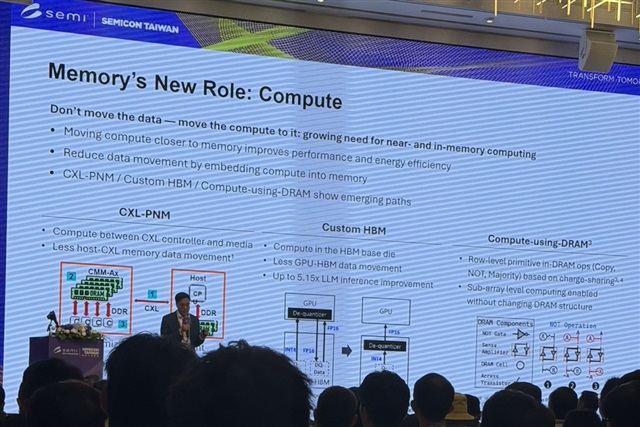
SK Hynix presented a custom HBM concept at SEMICON Taiwan 2026, where compute functions are placed in the base…
Taoyuan is positioning itself as a northern hub for AI data centers (AIDC), citing the Tatan area and an LNG c…
The U.S. Department of Defense announced on August 31 that it has deployed ChatGPT Mil, a customized version o…

Nvidia reported earnings that were both remarkable and boring, reflecting its focus on avoiding a consolidated…

Anthropic has agreed to a $35bn cloud-computing contract with Lambda, a Nvidia-backed cloud provider