
Dymium has launched GhostAI, a governance gateway designed to let enterprises safely use AI models with their sensitive data.
The tool sits between company data and more than 800 public and private AI models, applying security policies in real time—masking or redacting confidential information before it reaches a model and restoring original values afterward.
The company claims it is the first secure AI gateway to manage all four layers (models, data, context, and tools) through a single policy engine, addressing the core tension enterprises face when trying to unlock AI value from proprietary data without creating security and privacy risks.
What happened
Dymium Inc. introduced GhostAI, a gateway that sits between enterprise data and AI models to apply security and governance policies across models, data, context and tools. The product can route requests among more than 800 public and private models, mask or redact sensitive information before it reaches a model, and restore original values after the model responds. It is available through an early-access program with general availability planned but no date announced.
Why it matters
Companies face a core tension: foundation models gain enterprise value from access to proprietary data, but sharing that information creates privacy, security and regulatory risks. GhostAI claims to be the first secure AI gateway to govern all four layers (Models, Context, Tools and Data) through one policy engine rather than combining separate security products, giving security teams centralized control without requiring employees to stop using their preferred AI services.
What to watch
Pricing will be based on consumption. Dymium is targeting regulated industries such as financial services and healthcare, as well as organizations seeking to protect intellectual property. Wessels said most organizations can configure it in under five minutes and that customers have been running on the underlying technology for about six months.
Ask the AI about this article →
Dymium's GhostAI addresses a fundamental challenge in enterprise AI adoption: how to unlock the value of foundation models—which derive much of their enterprise value from access to proprietary data—without exposing sensitive information to security, privacy and regulatory risks. The product's core innovation is consolidating governance across four previously siloed layers (models, data, context, and tools) into a single policy engine, rather than requiring companies to stitch together separate security products. This architectural choice matters because it simplifies deployment and reduces complexity for security teams.
The gateway's approach of sitting transparently between data and models—inspecting interactions, applying policies in real time, and logging activity—allows employees to continue using their preferred AI services without friction while giving security teams centralized oversight. Dymium's use of techniques such as data masking, synthetic replacement, and zero-copy architecture (letting AI systems work with live enterprise data without replication) suggests the company is addressing not only security and governance but also operational efficiency and data freshness concerns that regulated industries like financial services and healthcare are likely to prioritize.
For example, today's edition would include:
AI-summarized, only the topics you pick — one digest a day via Email, Slack, or Discord.
Free · takes 30 seconds · unsubscribe anytimeWhat is AIToday? →
Ask AI anything about this article. Q&As are published on this page for other readers too.
Israeli startup DataAgent Ltd
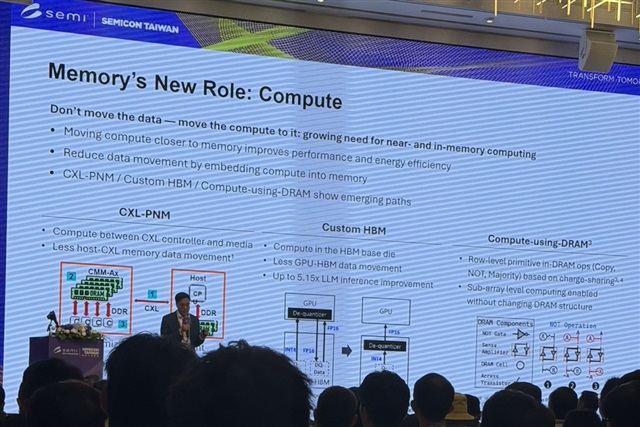
SK Hynix presented a custom HBM concept at SEMICON Taiwan 2026, where compute functions are placed in the base…
Taoyuan is positioning itself as a northern hub for AI data centers (AIDC), citing the Tatan area and an LNG c…
The U.S. Department of Defense announced on August 31 that it has deployed ChatGPT Mil, a customized version o…

Nvidia reported earnings that were both remarkable and boring, reflecting its focus on avoiding a consolidated…

Anthropic has agreed to a $35bn cloud-computing contract with Lambda, a Nvidia-backed cloud provider