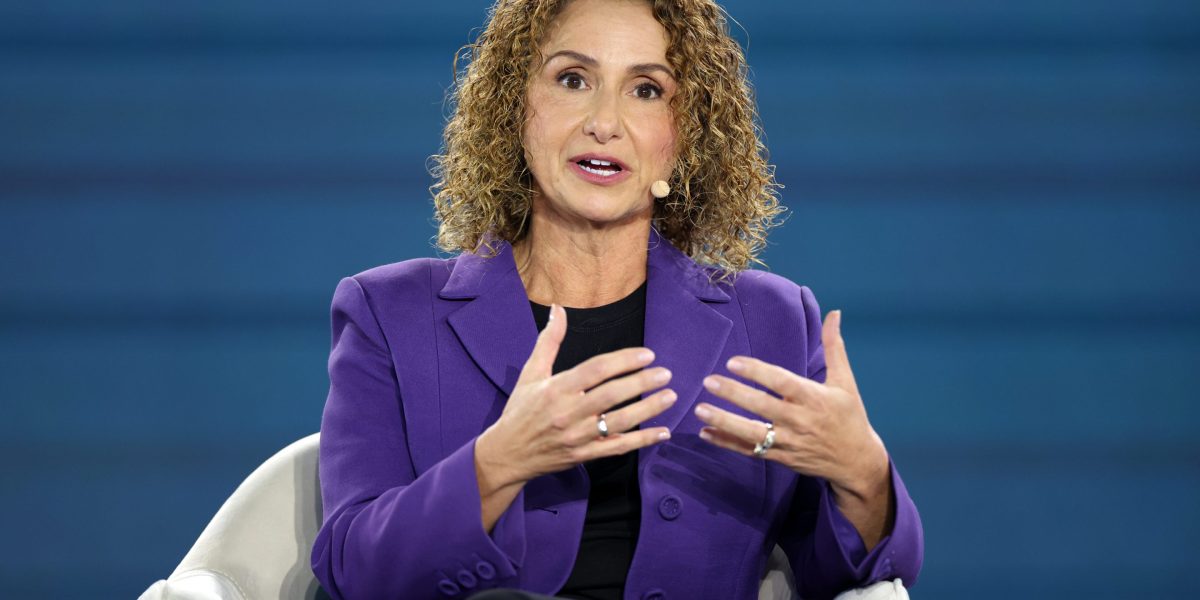
Google DeepMind's chief AI officer Lila Ibrahim has acknowledged that the risk of AI causing human extinction is "not zero," though she refuses to attach a specific probability—a more cautious stance than some peers (Geoffrey Hinton has suggested 10–20% odds within three decades).
Unlike Elon Musk and other executives who forecast a post-scarcity paradise by the 2030s–2040s, Ibrahim argues that AI is evolving too rapidly for reliable prediction and that the real focus should be solving concrete problems today—disease, extreme weather, industrial waste—while ensuring the technology's benefits are broadly distributed rather than concentrated in a few companies.
What happened
Lila Ibrahim, Google DeepMind's chief AI readiness officer, told Fortune that the odds of AI causing human extinction are "not zero"—though she declined to assign a specific percentage. She signed the Center for AI Safety's 2023 statement treating AI extinction risk as seriously as nuclear war, alongside Sam Altman and Dario Amodei.
Why it matters
While Elon Musk and other tech leaders predict a post-scarcity utopia by the 2030s–2040s (where money becomes irrelevant and robots handle work), Ibrahim argues the technology is moving too fast for anyone to accurately forecast what comes next. She frames the real priority as using AI to solve concrete near-term problems—extreme weather, industrial waste, disease—rather than betting on speculative futures.
What to watch
Ibrahim emphasized that Google DeepMind's focus is on ensuring AI's benefits reach beyond the handful of companies building these systems, and on "maximizing human potential" through practical tool use rather than chasing utopian or dystopian narratives.
Lila Ibrahim, Google DeepMind's chief AI readiness officer, has become one of the few senior AI leaders willing to publicly acknowledge the severity of existential risk while declining to fanfare utopian scenarios. In an interview with Fortune, she confirmed that she signed the Center for AI Safety's 2023 statement—which declared that mitigating the risk of human extinction from AI should rank alongside nuclear war as a civilizational priority—alongside OpenAI's Sam Altman and Anthropic's Dario Amodei. When asked to quantify the likelihood of such an outcome, Ibrahim was blunt: "It's not zero. Anything beyond that is just me guessing… that's the engineer in me." Her refusal to attach a percentage reflects a deliberate epistemic caution; for comparison, Geoffrey Hinton (known as the "godfather of AI") has publicly stated odds of 10% to 20% within three decades, while Amodei has suggested a 25% chance the future will go "really, really badly."
Yet Ibrahim's caution extends equally to the utopian opposite. Elon Musk has repeatedly promoted a vision of AI-driven abundance so complete that work becomes optional, wages irrelevant, and money itself obsolete by 2036. Musk recently told The Economist that by that date, goods will be so cheap the world will enter an era of deflation, compelling governments to distribute universal high income to citizens freed from the daily grind. Bezos has gone further, predicting that by 2045, "millions of people" will be living in space with robots handling their planetary commutes, and Sam Altman has suggested college graduates will soon be working "some completely new, exciting, super well-paid" job in space. Ibrahim rejects this prognostication with the same skepticism she reserves for extinction scenarios. "I don't think we can really predict what a future state looks like," she told Fortune, grounding her skepticism in the observed velocity of AI development: the field is advancing too rapidly for anyone to forecast with real accuracy.
Instead, Ibrahim reframes the conversation toward the present. Having witnessed Google DeepMind's breakthroughs firsthand—the lab is dedicated to solving major scientific problems—she argues that the real imperative is to use AI as a practical tool to maximize human potential and address concrete challenges: extreme weather, industrial waste, disease diagnosis, and pattern recognition that humans cannot perform alone. She also flagged a governance concern largely absent from Musk's cheerleading: the need to ensure that AI's benefits do not flow solely to the handful of people running the most powerful AI companies. Drawing an analogy to the internet and social media booms—eras when businesses failed to discuss systemic risks around investment tables—Ibrahim warned that "we didn't sit around the table when we were making investment decisions and talk about the risks in the way that we should have." She even invoked apocalyptic Hollywood science fiction as a cautionary tool: "If we don't do anything to mitigate that or to invest in the good things along the way, then we're ending up exactly where we don't want to go." Her final framing captured her pragmatic humility: "I think a lot about how we get to a future versus what the future is."
Ibrahim's measured stance reflects a divide within AI leadership between utopian and catastrophist camps. While Musk has consistently promoted an optimistic vision—robots, abundance, and obsolete wages by the late 2030s—and Bezos has imagined millions living in space by 2045, Ibrahim represents a more cautious middle ground. She signed the Center for AI Safety's 2023 statement equating AI extinction risk with nuclear war, yet refuses to quantify the threat, citing epistemic humility. Her skepticism toward both extremes stems from a practical observation: the technology is advancing faster than our ability to forecast its effects, making overconfident predictions (whether utopian or apocalyptic) a form of intellectual hubris.
Ibrahim's framing also surfaces a governance concern largely absent from Musk's rhetoric—the question of *who benefits*. While venture capitalists and tech founders envision futures where AI solves scarcity, Ibrahim pivots the conversation toward distributional fairness: ensuring that breakthroughs in disease detection, climate modeling, and industrial efficiency don't accrue only to the companies controlling the most advanced systems. Her reference to the internet and social media as cautionary tales—technologies whose systemic risks were underappreciated during deployment—suggests that near-term attention to equity and safety may matter more than speculation about 2036 or 2045.
AI-summarized, only the topics you pick — one digest a day via Email, Slack, or Discord.
Free · takes 30 seconds · unsubscribe anytime
Ask AI anything about this article. Q&As are published on this page for other readers too.
CoreWeave Inc., an Nvidia-powered AI cloud infrastructure provider, rose more than 18% in premarket trading af…
OpenAI data shows the disparity between heavy and moderate AI users among its business customers has grown sha…
ClearJet, an AI-enabled logistics startup, raised $25 million in Series B funding led by Edison Partners, brin…

OpenAI released a preview of its ChatGPT desktop application for Linux on Tuesday, supporting Ubuntu 24.04 and…

PitchBook's Q2 2026 U.S
RuntimeWire, an AI-powered news operation run by entrepreneur Ryan Merket, published a story about OpenAI's ro…

The AI news that matters, in one minute each morning.
Sign up free