An analysis of roughly 200 publicly disclosed $100 million(約160億円)-plus first rounds over 15 years found that only 1% generated venture-scale returns of 10x or better for first-round investors.
While mega AI seed rounds like Project Prometheus's $6.2 billion(約9900億円) capture headlines, the data shows that historically, venture winners like Google and Uber achieved far larger returns (300x–5,000x) by entering at lower valuations.
Even today's AI winners—Cursor, ElevenLabs, Cohere—started with much smaller first rounds yet now command billion-dollar valuations, suggesting that capital intensity alone does not predict venture success.
What happened
Analysis of roughly 200 publicly disclosed $100 million(約160億円)-plus first rounds over 15 years found that only 20% had recorded exits, and of those, only a few delivered 10x or better returns for first-round investors—roughly 1% overall. The finding challenges the narrative that headline-grabbing mega-seed rounds like Yann LeCun's $1 billion(約1600億円) and Project Prometheus's $6.2 billion(約9900億円) represent a new venture paradigm.
Why it matters
High entry prices in mega-seed rounds leave less room for upside to compound, hurting investor returns even when the underlying company succeeds. Historical winners like Google and Uber generated 300x–5,000x returns for early investors partly because those investors entered at much lower valuations. Even AI winners often started small: Cursor raised less than $10 million(約16億円), ElevenLabs $2 million(約3.2億円), Cohere $5 million(約8億円)—all now valued above $5 billion(約8000億円). The data suggests capital intensity alone does not create venture-scale returns.
What to watch
While OpenAI and Anthropic are projected to improve the dataset when they exit—first-round investors there are looking at 30–40x returns at projected IPO valuations—that outcome still lags historical standards. The playbook that has worked across prior technology waves remains buying meaningful ownership in capital-efficient companies at prices that leave room for upside, not chasing mega-round exceptions.
Ask the AI about this article →
The article challenges a widespread perception that the venture model has fundamentally changed in the AI era. While mega-seed rounds—including Yann LeCun's $1 billion(約1600億円) company, Project Prometheus at $6.2 billion(約9900億円), and Unconventional AI at $475 million(約760億円)—dominate venture headlines, an empirical review of 15 years of $100 million(約160億円)-plus first rounds reveals a sobering pattern: only 20% have recorded exits, and of those, only a handful achieved venture-scale returns. This mirrors dynamics long observed in biotech, where capital-intensive science necessitates large first checks but does not guarantee strong outcomes for early investors.
The core insight is that entry price, not company quality or capital size, determines return potential. Sequoia Capital and Kleiner Perkins turned roughly $12.5 million(約20億円) into $4 billion(約6400億円) on Google (300x+), and First Round Capital converted ~$500,000 into $2.5 billion(約4000億円) on Uber (nearly 5,000x)—returns dwarfing the 30–40x first-round investors project from OpenAI at its estimated IPO valuation. In contrast, today's canonical AI winners—Cursor, ElevenLabs, Cohere, Sierra—launched with seed rounds under $25 million(約40億円) and now command valuations exceeding $5 billion(約8000億円) while generating hundreds of millions in revenue. The pattern is consistent: capital efficiency at entry, not mega-round size, correlates with venture-scale compounding.
For example, today's edition would include:
AI-summarized, only the topics you pick — one digest a day via Email, Slack, or Discord.
Free · takes 30 seconds · unsubscribe anytimeWhat is AIToday? →
Ask AI anything about this article. Q&As are published on this page for other readers too.
Visko raised $10 million in pre-seed funding from Llama Ventures and opened public access to its first foundat…

U.S. markets ended August higher, with the S&P 500 up 2.6% and the Nasdaq up 3.9%

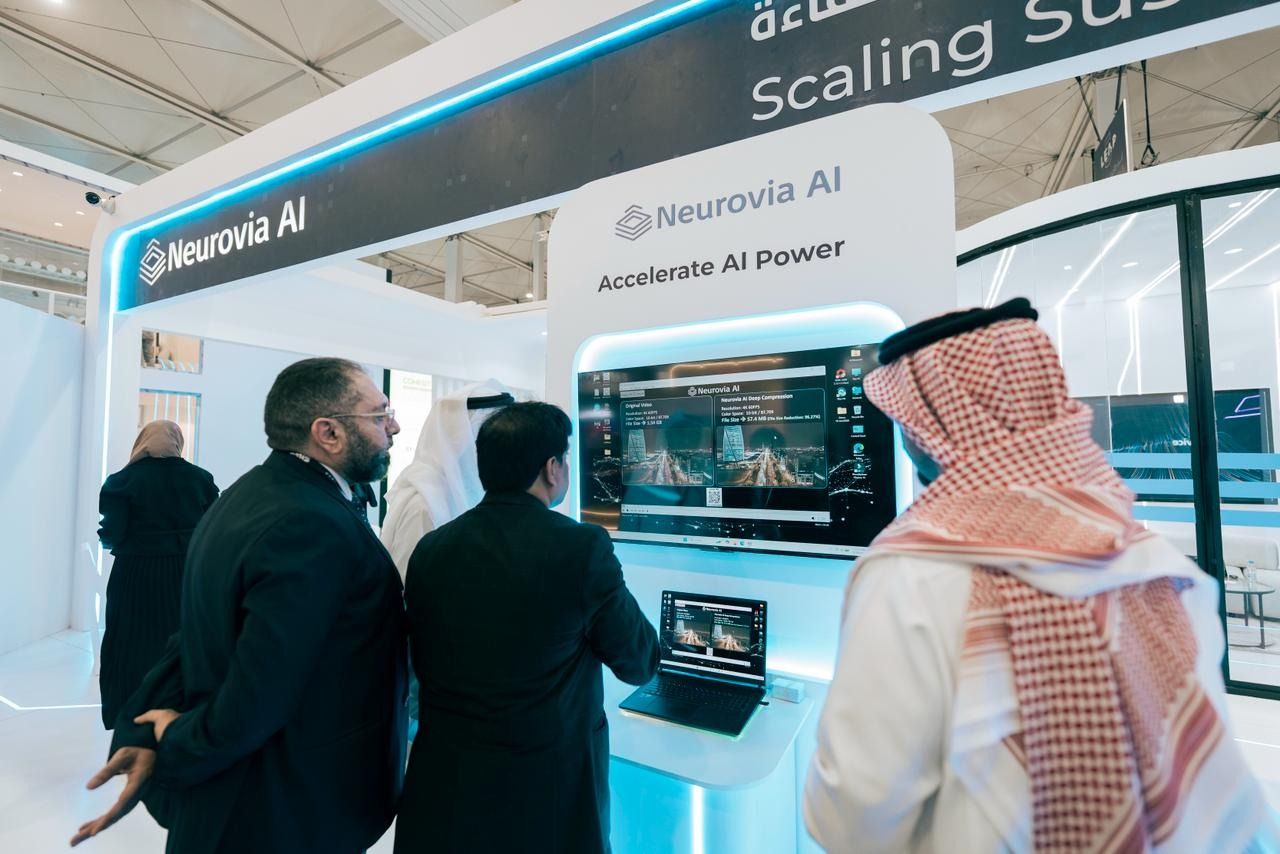
Neurovia AI, an Abu Dhabi-based company, is pitching Saudi security agencies software that it says can compres…
AI company Runway has unveiled Solaris, the first model in a new category it calls "Interface World Models." I…

John Deere introduced JD, a conversational AI tool that lets farmers ask open-ended questions about their hist…
Nvidia CEO Jensen Huang said on Fox Business that AI is creating 'hundreds of thousands' of jobs, including in…