Summaries like this, in your inbox every morning.
Sign up free →What happened
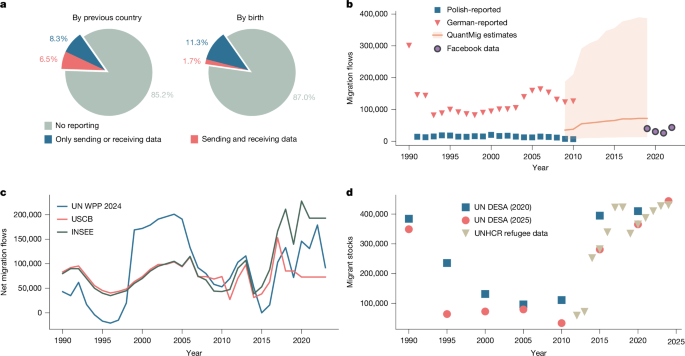
A study used deep learning to analyze anonymized Facebook location data from more than three billion users across 181 countries between 2019 and 2022 to estimate bilateral migration flows. The method captured major migration events such as Ukrainian displacement following the Russian invasion, the Venezuelan migration crisis, and pandemic-related migration pattern changes.
Why it matters
Most countries lack annual migration flow data; existing statistics come primarily from high-income Western nations and rely on snapshots taken at five- or ten-year intervals, missing year-to-year migration dynamics. Annual flow data would allow researchers to integrate migration patterns with other annually reported data on economic change, conflict, climate, and policy reforms, and enable more precise population projections and causal analyses.
What to watch
The digital-trace method provides a near-global direct estimate of migration flows for the first time, accounting for differences in Facebook usage and economic development along each migration corridor and calibrated against official migration statistics in selected countries.
AI-summarized, only the topics you pick — one digest a day via Email, Slack, or Discord.
Free · takes 30 seconds · unsubscribe anytime
No discussion yet for this article
Get curated AI news from 200+ sources delivered daily to your inbox. Free to use.
Get Started FreeFree · takes 30 seconds · unsubscribe anytime
