Summaries like this, in your inbox every morning.
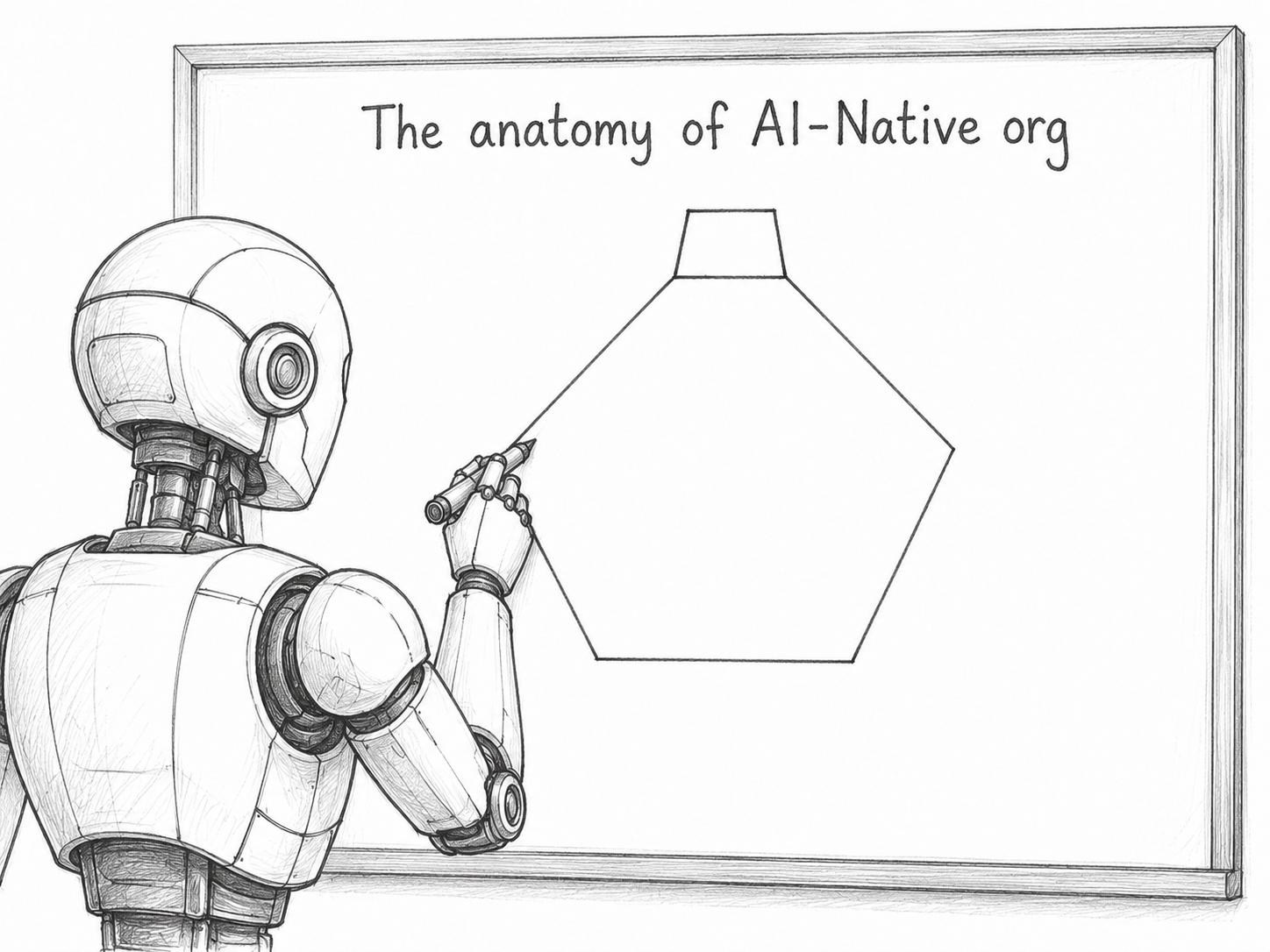
Sign up free →What happened: Software companies have historically been organized in three layers — a small group deciding why (strategy), a slightly larger group deciding what (product choices), and a broad middle translating those decisions into code, tickets, and release notes. AI agents are now performing most of that translation work, shrinking the middle layer dramatically and changing who stays in the organization.
Why it matters: The translation tasks that justified most middle-management and mid-level engineering roles — converting requirements to code, tickets to PRs, business intent to specs — are being compressed by AI. This means managers whose job was purely coordinating translators face a problem: the work that justified their role is dissolving. Engineers and leaders who do not contribute to the why, what, or core architecture are at risk of becoming unnecessary.
What to watch: The emerging shape is a smaller headcount organization where the ratio of people defining what (product judgment) to people doing how (engineering) is flipping in the next two years. The remaining engineers are handling the hardest work — architecture, trust systems, eval suites, and the harness that gates what agents can touch unsupervised. Most teams are not ready for this shift.
No discussion yet for this article
Get curated AI news from 200+ sources delivered daily to your inbox. Free to use.
Get Started FreeFree · takes 30 seconds · unsubscribe anytime
5 minutes a day. The AI essentials.
200+ sources · Email / LINE / Slack
