What happened
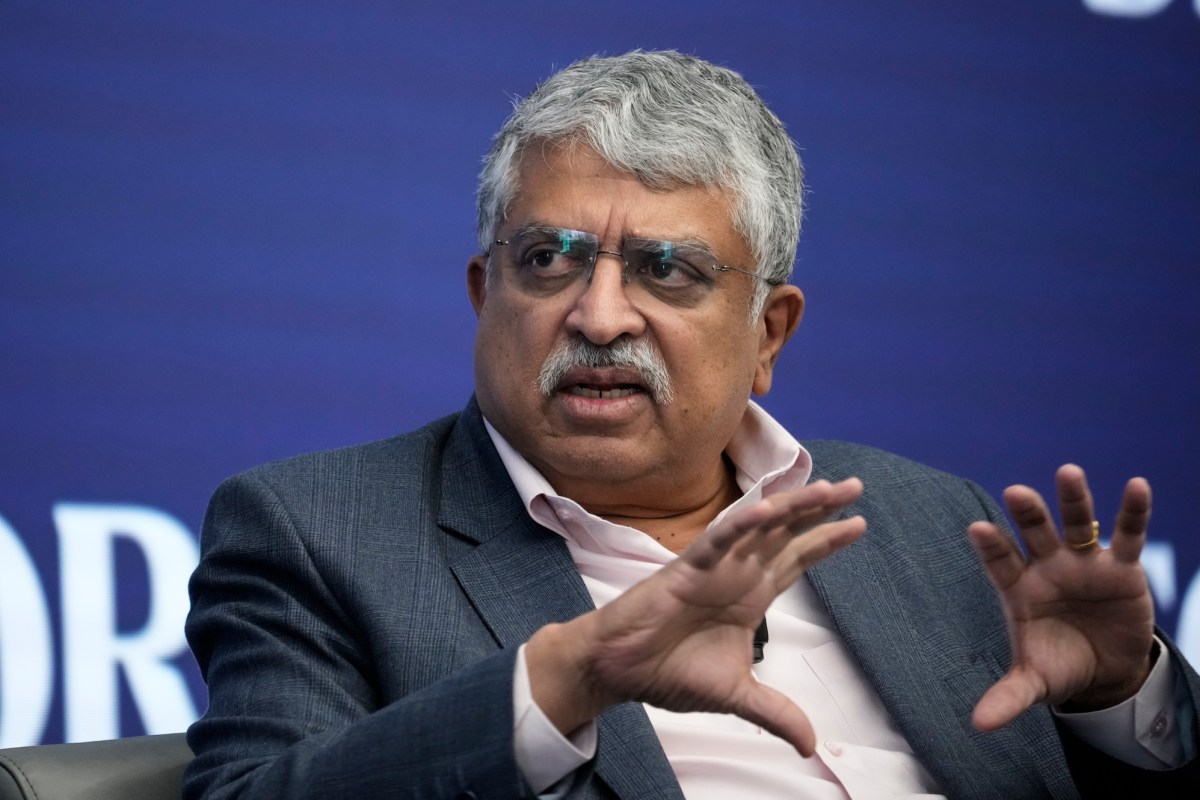
Nandan Nilekani, co-founder of Infosys, is stepping down as general partner at Fundamentum Partnership, the venture capital firm he co-founded in 2017. He will become the fund's anchor investor and continue advising the firm as Fundamentum launches its third fund, targeting to raise about $200 million(約320億円).
Why it matters
Nilekali remains deeply involved in mentoring portfolio founders and providing strategic guidance, so the shift is described as mainly a title change. His continued anchor investment reflects his largest-ever commitment to a venture capital fund. The move also reflects a broader evolution in India's venture ecosystem—the fund expects to raise roughly half its target from international investors and half from Indian institutions, family offices, founders, and partners, a significant shift from the mid-2000s when Indian venture funds relied almost entirely on U.S. capital.
What to watch
Fund III will be led by Sanjeev Aggarwal, Prateek Jain, Mayank Kachhwaha, and Sanjay Chaturvedi, and aims to back eight to 10 early-stage startups building consumer technology, fintech, and AI products, with initial checks of about ₹100 crore (around $10.5 million(約17億円)) each. Fundamentum expects the fundraising to conclude over the next 12 to 18 months.
Summaries like this, in your inbox every morning.
Nilekani's transition from general partner to anchor investor marks a milestone in Fundamentum's maturation. Founded in 2017, the firm has already made 17 investments across its first two funds and has returned about half the capital from its first fund to investors. By broadening its senior investment team—elevating Prateek Jain, Mayank Kachhwaha, and Sanjay Chaturvedi alongside Sanjeev Aggarwal—Fundamentum is formalizing a leadership structure that can operate independently of Nilekani's day-to-day involvement, while maintaining his strategic mentorship and capital commitment.
The composition of Fund III's capital sources reveals a fundamental shift in India's venture ecosystem. When Aggarwal helped launch Helion Venture Partners in the mid-2000s, domestic capital was scarce and all funding came from the United States. Today, Indian investors—institutions, family offices, and founders—now represent half of Fundamentum's fundraising target. This reflects a maturing market where venture capital can be built and sustained with homegrown capital, a stark contrast to a decade earlier. The firm's focus on application-layer AI startups built on existing global models, rather than frontier model development, further reflects how India's AI opportunity differs from the U.S. and China, where venture billions flow to model-building companies.
Pick your industry and the AI tools you use, and get news related to your work every day.
Free · 30 seconds with Google · unsubscribe anytimeWhat is AIToday? →
Ask AI anything about this article. The AI reads this article, earlier AIToday articles, and Wikipedia, and cites its sources. Q&As are published on this page for other readers too.

