DocuQueue has launched a document generation layer (MCP) that lets AI assistants like Claude automatically create invoices, contracts, forms, and other documents through natural language prompts.
The service integrates with popular AI tools via a one-click setup, claims to save 80% of document creation time, and charges per document generated while keeping user data encrypted and unretained after download.
What happened
DocuQueue launched a document layer (called MCP, or Model Context Protocol) that connects AI assistants like Claude and Cursor to automated document generation. Users can now generate invoices, contracts, forms, and other documents through natural language commands in their AI chat, with one-click setup into Claude Desktop, Cursor, VS Code, Windsurf, and compatible clients.
Why it matters
The tool claims to save 80% of document creation time and eliminate data entry errors. Document generation is a high-friction, repetitive task for many workflows (invoicing, contracts, IRS forms); automating it via AI chat removes manual data entry and template hunting, making it accessible without dashboard navigation or configuration files.
What to watch
DocuQueue MCP is free to use; pricing is per document generated (1 credit per document). The service handles batch processing (hundreds of documents in one request), integrates with Zapier, Airtable, n8n, and Make, and logs every generation for audit compliance. Setup takes under a minute (sign up, paste API key into your AI client config, and generate).
Ask the AI about this article →
DocuQueue addresses a persistent friction point in business workflows: document generation is repetitive, error-prone, and time-consuming. By surfacing document creation as a natural-language capability within AI chat interfaces that developers already use (Claude, Cursor, VS Code), the product removes the context-switching cost of opening a separate dashboard or form builder. The MCP protocol is key—it is an open standard allowing a single server to work across multiple AI tools (Claude, ChatGPT, Gemini, Windsurf), meaning one integration effort covers multiple assistants. The claim to save 80% of document creation time and eliminate data entry errors is credible in the context of invoicing or form-filling workflows where repetitive data entry dominates. The batch processing feature (hundreds of documents in one request) and integrations with automation platforms (Zapier, Airtable, n8n, Make) signal that the tool is built for production workflows, not just single-user demos. The security model—HTTPS encryption, per-integration API keys, no persistent storage, and audit logging—aligns with compliance requirements that matter to enterprises handling contracts and tax forms. Pricing as a per-document credit system is straightforward and scales with usage, lowering the barrier to entry for teams exploring the tool.
For example, today's edition would include:
AI-summarized, only the topics you pick — one digest a day via Email, Slack, or Discord.
Free · takes 30 seconds · unsubscribe anytimeWhat is AIToday? →
Ask AI anything about this article. Q&As are published on this page for other readers too.
Israeli startup DataAgent Ltd
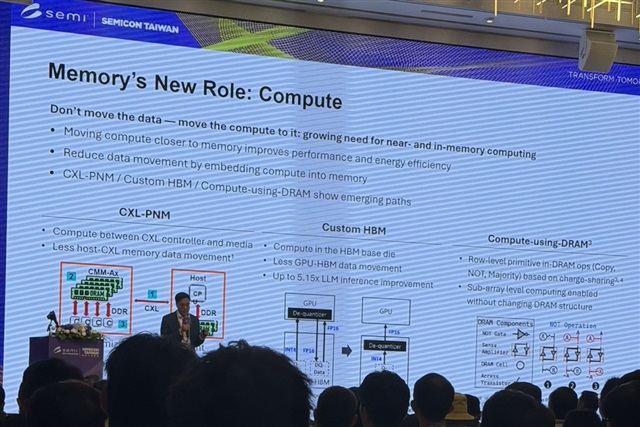
SK Hynix presented a custom HBM concept at SEMICON Taiwan 2026, where compute functions are placed in the base…
Nvidia reported earnings that were both remarkable and boring, reflecting its focus on avoiding a consolidated…

Anthropic has agreed to a $35bn cloud-computing contract with Lambda, a Nvidia-backed cloud provider

The Supreme Court of Japan has included about ¥60 million in its fiscal 2027 budget request for AI-related exp…

The Consumer Affairs Agency said Tuesday it will use generative AI to analyze about 900,000 annual consultatio…