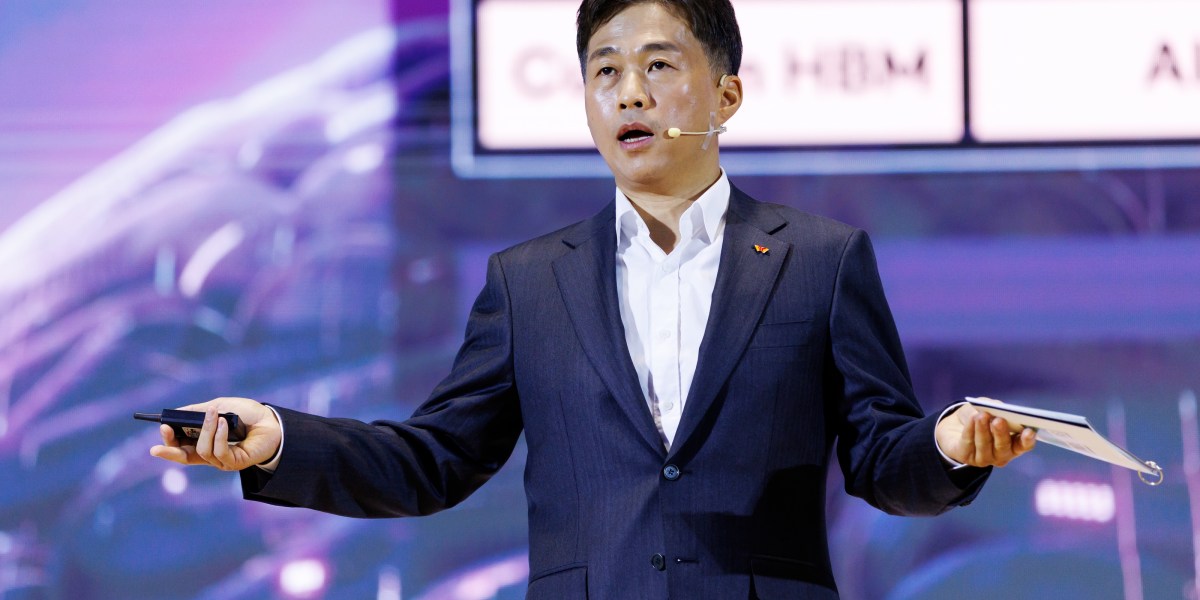
SK Hynix, South Korea's leading memory chip supplier to Nvidia, is launching a $29 billion(約4.6兆円) listing on Nasdaq this week, marking what could be the biggest first-time share sale by a foreign company.
The company's Korea-listed stock has soared 770% in a year, driven by AI boom demand for memory chips.
The offering will test whether investors remain willing to fund AI-related companies at elevated valuations.
What happened
South Korean chipmaker SK Hynix is launching a $29 billion(約4.6兆円) American depositary receipt (ADR) offering on Nasdaq, expected to begin trading Friday. This could be the largest-ever first-time share sale by a foreign company. SK Hynix's Korea-listed stock has surged 770% over the past 12 months and is now Nvidia's top supplier of high-bandwidth memory.
Why it matters
The offering is a test of whether investors will continue funding the AI boom at current valuations. SK Hynix's performance outpaced even Micron Technology's 700% rally over the same period, and memory chip makers have become critical enablers for AI. The company's dominance means its capital-raising success could signal broader confidence—or hesitation—in the AI hardware sector.
What to watch
SK Hynix and Samsung together represent about half the market cap of South Korea's KOSPI index, which has risen 87% year-to-date. The ADR listing on Friday will show whether foreign institutional investors view AI memory demand as sustainable at current valuations.
Ask the AI about this article →
SK Hynix's $29 billion(約4.6兆円) ADR listing represents a landmark moment for the AI hardware supply chain. The company's extraordinary stock rally—up 770% in 12 months and outpacing even Micron Technology's 700% gain—reflects investor confidence that memory chips will remain central to AI infrastructure. SK Hynix's position as Nvidia's preferred high-bandwidth memory supplier has made it the cornerstone of South Korea's equity markets; Samsung and SK Hynix alone represent about half the KOSPI index's market cap, and their combined market cap is around 16 times that of the third-largest company in the index, according to Deutsche Bank.
The timing of this offering is strategically significant. It arrives as a real test of whether appetite for AI-related capital raises remains robust. Elsewhere in the AI ecosystem, token pricing—the core unit of compute that OpenAI and Anthropic sell to clients—has declined 20% since May, suggesting clients are balking at high prices and opting for cheaper or open-source alternatives. Major companies including Citi, Adobe, and Atlassian have capped or limited token spending. This divergence between bullish semiconductor valuations and softening AI software pricing may indicate that the market is reassessing which links in the AI supply chain will prove durable profit generators.
For example, today's edition would include:
AI-summarized, only the topics you pick — one digest a day via Email, Slack, or Discord.
Free · takes 30 seconds · unsubscribe anytimeWhat is AIToday? →
Ask AI anything about this article. Q&As are published on this page for other readers too.

