Summaries like this, in your inbox every morning.
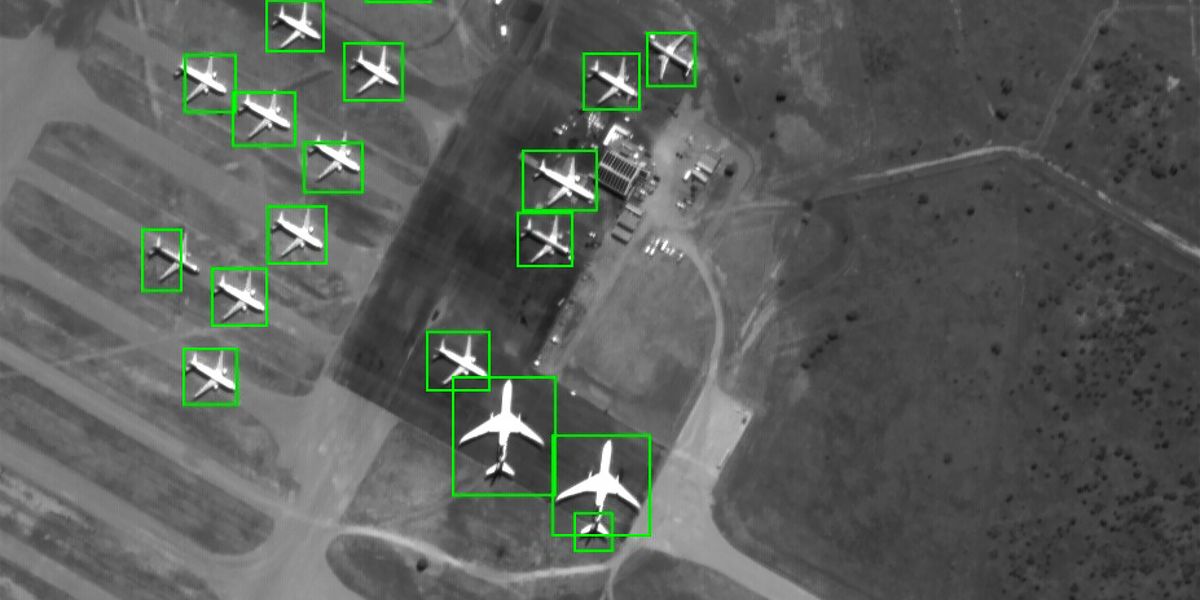
Sign up free →Planet Labs' Pelican-4 satellite ran an airplane-recognition algorithm in orbit, identifying aircraft on a tarmac in Alice Springs, Australia using an AI model running aboard the satellite. The company's engineers worked 18 months to accomplish reliable autonomous object classification from space.
The AI image-recognition algorithms analyze a single Pelican image comprising 16,000 pixels in half a second using onboard Nvidia Jetson Orin GPU modules (specialized processors for running AI). Results can reach users in minutes, whereas transferring data to Earth for processing and analysis via radio stations currently takes hours.
Planet currently operates a constellation of several hundred Dove and SuperDove CubeSats (small satellites) and is building a fleet of 32 larger Pelican satellites that image the planet's surface in 30-centimeter detail. All satellites combined generate 30 terabytes of data per day. The company plans to augment the SuperDove constellation with Owl satellites offering daily revisits at up to 1 meter resolution, also fitted with Nvidia Jetson processors.
The space-based real-time AI-detection service will be made available to customers in the next six to nine months. Planet and Google plan to fly two prototype satellites for the Suncatcher project in 2027.
No discussion yet for this article
Get curated AI news from 200+ sources delivered daily to your inbox. Free to use.
Get Started FreeFree · takes 30 seconds · unsubscribe anytime
1 minute a day. The AI essentials.
200+ sources · Email / LINE / Slack
