AIToday

OpenAI launches $230 AI keyboard amid Apple trade-secret lawsuit

TechCrunch AI2h ago
OpenAI launches $230 AI keyboard amid Apple trade-secret lawsuit

Key takeaway

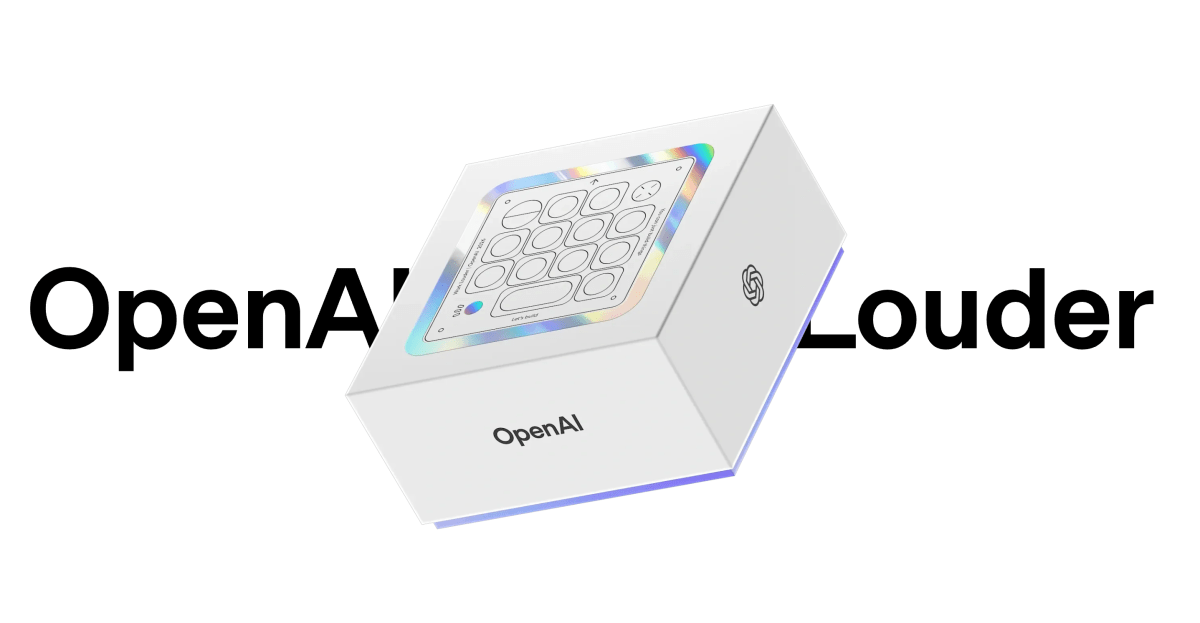
OpenAI has released a $230 light-up keyboard called the Codex Micro, designed to manage AI coding agents through a command-center interface. Separately, Bloomberg revealed OpenAI is developing a more ambitious screenless smart speaker with moving mechanical elements, currently in development and designed by former Apple engineers. The timing is notable because Apple last week sued OpenAI, alleging the company deliberately extracted confidential information to develop hardware—a claim OpenAI denies.

Summaries like this, in your inbox every morning.

Sign up free →

3 Key Points

  • What happened

    OpenAI released the Codex Micro, a $230 light-up keyboard co-designed with Work Louder, featuring Agent Keys that display agent status, customizable Command Keys for shortcuts, a joystick for workflows, and a dial to control agent reasoning levels. The device pairs with Codex, OpenAI's AI coding assistant, and is managed through the ChatGPT desktop app.

  • Why it matters

    The Codex Micro marks OpenAI's official entry into hardware and is positioned as a command center for managing fleets of AI coding agents—semi-autonomous bots that write and execute code with minimal human input. OpenAI described it as a limited-run collaboration, suggesting it is a novelty item rather than a mass-market product.

  • What to watch

    Bloomberg separately reported that OpenAI is developing a second, more substantial device: a portable, screenless smart speaker that integrates with ChatGPT and includes moving mechanical elements. That device is still in development and subject to change. The project is being designed by former Apple engineers—a detail that carries weight given Apple's recent lawsuit accusing OpenAI of stealing confidential information to develop its own hardware. OpenAI has denied wrongdoing.

In Depth

OpenAI is expanding into the hardware market with two offerings that differ dramatically in ambition and maturity. The Codex Micro, priced at $230 and co-designed with specialty keyboard maker Work Louder, is the company's first official hardware product. It is built to serve as a command center for users managing fleets of AI coding agents—semi-autonomous bots capable of writing and executing code with minimal human oversight. The keyboard features Agent Keys that illuminate to show agent status, customizable Command Keys that act as shortcuts for frequent Codex tasks, and a joystick for launching common workflows. A dial allows users to adjust the reasoning level of agents, controlling how much time and computing power they dedicate to individual tasks. OpenAI told TechCrunch that the Micro is a limited-run collaboration, framing it as a novelty item rather than a product intended for mass adoption. The device is controlled and customized through the ChatGPT desktop app.

A second, more ambitious hardware project emerged this week when Bloomberg reported on an unreleased OpenAI device still in development. This device is described as a portable, screenless smart speaker that integrates with ChatGPT and incorporates mechanical elements capable of moving autonomously. OpenAI has not publicly detailed how these disparate features—the lack of a screen, portability, and moving parts—will cohere into a finished product, and Bloomberg's reporting indicates the design remains subject to change.

The timing of these hardware announcements collides with an escalating legal conflict. Apple sued OpenAI last week, alleging that the company's senior leadership pursued a deliberate strategy to extract Apple's confidential information and used that information in developing its own hardware device. The reported smart speaker is being designed by former Apple engineers, lending specificity to Apple's accusations. OpenAI has denied the allegations of wrongdoing. The lawsuit and the hardware reveals underscore both the strategic importance OpenAI places on physical products and the legal risks it faces in pursuing that ambition.

Context & Analysis

OpenAI's hardware push comes at a legally fraught moment. The Codex Micro, described by OpenAI itself as a limited-run collaboration, appears to be a novelty product—a fashionable entry point into hardware that signals the company's ambitions in the space. More substantive is the reported screenless smart speaker still in development, which Bloomberg describes as having moving mechanical elements and portability. The fact that former Apple engineers are designing it has become combustible because Apple's recent lawsuit directly alleges that OpenAI stole confidential information to develop hardware. Whether that accusation has merit remains to be tested in court; OpenAI denies it. The juxtaposition of the two products and the lawsuit suggests that OpenAI views hardware as a frontier business—one worth entering even in the face of legal jeopardy.

FAQ

What is the Codex Micro and what does it do?
The Codex Micro is a $230 light-up keyboard co-designed with Work Louder that pairs with OpenAI's Codex AI coding assistant. It features Agent Keys that show agent status, customizable Command Keys for shortcuts, a joystick for launching workflows, and a dial to control how much reasoning time and computing power agents use on tasks.
What is the other hardware device Bloomberg reported?
Bloomberg reported that OpenAI is developing a portable, screenless smart speaker that integrates with ChatGPT and includes mechanical elements that can move on their own. The device is still in development and subject to change.
Why is the timing of these announcements significant?
Apple last week sued OpenAI, accusing the company's senior leadership of deliberately extracting its confidential information to develop hardware. The reported smart speaker is being designed by former Apple engineers, adding to the controversy. OpenAI has denied wrongdoing.

Discussion

No comments yet. Be the first to share your thoughts!

Log in to join the discussion

Related Articles

Stay ahead with AI news

Get curated AI news from 200+ sources delivered daily to your inbox. Free to use.

Get Started Free

Free · takes 30 seconds · unsubscribe anytime

1 minute a day. The AI essentials.

200+ sources · Email / LINE / Slack

Get it free →