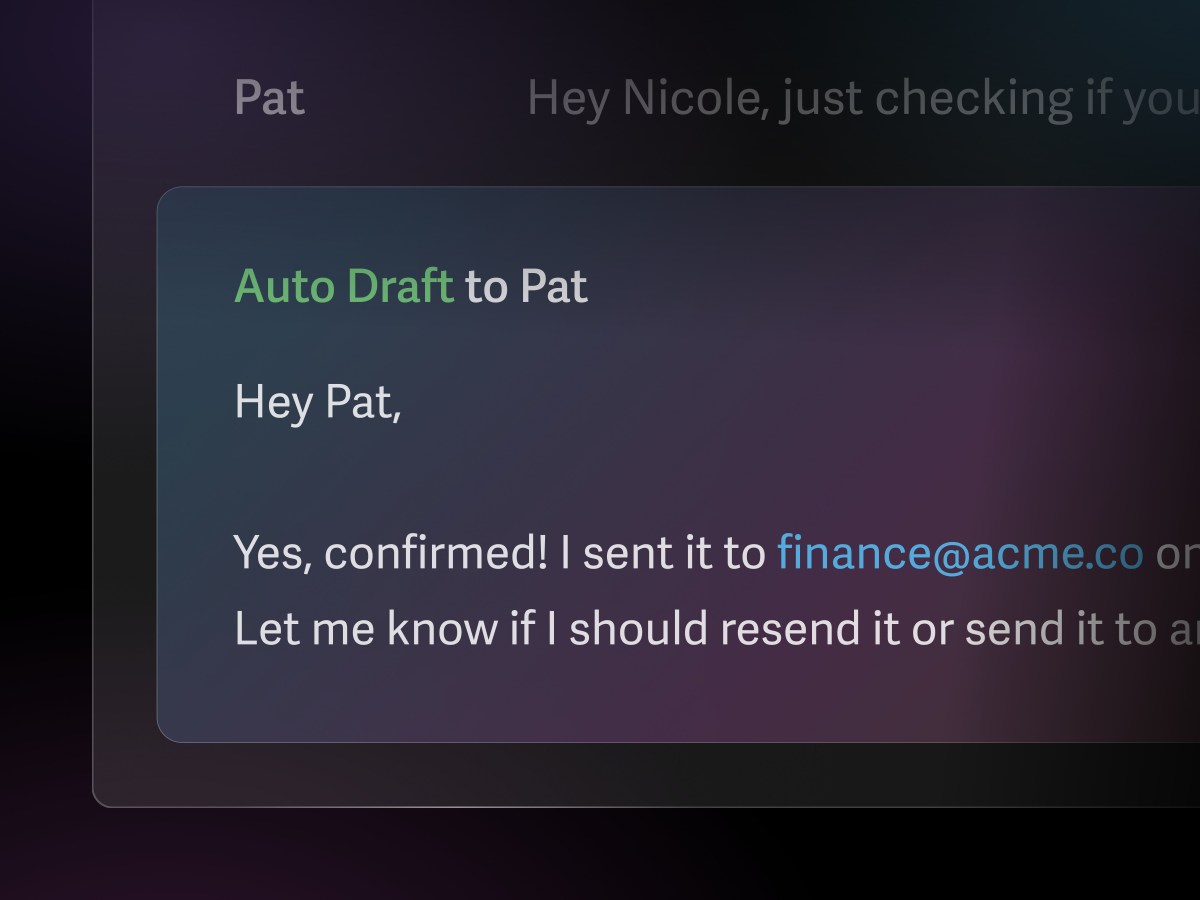
Superhuman, an AI-powered email client now owned by Grammarly, has launched a new auto-draft feature that generates email replies in your voice by analyzing your tone from past conversations and using models from Anthropic and OpenAI.
The feature proved practical enough that 60% of auto-drafted emails were sent without editing, addressing the long-standing problem of AI-generated emails sounding robotic and overly enthusiastic.
What happened
Email client Superhuman launched an improved auto-draft feature that uses frontier AI models from Anthropic and OpenAI to identify important emails and generate replies matching your tone. According to co-founder Rahul Vohra, 40% of auto-generated drafts were sent within one day, and 60% of those were sent without any manual editing.
Why it matters
Earlier AI email features like Superhuman's Instant replies sounded robotic and overly salesy, so users avoided them. This version learns from your writing style and generates three response variations, making it practical for people drowning in thousands of emails monthly—especially as AI is making it easier for others to send more email in the first place.
What to watch
Users can personalize the feature by heading to Settings > Personalization and adding details about themselves, their role, and files or links for context. The feature learns and improves over time; after Vohra rejected a midnight meeting suggestion, it later generated a draft declining similar timing automatically.
Ask the AI about this article →
Superhuman's challenge has always been the uncanny-valley problem of AI-generated email: it automates a task people do constantly, but when the output sounds off, it breaks trust and wastes time in editing. Previous features like Instant replies suffered from sounding like an overly enthusiastic sales bot, so adoption remained low despite the time-saving potential. The new version tackles this by anchoring drafts to the user's own writing style—analyzing tone from past conversations rather than generating generic corporate-speak. By offering three variations and learning from user rejections (Vohra's example of the midnight-meeting fix illustrates this), Superhuman shifts from a fire-and-forget automation to a collaborative drafting tool that improves with use. This matters because the email inbox is becoming a bottleneck precisely as AI makes it easier for others to send more email; Superhuman positions itself as the relief valve for people receiving thousands of messages monthly but who need more control than a fully automated system would allow.
For example, today's edition would include:
AI-summarized, only the topics you pick — one digest a day via Email, Slack, or Discord.
Free · takes 30 seconds · unsubscribe anytimeWhat is AIToday? →
Ask AI anything about this article. Q&As are published on this page for other readers too.

