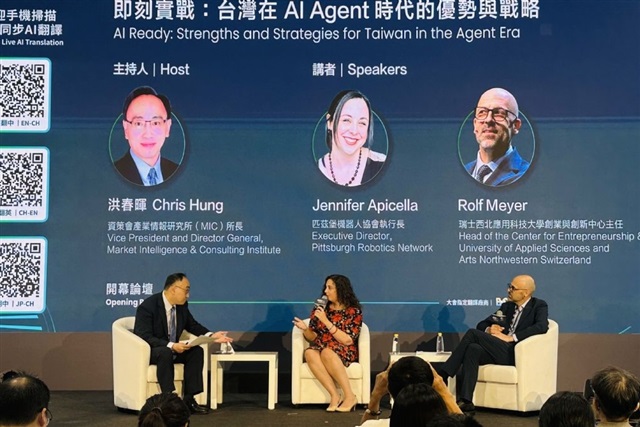
Industry experts from Pittsburgh and Switzerland are warning Taiwan that success in AI is no longer determined by hardware manufacturing prowess alone.
As artificial intelligence shifts toward agentic and physical applications—systems that act autonomously in the real world—the ability to seamlessly integrate hardware with software has become the new competitive frontier.
Taiwan's traditional dominance in chip and hardware production will need to be paired with software integration capabilities to remain relevant.
What happened
Industry observers say the competitive landscape for AI is shifting away from hardware manufacturing alone toward the integration of hardware and software, as AI moves toward agentic and physical applications.
Why it matters
Taiwan has built its global standing on advanced chip and hardware production, but the emerging focus on combining hardware with software integration suggests the island's traditional strength may no longer be sufficient to maintain competitive advantage in the AI era.
What to watch
The extent to which Taiwan's manufacturers and technology firms develop capabilities in software integration and agentic AI systems alongside their established hardware expertise.
Ask the AI about this article →
Taiwan's economy has long depended on its mastery of hardware manufacturing, particularly semiconductors and advanced electronics. The commentary from Pittsburgh and Switzerland observers reflects a broader recognition that the AI industry's center of gravity is moving beyond pure hardware capability. As AI systems become more autonomous and interact directly with the physical world—handling robotics, automation, and real-time decision-making—the integration layer between hardware and the software controlling it becomes critical to commercial success. This shift presents both a challenge and an opportunity for Taiwan: the island must either develop indigenous software integration expertise or risk seeing its hardware advantages diminished if international competitors capture the high-value software-hardware integration space.
For example, today's edition would include:
AI-summarized, only the topics you pick — one digest a day via Email, Slack, or Discord.
Free · takes 30 seconds · unsubscribe anytimeWhat is AIToday? →
Ask AI anything about this article. Q&As are published on this page for other readers too.
Israeli startup DataAgent Ltd
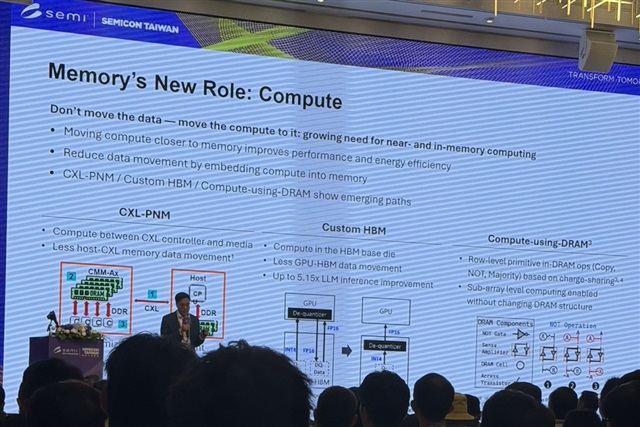
SK Hynix presented a custom HBM concept at SEMICON Taiwan 2026, where compute functions are placed in the base…
Nvidia reported earnings that were both remarkable and boring, reflecting its focus on avoiding a consolidated…

Anthropic has agreed to a $35bn cloud-computing contract with Lambda, a Nvidia-backed cloud provider

The Supreme Court of Japan has included about ¥60 million in its fiscal 2027 budget request for AI-related exp…
The Consumer Affairs Agency said Tuesday it will use generative AI to analyze about 900,000 annual consultatio…