Moonshot's Kimi K3 has reached the frontier of AI model performance, ranking fourth globally among 580 models according to Artificial Analysis, behind only Claude Opus 5, Fable 5, and GPT-5.6 Sol.
The company released not just the model weights but also a full 47-page technical report and code, revealing three key engineering innovations: a memory-efficient attention mechanism that cuts context storage from 104.6 GiB to 27.2 GiB, a load-balancing system for 896 experts per layer, and a specialized training runtime that created 51 million sandboxes with sub-200-millisecond checkpointing.
This open release allows the broader research community to understand how frontier-grade performance was achieved through architectural and infrastructure optimization.
What happened
Moonshot's Kimi K3 has been ranked fourth among 580 models by Artificial Analysis, behind only Claude Opus 5, Fable 5, and GPT-5.6 Sol, and the company released both model weights and a 47-page technical report with code.
Why it matters
The model achieves frontier performance through three specific engineering innovations: Kimi Delta Attention reduces memory use for a 1M-token context from 104.6 GiB to 27.2 GiB by replacing the KV cache in 69 of 93 layers with a 128×128 matrix per head; Quantile Balancing keeps 896 experts per layer evenly distributed (solving a problem where DeepSeek-V3's approach breaks); and AgentENV, a microVM runtime, created 51 million sandboxes with 133 ms checkpoints and 49 ms resumes during reinforcement learning training, allowing trajectory pauses while the model processes.
What to watch
The open release of weights, code, and technical documentation gives researchers and developers direct access to study how a frontier-ranked model achieved its performance through memory optimization and training infrastructure design.
Ask the AI about this article →
Kimi K3's rise to the frontier reflects a shift in how leading AI labs compete: rather than scale alone, the focus is now on engineering innovation in attention mechanisms, expert load balancing, and training infrastructure. The model's ranking as fourth globally places it in a tier that includes only the most advanced closed and open-weight systems, signaling that Moonshot has closed the gap with leading labs on core capability metrics.
The three technical innovations Moonshot chose to highlight in the report address distinct bottlenecks. Kimi Delta Attention solves the memory ceiling that emerges when scaling context windows — a critical constraint for long-form reasoning and document processing. Quantile Balancing addresses an issue that existing approaches like DeepSeek-V3's fixed-step method cannot handle at the expert counts Kimi K3 requires. AgentENV's microVM approach to training suggests Moonshot has invested heavily in the infrastructure layer, enabling faster iteration and more efficient exploration during reinforcement learning — a phase known to be compute-intensive. The decision to publish the technical report, code, and weights together signals confidence in the approach and may position Kimi K3 as a reference point for future open-weight development.
For example, today's edition would include:
AI-summarized, only the topics you pick — one digest a day via Email, Slack, or Discord.
Free · takes 30 seconds · unsubscribe anytimeWhat is AIToday? →
Ask AI anything about this article. Q&As are published on this page for other readers too.
Israeli startup DataAgent Ltd
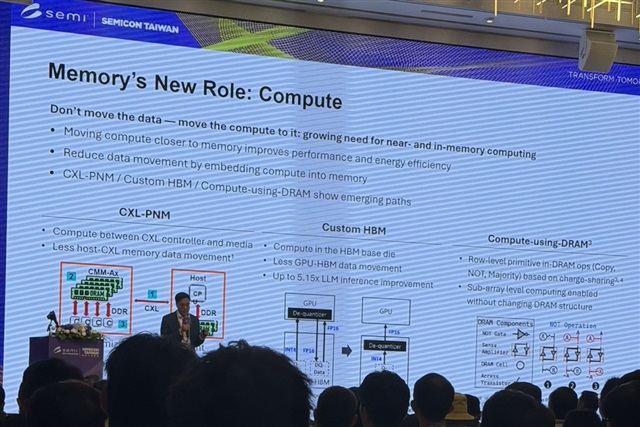
SK Hynix presented a custom HBM concept at SEMICON Taiwan 2026, where compute functions are placed in the base…
Nvidia reported earnings that were both remarkable and boring, reflecting its focus on avoiding a consolidated…

Anthropic has agreed to a $35bn cloud-computing contract with Lambda, a Nvidia-backed cloud provider

The Consumer Affairs Agency said Tuesday it will use generative AI to analyze about 900,000 annual consultatio…

The Supreme Court of Japan has included about ¥60 million in its fiscal 2027 budget request for AI-related exp…