
Qualcomm has tumbled 35% due to smartphone weakness—particularly the planned exit from supplying Apple modems by 2027 and near-term handset inventory corrections—but the stock now trades at only 16x forward earnings on a shrinking but stabilizing mobile business.
The deeper opportunity lies in AI data-center infrastructure, where Qualcomm's decades of low-power chip design expertise directly addresses the industry's most pressing constraint: power availability and cooling efficiency.
The company is targeting more than $15 billion in annual data-center revenue by fiscal 2029 and has already won commitments from HUMAIN and Meta, positioning it as a potential second growth engine.
What happened
Qualcomm's stock has fallen 35% from May 2026 highs following weak quarterly results, with handset revenue dropping 20% last quarter as smartphone makers cut chip purchases and Apple plans to supply none of Qualcomm's modems by 2027 (down from around 20% expected in 2026). Adjusted earnings fell to $2.21 per share, about 20% year over year, with Q4 guidance pointing to further softness.
Why it matters
The handset pressure is temporary and already priced into the stock at roughly 16x forward earnings. Qualcomm's two-decade expertise in low-power, high-efficiency chip design positions it for AI data-center infrastructure, where power constraints are becoming the main bottleneck—securing grid connections can take 36 to 84 months while data-center demand grows. The company is shifting toward inference (running trained models in production), which could account for roughly two-thirds of AI compute by 2029, directly leveraging Qualcomm's strengths in performance-per-watt optimization.
What to watch
Qualcomm is targeting more than $15 billion in annual data-center revenue by fiscal 2029. The company has secured a marquee customer agreement with HUMAIN for 200 MW of Qualcomm AI200 and AI250 infrastructure starting in 2026, and Meta has signed a multi-generation agreement to use Qualcomm's Oryon-based Dragonfly C1000 server CPUs, with first production expected in 2028. The $2.4 billion Alphawave acquisition (completed) strengthens custom silicon and connectivity capabilities to compete with Broadcom and Marvell in AI infrastructure.
Ask the AI about this article →
Qualcomm's near-term troubles in handset chips are real but cyclical, while the company's positioning in AI infrastructure reflects a structural shift in semiconductor demand. The smartphone weakness stems from two sources: temporary memory supply constraints squeezing handset OEMs' chip purchases, and a permanent structural loss as Apple transitions to modems built in-house. Both pressures are already visible in the valuation—the stock trades at only 16x forward earnings despite projections of $10.20 per share in fiscal 2027, down slightly from $10.50 in fiscal 2026. Once the Apple transition completes by fiscal 2027, the handset comparisons stabilize on a smaller but steadier base. Meanwhile, the company's legacy cash-generation engine (the smartphone and licensing business) produced close to $10 billion in operating free cash flow, providing a cushion while the AI business develops. The opportunity that follows taps into Qualcomm's core strength: decades of optimization for performance per watt, the metric now constraining AI data-center expansion more than pure compute. Power infrastructure is the bottleneck—securing grid connections in key U.S. markets takes 36 to 84 months, and more than 2,000 GW of generation and storage capacity sits in the interconnection queue. Inference, the step of running trained models in production (as opposed to training them), is projected to account for roughly two-thirds of AI compute by 2029, and agentic AI systems that execute tasks autonomously could further drive demand for efficient inference hardware. Qualcomm is already moving: it has announced the AI200, AI250, and AI300 systems optimized for power efficiency and total cost of ownership, secured a 200 MW commitment from HUMAIN for 2026 onward, and obtained a multi-generation agreement from Meta for server CPUs based on the Oryon architecture acquired from Nuvia.
For example, today's edition would include:
AI-summarized, only the topics you pick — one digest a day via Email, Slack, or Discord.
Free · takes 30 seconds · unsubscribe anytimeWhat is AIToday? →
Ask AI anything about this article. Q&As are published on this page for other readers too.
Israeli startup DataAgent Ltd
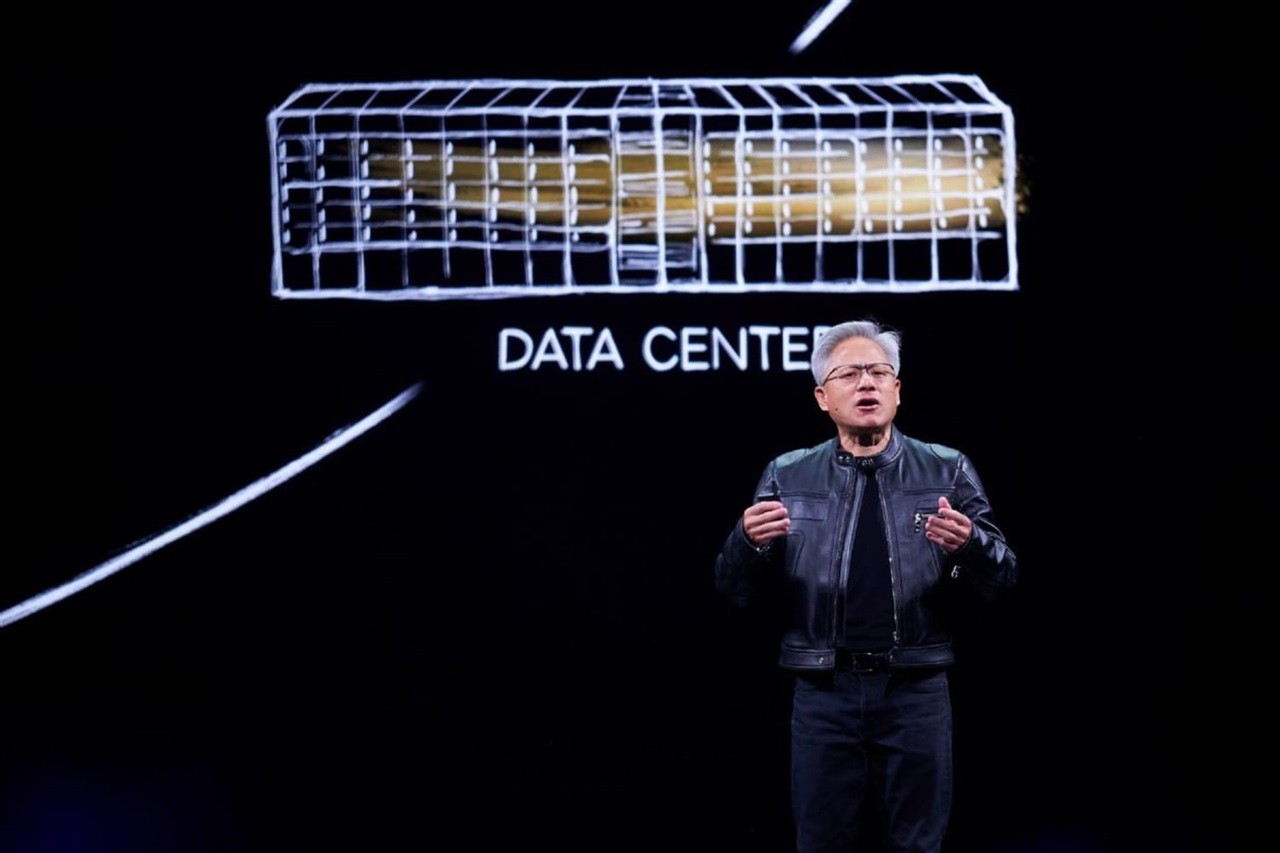
Taoyuan is positioning itself as a northern hub for AI data centers (AIDC), citing the Tatan area and an LNG c…
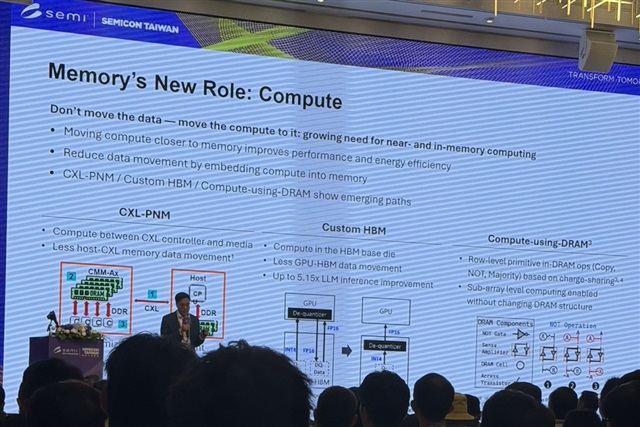
SK Hynix presented a custom HBM concept at SEMICON Taiwan 2026, where compute functions are placed in the base…
The U.S. Department of Defense announced on August 31 that it has deployed ChatGPT Mil, a customized version o…

Nvidia reported earnings that were both remarkable and boring, reflecting its focus on avoiding a consolidated…

Anthropic has agreed to a $35bn cloud-computing contract with Lambda, a Nvidia-backed cloud provider