
Analog Devices delivered stronger profit and revenue results fueled by accelerating demand from AI data centers for its semiconductor products.
The surge reflects the ongoing infrastructure investment required to support the rapid expansion of AI services and generative AI applications.
What happened
Analog Devices reported higher profit and revenue, driven by surging demand from AI data centers for its semiconductors.
Why it matters
AI infrastructure buildout is accelerating demand for specialized chips that Analog Devices manufactures, signaling strong growth in the infrastructure needed to power generative AI applications.
What to watch
The company's ability to sustain this momentum as data center operators continue scaling AI compute capacity.
Ask the AI about this article →
Analog Devices' profit and revenue gains underscore the broader wave of infrastructure investment flowing into AI data centers. As companies expand their generative AI capabilities, they require specialized semiconductor components that Analog Devices manufactures. The company's results are a bellwether of the capital intensity of AI infrastructure buildout, showing that demand for semiconductors critical to data center operations remains robust.
For example, today's edition would include:
AI-summarized, only the topics you pick — one digest a day via Email, Slack, or Discord.
Free · takes 30 seconds · unsubscribe anytimeWhat is AIToday? →
Ask AI anything about this article. Q&As are published on this page for other readers too.
Israeli startup DataAgent Ltd

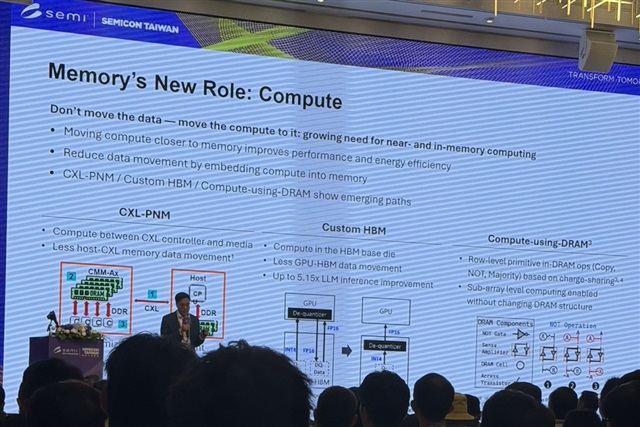
SK Hynix presented a custom HBM concept at SEMICON Taiwan 2026, where compute functions are placed in the base…
Taoyuan is positioning itself as a northern hub for AI data centers (AIDC), citing the Tatan area and an LNG c…
The U.S. Department of Defense announced on August 31 that it has deployed ChatGPT Mil, a customized version o…

Nvidia reported earnings that were both remarkable and boring, reflecting its focus on avoiding a consolidated…

Anthropic has agreed to a $35bn cloud-computing contract with Lambda, a Nvidia-backed cloud provider