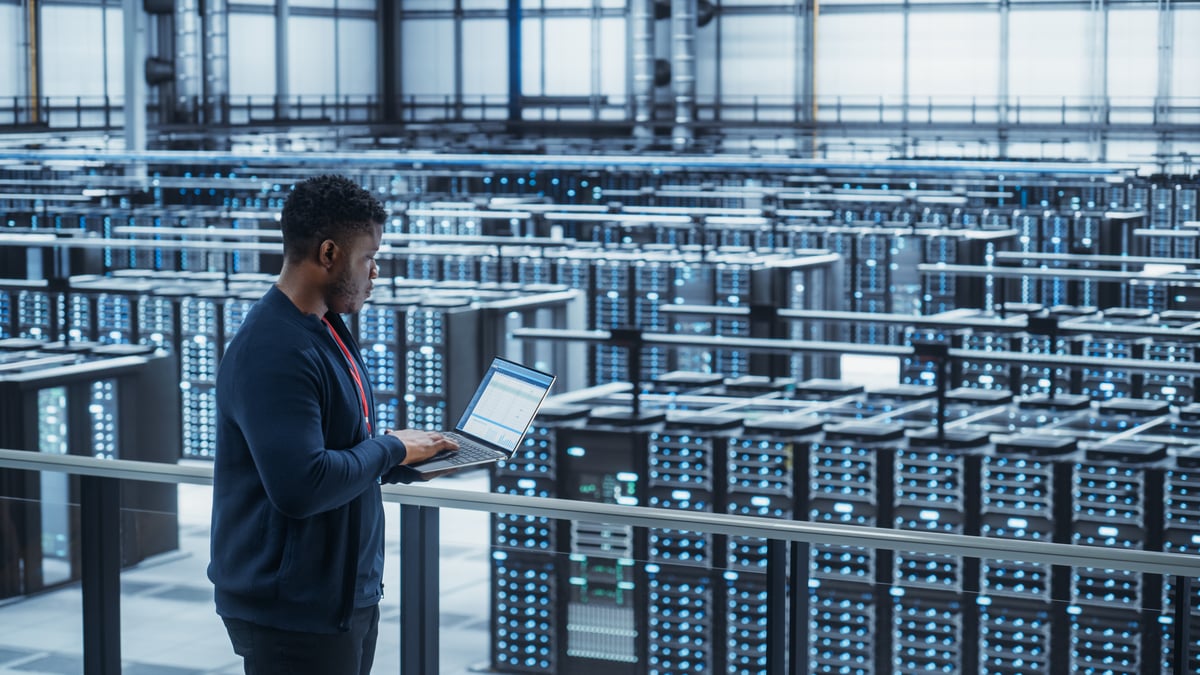
CoreWeave and Nebius, cloud providers for AI workloads, surged in 2026. Nebius gained 196%, CoreWeave 30%.
Analysts project Nebius 544% revenue growth through 2026, then 250% in 2027. CoreWeave trails at 151% and 105%.
Both depend on rising AI spending; if it slows, they face trouble.
What happened
CoreWeave and Nebius, both neocloud providers offering computing capacity tailored for AI workloads, have risen sharply in 2026—CoreWeave up about 30%, Nebius nearly tripling at a 196% gain. Wall Street projects Nebius will achieve 544% revenue growth for the rest of 2026 and 250% for 2027, while CoreWeave is expected to grow 151% in 2026 and 105% in 2027.
Why it matters
Both companies depend entirely on sustained AI spending to survive, since they operate on a growth-at-all-costs model with no current profitability. Their largest clients—Microsoft and Meta Platforms—rent capacity because their own computing infrastructure cannot meet demand, though Meta's exploration of a cloud division initially spooked investors until CEO Mark Zuckerberg clarified the company is still buying compute at a premium.
What to watch
The AI build-out is not expected to wrap up until at least 2030, according to analyst expectations cited in the article. If demand for AI computing capacity does not continue to rise, both companies' business models could be in jeopardy; however, if the expansion continues at its current pace, both stocks could deliver solid returns.
Ask the AI about this article →
CoreWeave and Nebius represent a bet on sustained hyperscaler demand for external AI computing capacity. Both companies' dependency on two major clients—Microsoft and Meta—initially appeared risky when Meta signaled it might launch its own cloud division, but Meta CEO Mark Zuckerberg's August statement that the company is "getting a lot of offers for compute at a significant premium over what we paid for it" reassured investors that the relationship would continue. The article notes that even if Meta were to exit, the computing capacity likely would not go unused, reflecting broader market confidence in AI infrastructure expansion.
The divergence in analyst projections—Nebius at 544% revenue growth versus CoreWeave at 151% for 2026—suggests the market perceives different scaling trajectories, though both figures are contingent on the AI build-out continuing. Since neither company is profitable, valuation relies on price-to-sales ratios relative to forward revenue, where Nebius trades at a premium despite its higher growth rate. The analyst commentary that the AI build-out is expected to continue through at least 2030 frames both stocks as longer-term plays, dependent on that timeline holding.
AI-summarized, only the topics you pick — one digest a day via Email, Slack, or Discord.
Free · takes 30 seconds · unsubscribe anytime
Ask AI anything about this article. Q&As are published on this page for other readers too.
Nvidia has taken a minority stake in Cloverleaf Infrastructure, a company that has helped develop more than se…
Michael Burry issued a Substack warning Friday that the AI data center boom mirrors 2008's structural excesses…

Synopsys has beaten earnings expectations in two consecutive quarters—Q1 and Q2—and raised full-year 2026 guid…

A workplace researcher who has studied four-day workweeks for seven years argues that despite AI's productivit…
Panasonic Avionics Corporation built an agentic AI system on AWS using Amazon Bedrock, Amazon SageMaker, and A…

AWS introduced the Agentic Data Operations Platform (ADOP), a reference architecture built on Amazon Bedrock t…