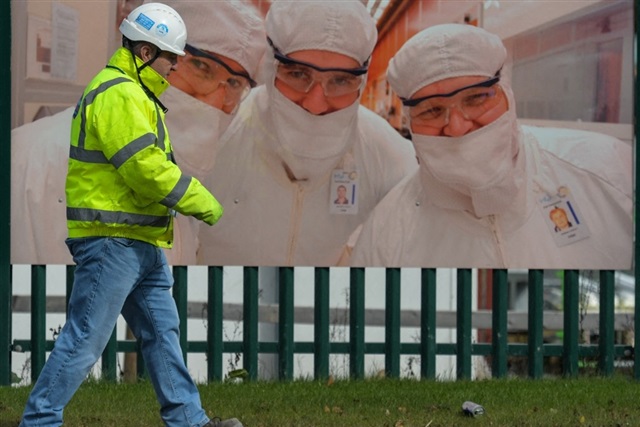
Intel is investing EUR5 billion (US$5.7 billion(約9100億円)) to expand its chip manufacturing campus in Leixlip, Ireland, establishing it as the anchor of its European production base. The move comes about a year after Intel scrapped larger fab projects in Germany and Poland, signaling a shift toward concentration rather than geographic diversification in Europe.
Summaries like this, in your inbox every morning.
Sign up free →What happened
Intel is investing EUR5 billion (US$5.7 billion(約9100億円)) to expand its Leixlip campus in Ireland, consolidating its European manufacturing base there. This comes roughly a year after Intel abandoned larger fab projects in Germany and Poland.
Why it matters
Intel's decision reflects a strategic pivot toward concentrating its European chipmaking in a single, established location rather than spreading investment across multiple countries. For Ireland and the EU, this signals continued commitment to semiconductor production on the continent, though on a narrower geographic footprint than originally planned.
What to watch
The investment size and timing relative to Intel's prior European strategy announcements; whether this consolidation approach influences broader EU semiconductor policy and foreign investment patterns.
Intel's EUR5 billion commitment to expand Leixlip represents a significant recalibration of its European semiconductor strategy. The company had previously announced more ambitious plans for Germany and Poland, but those projects did not proceed. By consolidating on its existing Irish site, Intel is choosing a proven location with established infrastructure and regulatory relationships over pursuing expansion across multiple countries. This move may reflect both cost discipline in the face of global chip market dynamics and the practical advantages of deepening investment in a single, operating facility rather than building greenfield plants in new jurisdictions. For Ireland, the decision reinforces its position as a major semiconductor manufacturing hub in Europe, while for the broader EU, it suggests that large-scale foreign chipmaking investment may concentrate in fewer, strategically advantaged locations rather than distribute evenly across member states seeking to build domestic capacity.
No discussion yet for this article
Get curated AI news from 200+ sources delivered daily to your inbox. Free to use.
Get Started FreeFree · takes 30 seconds · unsubscribe anytime
1 minute a day. The AI essentials.
200+ sources · Email / LINE / Slack
