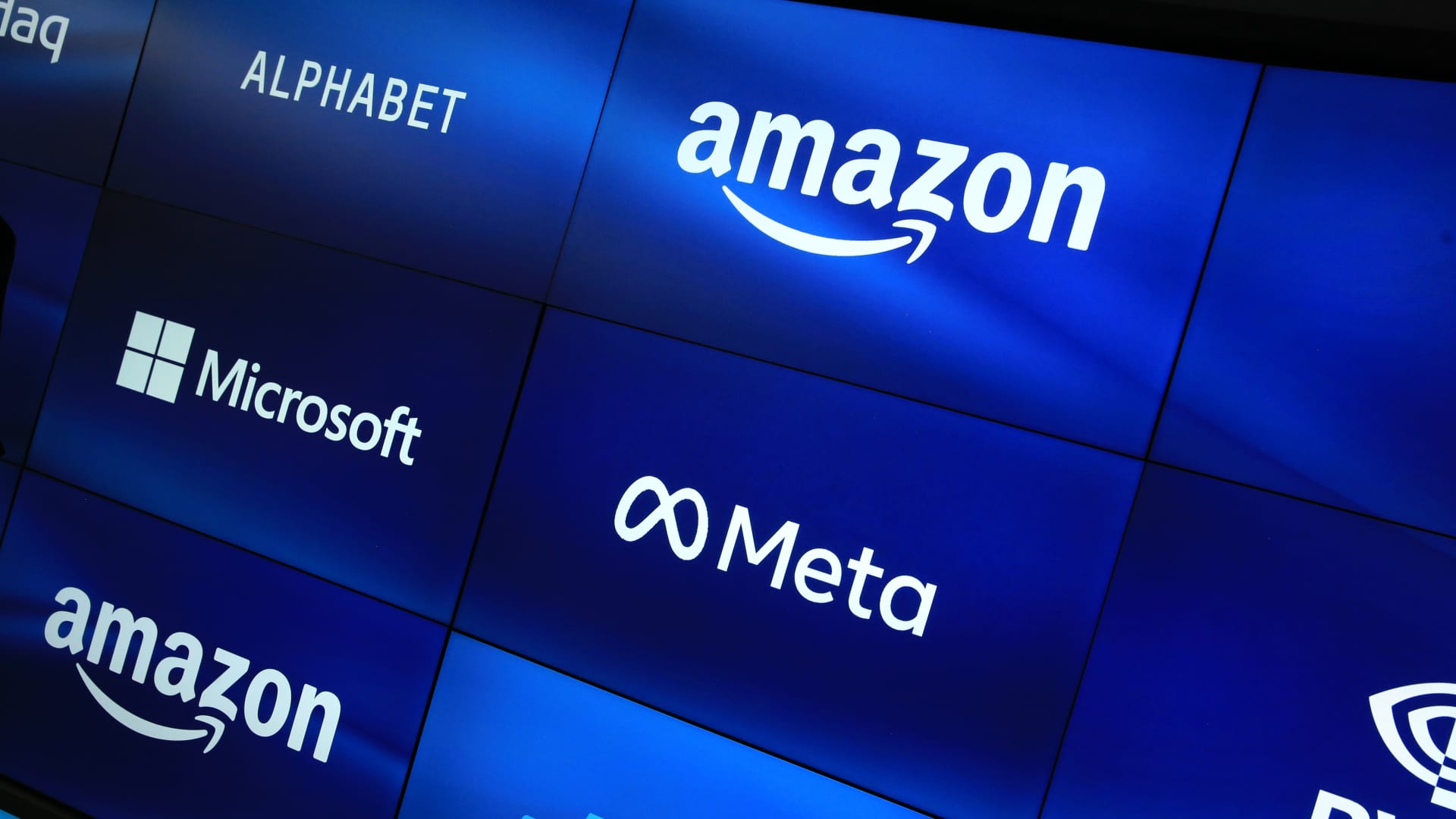
Moody's Ratings warned that unprecedented AI infrastructure spending—projected to reach $1 trillion(約160兆円) annually—is fundamentally reshaping the financial profiles of major tech companies by forcing them to shift from asset-light software models to capital-intensive hardware-dependent operations. While giants like Microsoft, Alphabet, Amazon, and Meta maintain strong balance sheets and are unlikely to face immediate credit downgrades, the rating agency flagged that debt has reached $460 billion(約74兆円) across six major hyperscalers and long-term data center lease commitments have surged to $1.2 trillion(約190兆円), creating structural risks that investors should monitor as companies race to prove adequate returns on their massive AI investments.
Summaries like this, in your inbox every morning.
Sign up free →What happened
Moody's Ratings released a research note warning that the race to build AI infrastructure at a trillion-dollar annual clip is eroding free cash flow and increasing balance-sheet risk at hyperscalers including Microsoft, Amazon, Alphabet, Meta, Oracle, and CoreWeave. The ratings firm projects capital expenditures will reach $785 billion(約130兆円) in 2026 before hitting about $1 trillion(約160兆円) in the following year.
Why it matters
Tech companies have historically relied on asset-light business models centered on software and cloud services, which required modest capital investment and generated strong profit margins. The shift to asset-heavy AI infrastructure—requiring expensive data centers, servers, and chips—forces even the world's most cash-rich corporations to lean heavily on debt, stock sales, and off-balance-sheet financing. Direct debt across the six hyperscalers has reached approximately $460 billion(約74兆円), and lease commitments have ballooned to $1.2 trillion(約190兆円), with more than $820 billion(約130兆円) from leases that haven't started yet.
What to watch
Moody's noted that Microsoft, Alphabet, Amazon, and Meta retain among the strongest corporate balance sheets in the world and are unlikely to face imminent rating threats, but Oracle (rated Baa2 with negative outlook, two notches above junk status) and CoreWeave (Ba3 high-yield rating) face more immediate pressure. The firm warned that overlapping relationships—with hyperscalers investing billions into AI labs like OpenAI and Anthropic, which in turn spend heavily on the same companies' cloud computing—create structural circularity that heightens risk across the sector.
In a research note released this week, Moody's Ratings warned that the race to build artificial intelligence infrastructure at a trillion-dollar annual clip is fundamentally reshaping the financial structures of the world's largest technology companies. The shift is forcing even the most cash-rich corporations—including Microsoft, Amazon, Alphabet, Meta, Oracle, and CoreWeave—to lean heavily on debt, stock sales, and off-balance-sheet financing to fund their AI ambitions.
The core problem is a departure from decades of Silicon Valley success. Traditional software and cloud-based businesses were "asset-light," requiring modest capital investment while generating fat profit margins and strong fortress balance sheets. Generative AI demands the opposite: massive physical footprint. "The transition from asset-light to asset-heavy models requires unprecedented levels of investment and capital raising," Moody's stated in its Wednesday report. The rating agency projects that capital expenditures across the sector will reach $785 billion(約130兆円) in 2026 before hitting about $1 trillion(約160兆円) the following year.
To finance this expansion, tech giants are increasingly turning to Wall Street. Direct debt across the six hyperscalers tracked by Moody's has reached approximately $460 billion(約74兆円). Alphabet, the Google parent company, exemplified the trend by announcing an $85 billion(約14兆円) equity sale last month. More creatively, hyperscalers are avoiding traditional balance-sheet debt by leasing data centers under long-term agreements. These lease commitments have ballooned to $1.2 trillion(約190兆円) across the group, with more than $820 billion(約130兆円) representing leases for data centers that are still being built. Although these obligations don't show up as traditional debt on financial statements, Moody's considers them debt-equivalent liabilities that will bind companies to significant rent payments over time.
Moody's also flagged a structural risk embedded in the AI boom: circular dependencies among the largest players. Hyperscalers have invested billions into pre-IPO AI labs including OpenAI and Anthropic, which in turn spend heavily on cloud computing from those same companies. This creates what Moody's called a "circular AI ecosystem," where many of the industry's biggest companies are increasingly dependent on the same AI customers and assumptions about future demand. The overlapping relationships heighten risk because they concentrate leverage across the sector.
Despite the warnings, Moody's acknowledged that Microsoft, Alphabet, Amazon, and Meta retain among the strongest corporate balance sheets in the world, making it unlikely that their investment-grade ratings face imminent threat. The immediate pressure is concentrated on lower-rated entities. Oracle carries a Baa2 rating with negative outlook, placing it just two notches above junk status. CoreWeave, a specialized AI cloud provider, operates in the high-yield market with a Ba3 rating and relies on complex private debt structures to finance its GPU hardware fleets. Moody's noted that despite the spending boom, the tech giants have significant strengths: demand for AI computing remains robust, cloud businesses continue to grow, and hyperscalers have signed hundreds of billions of dollars in long-term customer contracts that provide predictable revenue. Still, the rating agency cautioned that the tech industry's financial profile is undergoing a structural change unlike anything in the cloud era. "Investors will increasingly focus on these companies' ability to realize an adequate return on investment," Moody's said.
Moody's analysis reveals a fundamental break from the financial model that built Silicon Valley's dominance over the past two decades. For decades, tech companies thrived on a capital-efficient formula: software and cloud services required minimal physical infrastructure, enabling massive profit margins and fortress balance sheets funded almost entirely by operating cash flow. Generative AI upends that formula. The technology demands vast warehouses filled with expensive, energy-hungry servers and chips—a transition the rating agency characterizes as moving from "asset-light to asset-heavy models" requiring "unprecedented levels of investment."
This shift is forcing even the world's most cash-rich corporations to reshape their capital structures. Alphabet announced an $85 billion(約14兆円) equity sale last month; across the sector, debt has accumulated to $460 billion(約74兆円). More striking still, hyperscalers are turning to off-balance-sheet financing through long-term data center leases—$1.2 trillion(約190兆円) in commitments, with $820 billion(約130兆円) still representing leases that haven't commenced. While these obligations don't appear as traditional debt, Moody's treats them as debt-equivalent liabilities that will impose significant rent burdens over time.
Moody's also identified a structural circularity that amplifies risk: hyperscalers like Microsoft and Amazon have invested billions into pre-IPO AI labs such as OpenAI and Anthropic, which in turn spend heavily on those same companies' cloud computing services. This circular dependency means the industry's largest players are increasingly reliant on the same customers and assumptions about future demand, potentially concentrating risk. However, the rating agency acknowledged that robust demand for AI computing, growing cloud businesses, and hundreds of billions of dollars in long-term customer contracts help offset these pressures—for now. The key question investors must monitor, Moody's suggested, is whether these companies will ultimately achieve adequate returns on their unprecedented capital deployment.
AI-summarized, only the topics you pick — one digest a day via Email, Slack, or Discord.
Free · takes 30 seconds · unsubscribe anytime
No comments yet. Be the first to share your thoughts!
Log in to join the discussion




Get curated AI news from 200+ sources delivered daily to your inbox. Free to use.
Get Started FreeFree · takes 30 seconds · unsubscribe anytime
