
Microsoft's Southern Europe leader argues that AI leadership in the region will be decided by workforce skills and organizational transformation, not technology alone. Greece ranks first in Gen Z AI adoption across Europe, and Microsoft has trained 100,000 people through its skilling initiative.
However, a transformation paradox—where 65% fear being left behind but only 13% believe their employer rewards risk-taking—threatens adoption.
Major infrastructure investments, including Microsoft's €1 billion data center complex in Eastern Attica and competing hyperscale projects worth up to €770 million, are positioning Southern Europe as a digital hub.
What happened
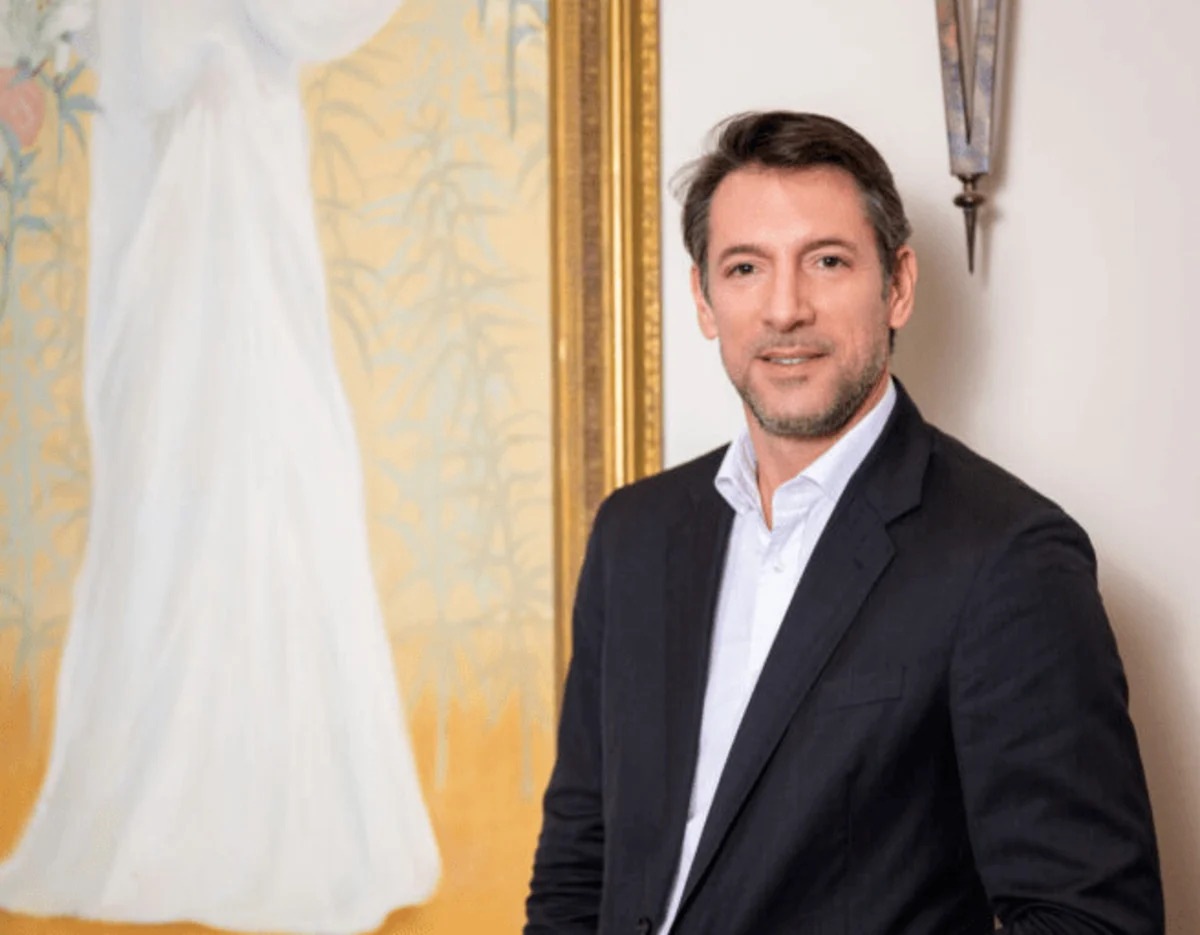
Charles Calestroupat, Microsoft's Vice President for Southern Europe, argues that the region's AI future will be determined not by the power of AI models themselves, but by how well organizations and countries develop the skills and infrastructure to deploy them at scale. He notes that Greece ranks 1st in Gen Z's use of AI in Europe, and Microsoft has trained 100,000 people through its GR for GRowth initiative.
Why it matters
A skills gap is widening: 67% of executives report familiarity with advanced AI tools, but only 40% of employees do. Additionally, 65% of people fear being left behind by AI transformation, while only 13% believe their organization will value a learn-test-fail mindset. For Southern Europe's SME-heavy economy, the transformation paradox—fear of failure paired with reluctance to take risks—poses a real obstacle to adopting AI at scale.
What to watch
Microsoft is upgrading Athens into a regional hub managing 12 markets (previously Greece, Cyprus, and Malta only), under Yanna Andronopoulou's leadership. An investment of €1 billion is underway for three data centers in Eastern Attica forming Azure Cloud Region Greece Central, Microsoft's first integrated cloud region in the country. Competing investments include EDGNEX's AI-ready facility (PPC Group and DAMAC joint venture), Digital Realty's €400 million campus across Attica and Crete, and Apto's Data Center Olive hyperscale project worth up to €770 million.
Charles Calestroupat, Microsoft's Vice President for Southern Europe responsible for 17 markets, articulated a fundamental shift in how the region should think about artificial intelligence. The second act of AI, he told Fortune Greece, will not be won by those with the most powerful models, but by those who can turn technology into measurable productivity. After nearly two years of headline-grabbing AI demonstrations, the global economy is entering a new phase where the question is no longer who has the best AI tool, but which organizations and countries possess the skills, leadership, and infrastructure to deploy it at scale and become regional leaders in frontier AI.
Greece, Portugal, Italy, and other Southern European markets are attempting this transition—moving from passive AI tool adoption to building an ecosystem that weaves together human capital, universities, startups, the public sector, and modern digital infrastructure. Calestroupat sees Greece specifically as an innovation hub with several necessary ingredients already in place: a maturing innovation ecosystem, public digital initiatives such as mAigov, growing cloud and data center investments, and crucially, people with the right skills. To support this, Microsoft's GR for GRowth initiative has already trained 100,000 people—professionals in public and private sectors, students, and the unemployed—in digital skills. Notably, Greece ranks 1st in Europe for Gen Z's use of AI, yet Calestroupat emphasizes that success will hinge on whether large organizations can redesign how they work, invest in their people's capabilities, and build the trust necessary for AI to generate real business value.
The Work Trend Index Report for 2025 reveals both opportunity and risk. Globally, 46% of organizations already automate workflows through AI agents, and 82% of leaders plan to integrate them within 12–18 months. Yet a troubling hierarchical gap emerges: 67% of executives claim familiarity with advanced AI tools, compared to only 40% of employees. Calestroupat frames this as a critical need for equal training and access. For Southern Europe specifically, the integration of AI agents is an opportunity to narrow the productivity gap—but only by moving beyond experimentation to systematic use, particularly for frontline workers. The path forward requires structural reskilling, transforming employees into managers of autonomous digital assistants.
Calestroupat describes a three-phase evolution: first, being assisted by AI to complete individual tasks; second, using agents to accomplish specific end-to-end tasks; and third, creating teams of agents that remain under human control and management. This final phase, he argues, is the best way to create company-level value. Successful Frontier Firms follow a similar pattern: they redesign their work processes to accommodate AI rather than simply applying AI to old processes, focus AI deployment on core business priorities to ensure tangible returns, and establish robust data governance covering privacy, security, data protection, and data quality. Success, he stresses, means measuring tangible business outcomes and beginning with a clear vision and top-down strategy before focusing on top priorities with solid AI governance and data protection compliance.
Yet obstacles remain. A transformation paradox grips Europe: 65% of people fear being left behind by AI transformation, yet 45% prefer staying in a safe zone rather than risking failure, and only 13% believe their organization values a learn-test-fail mentality. Calestroupat argues that building cultures that accelerate learning and foster a transformation mindset is essential. The paradox traces back to company structures and Southern Europe's SME-dominated market. Some SMEs search unsuccessfully for specific skills; in others, demand for new capabilities remains low. Labor market data from Intellectica's Skills Demand-Supply Intensity Index reveals that Greece's largest skills shortages lie in Cloud & DevOps, cybersecurity, software engineering, and AI. Demand for AI skills remains lower than in other European markets like Portugal and Cyprus—a reflection of lower AI adoption by Greek companies—but Intellectica notes this lag could be reframed as an advantage, giving workers and organizations time to invest in upskilling before demand surges, especially with broader ecosystem support.
Paralleling these human-capital efforts is a massive infrastructure buildout. Athens is being elevated into a central administrative hub for all of Southern Europe. Microsoft's Greek office, previously managing Greece, Cyprus, and Malta, now oversees 12 markets under Yanna Andronopoulou's leadership, including the entire Adriatic region and Bulgaria. Most significantly, an investment of €1 billion is underway for three data centers in Eastern Attica, creating Azure Cloud Region Greece Central—Microsoft's first integrated cloud region in the country. This move is one of the strongest signals that Southern Europe is moving toward a new digital infrastructure map. The region's geography, energy infrastructure, and access to international telecommunications networks are creating conditions for a new digital corridor drawing investments globally. EDGNEX Data Centers, a joint venture of PPC Group and the UAE's DAMAC, is building an AI-ready facility. Digital Realty has already created Greece's largest data center campus, with more than €400 million invested across four facilities in Attica and Crete, positioning Greece as a strategic hub connecting Europe with the Eastern Mediterranean, Asia, and North Africa using exclusively renewable energy. Apto, an investment vehicle of Pimco, in collaboration with Dromeus Capital, is planning the Data Center Olive hyperscale project, valued at up to €770 million, which will add significant computing power over the next decade. Collectively, these developments—organizational transformation into Frontier Firms, structural reskilling of employees to safely guide AI tools, and sustained local data center investment—are enabling Southern Europe to move from AI ambition to AI execution, turning frontier transformation theory into direct business action.
The article frames AI's next phase as moving from tool competition to execution competence. After nearly two years of AI demonstrations and large language model discussions, the focus has shifted to which organizations and countries can actually deploy AI at scale—a challenge that hinges on workforce capability rather than model sophistication. Calestroupat's argument is grounded in concrete data: Greece's leadership in Gen Z AI adoption stands alongside a visible gap between executive and employee familiarity with advanced tools (67% vs. 40%), which he suggests reflects both opportunity and risk.
Southern Europe's structural makeup—dominated by SMEs with lower AI adoption rates—creates what the article identifies as a transformation paradox. The data is stark: 65% of workers fear being left behind, 45% prefer staying in a safe zone rather than risking failure, yet only 13% believe their organization rewards a learn-test-fail mentality. This cultural resistance, paired with real skill shortages in cloud infrastructure, cybersecurity, and AI roles, threatens the region's transition to what Microsoft calls "Frontier Firms"—organizations that redesign their core processes rather than retrofitting AI onto legacy workflows.
Meanwhile, infrastructure investment is accelerating. Microsoft's elevation of Athens to a 12-market regional hub (from managing three markets) and its €1 billion data center commitment signal institutional confidence. But Microsoft is not alone: Digital Realty has invested over €400 million, EDGNEX (a PPC-DAMAC joint venture) is building an AI-ready facility, and Apto is planning a €770 million hyperscale project. Together, these investments are creating the physical and computational backbone for Southern Europe to shift from "AI ambition to AI execution," as the article puts it—but only if the skills and organizational culture keep pace.
AI-summarized, only the topics you pick — one digest a day via Email, Slack, or Discord.
Free · takes 30 seconds · unsubscribe anytime
Ask AI anything about this article. Q&As are published on this page for other readers too.
Apple is taking a focused approach to AI by integrating Apple Intelligence into existing products rather than…

Nvidia, Micron, Taiwan Semiconductor, Broadcom, and AMD have all posted gains of 300% or more over the past th…

Newsmax reported its first profitable quarter as a public company, with net income of US$2.9 million, alongsid…

Microsoft's Vice President for Southern Europe, Charles Calestroupat, told Fortune Greece that the region—Gree…
OpenAI dissolved its Preparedness team at the end of July, which had evaluated whether the company's AI models…

Juliana Chyzhova, a former CMO with a 65-person team, stepped down from management to work solo as founding ma…

The AI news that matters, in one minute each morning.
Sign up free