What happened
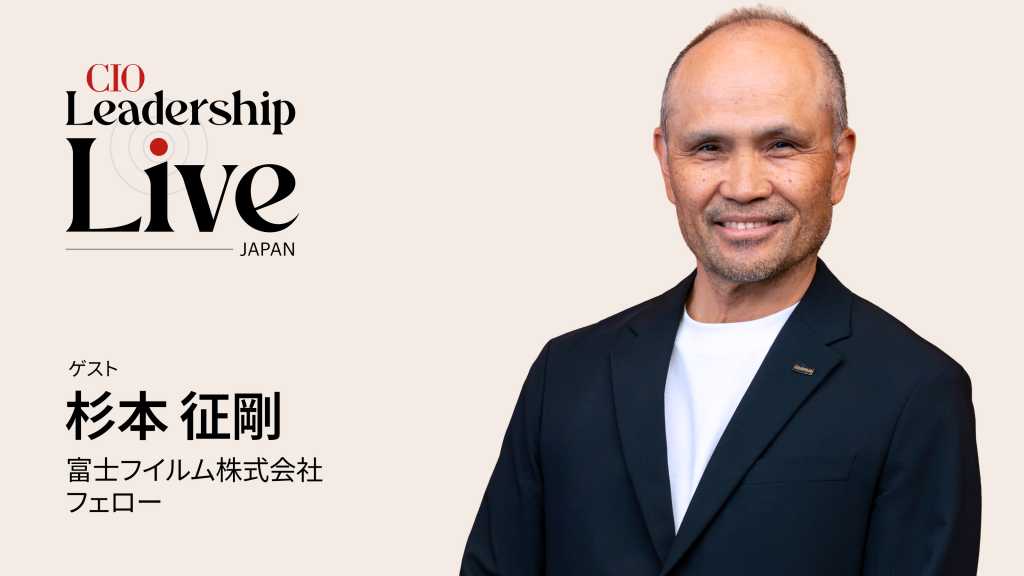
Fujifilm Holdings CDO Seigo Sugimoto described the AI-era CDO role as building the company's "OS", after rolling out a shared platform, guidelines and training so all employees could use AI safely.
Why it matters
Sugimoto says the payoff is visible in work like meeting summaries and information gathering, with employees now developing and sharing their own AI agents — a sign governance-first rollouts can turn staff into builders, not just users.
What to watch
The test is whether his "translation, connection and discernment" skills keep the company from chasing the AI boom, and whether the data-asset, security, AI governance and trust pillars hold as the group pushes group-wide change.
WHO IT HITSChief digital, information and security officers at large Japanese groups weighing how to roll out AI across a whole workforce without losing control. Sugimoto's account points to shared platforms, guidelines and training as the foundation before employees build their own AI agents.
Ask the AI about this article →
Summaries like this, in your inbox every morning.
Sugimoto's path to the CDO seat runs through information engineering: he joined in 1989 and has worked consistently on system development and AI research, and he now carries the CIO and CISO roles alongside the CDO title while driving change across the group. One effort that illustrates his approach is the common platform built to merge the technology foundations of Fujifilm and Fujifilm Business Innovation. The two companies brought different organizational cultures and technology stacks, and he says the way through was a belief that "if we talk, we can understand", listening to frontline voices and steering them toward a shared goal.
That same organizing idea — understand the other side's problems and position, build cooperation through empathy — is echoed in how he frames AI adoption. The group started by giving every employee a shared platform they could use safely, backed by thorough guidelines and education, and only then went company-wide. In his telling, the result is now visible in daily work: meeting summaries, information gathering, idea generation and more, with an eye on both productivity and the quality of output.
The stakes hinge on whether that foundation holds as the group leans on data as an asset, information security, AI governance and trust. For other large organizations, the read is that the harder part may not be picking a model but judging which technology truly fits — a call Sugimoto frames as a source of corporate value, and one that only time and continued internal adoption will test.
For example, today's edition would include:
AI-summarized, only the topics you pick — one digest a day via Email, Slack, or Discord.
Free · 30 seconds with Google · unsubscribe anytimeWhat is AIToday? →
Ask AI anything about this article. Q&As are published on this page for other readers too.
At the All-In Summit 2026, Nvidia CEO Jensen Huang described China's approach to artificial intelligence as "m…
Calls to moderate frontier AI development have surfaced a financial dilemma alongside the safety debate, since…
A shareholder of more than 10 years says he won't sell a single Microsoft share, citing fiscal 2026 revenue of…

Mozilla and Mistral launched Firefox Smart Window (beta), an AI assistant that helps with complex searches, re…
OpenAI CEO Sam Altman said he deleted TikTok after his scrolling grew from a few minutes before bed to an hour…
Syensqo's Mike Finelli says AI is pushing semiconductors and data centers to their physical limits, requiring…