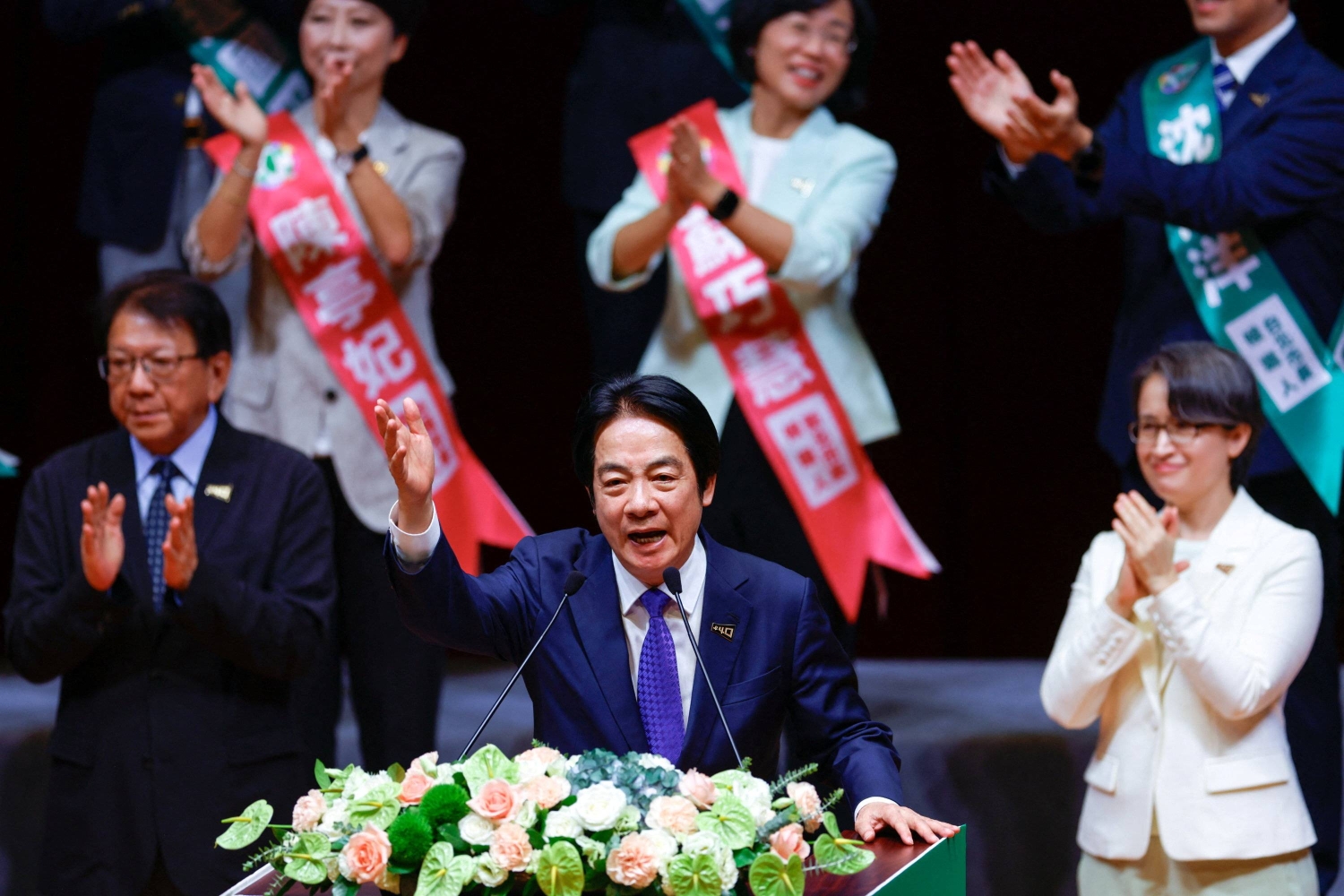
Taiwan's President Lai Ching-te warned on Sunday that his island must resist China's political and legal pressure to avoid becoming "China's Taiwan." Speaking to his Democratic Progressive Party, Lai pointed to Beijing's new ethnic unity law—which could enable prosecution of people abroad—as evidence of what he called China's "legal warfare." Lai, who won Taiwan's presidential election two years ago, emphasized that Taiwan is already independent and its future must be decided by its 23 million people, not by Beijing.
Summaries like this, in your inbox every morning.
Sign up free →What happened
President Lai Ching-te addressed Taiwan's Democratic Progressive Party (DPP) on Sunday, warning that Taiwan must remain vigilant against China's pressure and reject becoming subordinate to Beijing. Lai cited China's new ethnic unity law as an example of what he called China's "legal warfare," which could give Beijing grounds to prosecute or arrest Taiwanese it views as separatists.
Why it matters
Lai, who won the island's presidential election two years ago, leads a government that champions Taiwan's separate identity from China—a stance that frequently provokes Beijing, which claims Taiwan as an inviolable part of its territory. The ethnic unity law alarm highlights how Beijing is using new legal tools to extend its reach beyond its borders, creating additional pressure on Taiwan's democracy and governance.
What to watch
China's Taiwan Affairs Office did not immediately respond to the president's remarks. Lai reiterated that Taiwan is already an independent country—constitutionally named the Republic of China—and that Taiwan's future "must be decided jointly by the 23 million people of Taiwan," not by Beijing.
Taiwan's President Lai Ching-te, who won the island's presidential election two years ago, delivered a forceful address to the Democratic Progressive Party (DPP) on Sunday, calling on party members to defend Taiwan against what he described as China's "red terror." Speaking in Taiwanese (Hokkien), rather than Mandarin, Lai emphasized that Taiwan must protect its democracy and avoid becoming subordinate to China. "We must work together to protect our democratic and free way of life, and absolutely never allow 'democratic Taiwan' to turn back and become 'China's Taiwan'," he said.
Lai's remarks focused particularly on China's new ethnic unity law, which he characterized as a form of "legal warfare." According to Lai, this law gives Beijing a legal basis to take action against people outside its borders—a development that has alarmed Taiwan because it could enable Beijing to prosecute or arrest Taiwanese whom China views as separatists. China's legal system has no jurisdiction in Taiwan, yet the law represents an attempt to extend Beijing's authority extraterritorially. China has rejected all criticism of the law, and China's Taiwan Affairs Office did not immediately respond to requests for comment on Lai's statements.
Lai reiterated his government's core position: that Taiwan is already an independent country. He emphasized that Taiwan's constitutional name is the Republic of China and that it is not subordinate to the People's Republic of China. "Regardless of ethnic group, regardless of who came earlier or later, anyone who identifies with Taiwan is a master of the country," he said. He stressed that Taiwan's future "must be decided jointly by the 23 million people of Taiwan." This statement underscores the DPP's commitment to Taiwan's separate identity, a stance that frequently angers Beijing, which views the island as an inviolable part of Chinese territory. China has repeatedly rejected Lai's calls for talks, labeling him a "separatist."
Contextualizing his warnings, Lai noted that over the past decade of DPP government, Taiwan has not backed down in the face of authoritarian expansion, disinformation attacks, military threats, and diplomatic pressure. He offered a broader claim about democracy itself: "Taiwan has shown the world that democracy is not a weakness; democracy is strength." The historical backdrop of this conflict remains unresolved: the defeated Republic of China government fled to Taiwan in 1949 after losing a civil war to Mao Zedong's communists, and to this day neither government formally recognizes the other. No peace treaty or armistice ending the civil war has ever been signed.
President Lai Ching-te's speech reflects the ongoing geopolitical tension between Taiwan and mainland China, rooted in their unresolved civil war. The defeated Republic of China government fled to Taiwan in 1949 after losing to Mao Zedong's communists, who established the People's Republic. To this day, neither government formally recognizes the other and no peace treaty or armistice has been signed. Lai's focus on China's "legal warfare," exemplified by the ethnic unity law, indicates a shift in Beijing's tactics—moving beyond military intimidation and diplomatic pressure to construct legal instruments that extend Chinese governance claims beyond its borders. For Taiwan's DPP-led government, which explicitly champions the island's separate identity, this represents a novel threat that blurs the line between domestic and international jurisdiction.
Lai's address comes as Taiwan has, over the past decade of DPP government, resisted what he characterized as "authoritarian expansion," disinformation attacks, military threats, and diplomatic pressure from Beijing. His framing of democracy—rather than as a weakness—as a source of strength reflects the DPP's ideological position and a bid to rally party members around a defense of Taiwan's political system. China's Taiwan Affairs Office's lack of immediate response does not diminish the fundamental disagreement: Beijing continues to reject Lai's calls for talks and labels him a "separatist," while Lai insists Taiwan's future rests with its 23 million people, not with Beijing.
AI-summarized, only the topics you pick — one digest a day via Email, Slack, or Discord.
Free · takes 30 seconds · unsubscribe anytime
No discussion yet for this article
Get curated AI news from 200+ sources delivered daily to your inbox. Free to use.
Get Started FreeFree · takes 30 seconds · unsubscribe anytime
1 minute a day. The AI essentials.
200+ sources · Email / LINE / Slack

