
What happened
Nvidia's fiscal first quarter (ended April 26, 2026) saw revenue jump 85% year over year to $81.6 billion(約13兆円), with data center revenue climbing 92% to $75.2 billion(約12兆円). The company projects about $1 trillion(約160兆円) of revenue from its current Blackwell and next-generation Rubin chips between 2025 and the end of 2027, and guided for fiscal second-quarter revenue of about $91 billion(約15兆円).
Why it matters
Demand for Nvidia's AI chips remains strong, and the company's gross margin sits near 75%, giving it significant pricing power. However, the stock has traded sideways for months and sits about 13% below its all-time high, suggesting investors are already pricing in much of the optimism. At a price-to-earnings ratio of about 31, the valuation reflects caution about real risks: China, once at least a fifth of data center revenue, now contributes zero under current guidance due to geopolitics, and Nvidia's biggest cloud-provider customers are designing their own chips in parallel.
What to watch
Management emphasized that "agentic AI" (AI systems that act autonomously) has driven demand "parabolic," but the company faces pressure from chip rivals like AMD. The real test will be whether large cloud providers increasingly rely on their own hardware rather than Nvidia's, which could weaken the company's pricing power over time.
Ask the AI about this article →
For example, today's edition would include:
AI-summarized, only the topics you pick — one digest a day via Email, Slack, or Discord.
Free · takes 30 seconds · unsubscribe anytimeWhat is AIToday? →
Ask AI anything about this article. Q&As are published on this page for other readers too.
Visko raised $10 million in pre-seed funding from Llama Ventures and opened public access to its first foundat…

U.S. markets ended August higher, with the S&P 500 up 2.6% and the Nasdaq up 3.9%

Neurovia AI, an Abu Dhabi-based company, is pitching Saudi security agencies software that it says can compres…

AI company Runway has unveiled Solaris, the first model in a new category it calls "Interface World Models." I…

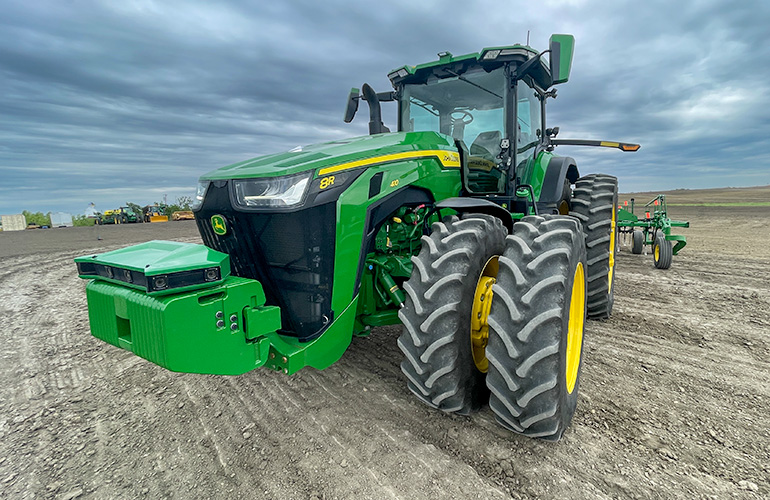
John Deere introduced JD, a conversational AI tool that lets farmers ask open-ended questions about their hist…
Nvidia CEO Jensen Huang said on Fox Business that AI is creating 'hundreds of thousands' of jobs, including in…