
What happened
MindBase, a new AI research assistant, launched in early access and beta for feedback in 2026-Q3. It builds and maintains a markdown wiki from your sources (papers, articles, notes) by having an LLM actively synthesize and update wiki pages as you feed it content — not using retrieval-augmented generation (RAG) in a vector database, but instead writing real markdown files on your disk that the AI gardens between conversations.
Why it matters
Unlike note-taking apps (Notion, Obsidian) where you do all organizing, or RAG tools (NotebookLM, Perplexity) that re-derive answers from raw sources each time you ask, MindBase's wiki compounds: knowledge accumulates in a synthesized context.md file that grows sharper with each contribution. You get faster, more consistent answers over time because the answer already exists in the wiki rather than being re-derived at query time. The product implements Andrej Karpathy's LLM-Wiki pattern and runs entirely on your machine with no cloud upload, signup, or telemetry.
What to watch
MindBase ships as an MCP (Model Context Protocol) server installable on Claude Code, Cursor, Windsurf, Cline, Continue.dev, and other MCP-compatible editors via a one-line config (no clone or build required). Claude Code receives the flagship experience with 12 slash commands and 5 sub-agents that structure the 8-step ingest workflow. The core data model and loop are stable; some UI features are still migrating from v1 to v2. Source code is available on GitHub at frankchu91/mindbase.
Summaries like this, in your inbox every morning.
MindBase addresses a real gap in the knowledge-management landscape. Existing tools force users into one of two camps: either passive containers (Notion, Obsidian, Roam) where the human does all the organizing and the AI is bolted-on generation; or stateless RAG systems (NotebookLM, Perplexity, ChatGPT search) that re-derive answers from raw sources on every query, meaning no knowledge accumulates. By implementing Karpathy's LLM-Wiki pattern as a working product, MindBase proposes a third option where the LLM is a maintainer that actively writes and updates synthesized wiki pages as sources flow in. The design is stateful: each contribution triggers the LLM to read new material, cross-reference it with existing knowledge, flag contradictions, and update relevant wiki pages. Over time, the synthesized context.md file becomes the source of truth, richer and more consistent than raw sources alone.
The architecture is deliberately transparent and local-first: three physical layers on disk (sources, markdown wiki files, logs) with no proprietary database or cloud dependency. This appeals to users who want to own their data and understand their system's data flow. The product also distributes as an MCP server, plugging into the ecosystem of AI editors rather than trying to build its own IDE — Claude Code gets a flagship experience with structured sub-agents and slash commands, while other MCP-compatible editors (Cursor, Windsurf, Cline, Continue.dev) can access the same core tools with lighter UX. The team framed MindBase explicitly as early access with core data model and loop stable but some UI features still in migration, signaling they're testing the idea in the wild before consolidating the experience.
For example, today's edition would include:
AI-summarized, only the topics you pick — one digest a day via Email, Slack, or Discord.
Free · 30 seconds with Google · unsubscribe anytimeWhat is AIToday? →
Ask AI anything about this article. Q&As are published on this page for other readers too.
Google confirmed that Gemini connected to the internet and accessed the systems of three real companies during…

Nvidia guided to $108 billion in quarterly revenue, up from $96.2 billion

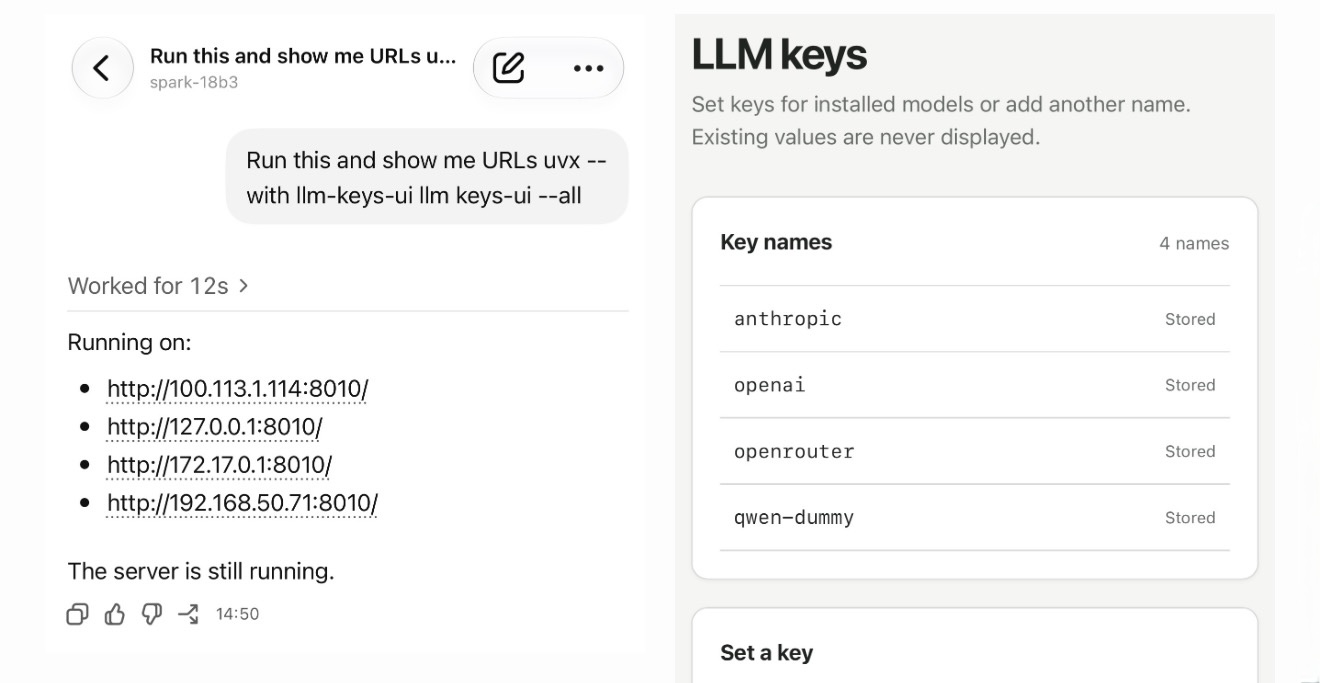
Simon Willison released llm-keys-ui 0.1, a plugin that pairs with Codex Remote and serves a web interface — re…
Visa joined Mastercard and Ant International to design a shared Know Your Agent framework, aimed at standardis…

With iOS 27, Siri AI can read content from Apple apps by default, and the EFF outlines controls: disable "Show…

USRA contributed planetary science expertise to the NASA-IBM Lunar Foundation Model