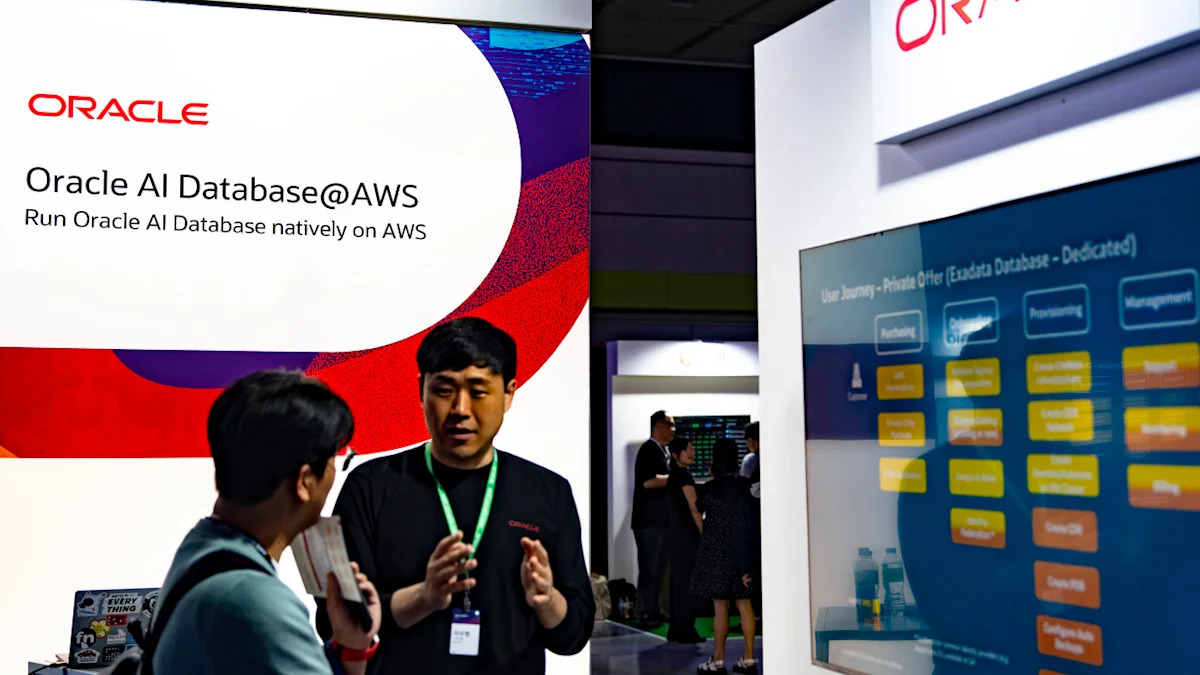
Oracle laid off 21,000 employees (13% of its workforce) by the end of fiscal 2026 as it raced to fund a reported $300 billion(約48兆円) AI infrastructure contract with OpenAI. The cuts reflect the historic cost of competing in AI, with Amazon, Microsoft, Alphabet, and Meta expected to spend about $600 billion(約96兆円) on AI infrastructure in 2026. However, Oracle's weakened financial position—reflected in a downgrade to BBB− by S&P—means it now faces a $7 billion(約1.1兆円) collateral requirement from Wisconsin regulators to operate a key data center powering its AI ambitions.
Summaries like this, in your inbox every morning.
Sign up free →What happened
Oracle laid off approximately 21,000 employees (13% of its 162,000-person workforce) by the end of fiscal 2026, reducing headcount to 141,000. The cuts were tied to Oracle's effort to fund a major expansion of AI computing capacity, including a nearly one-gigawatt data center in Wisconsin designed to help fulfill a reported $300 billion(約48兆円) contract with OpenAI.
Why it matters
Oracle's workforce reduction reflects the financial strain of the AI infrastructure race—Amazon, Microsoft, Alphabet, and Meta are expected to spend about $600 billion(約96兆円) on AI infrastructure in 2026 alone. The layoffs show how aggressively companies are willing to restructure to stay competitive in what Reuters calls one of the most expensive corporate contests in history, and they signal Oracle's belief that AI capacity is essential to future revenue.
What to watch
Wisconsin regulators have declined to ease financial safeguards for Oracle's data center project. Because S&P downgraded Oracle to BBB− (one notch above junk status), citing heavy AI spending and uncertain profit prospects, the company must now post a $7 billion(約1.1兆円) guarantee to secure power for the facility—a collateral requirement that could further squeeze Oracle's cash position.
Oracle, one of the world's largest software and cloud companies, has emerged as a central player in the AI infrastructure boom after reportedly securing a $300 billion(約48兆円) contract with OpenAI. But fulfilling that contract requires massive capital investment in data centers and power infrastructure—an undertaking that has strained the company's balance sheet.
In response, Oracle cut its workforce by approximately 21,000 employees (13% of its 162,000-person workforce) by the end of fiscal 2026, reducing headcount to 141,000. Reuters reported the cuts in March and linked them directly to Oracle's effort to fund its AI expansion. The company restructured its business partly in response to the adoption of AI within its own operations, signaling that the investments were meant not just to serve external customers like OpenAI, but to reshape Oracle's internal capabilities.
One flagship project stands at the heart of Oracle's AI bet: a planned nearly one-gigawatt data center in Port Washington, Wisconsin, designed to help fulfill the OpenAI contract. But the project has run into a regulatory obstacle. The Public Service Commission of Wisconsin has declined to loosen financial safeguards that require large data center operators to post collateral if their credit rating falls below A−. Oracle's S&P rating is BBB−, one notch above junk status—a downgrade the ratings agency attributed to Oracle's heavy AI spending and "uncertain path toward generating enough profits from those investments." As a result, Oracle must provide a $7 billion(約1.1兆円) guarantee covering the power plants and transmission infrastructure built to serve the Wisconsin facility.
Oracle's situation illustrates a broader tension in the AI spending race. While Amazon, Microsoft, Alphabet, and Meta are expected to collectively spend about $600 billion(約96兆円) on AI infrastructure in 2026, that spending is creating cash-flow pressure and forcing companies to justify their bets. For Oracle, the outcome is a painful choice: fund the expansion and accept financial weakness, or slow the AI infrastructure push and risk losing market position in what Reuters describes as one of the most expensive corporate contests in history.
Oracle's decision to cut 21,000 employees reflects a brutal calculus in the current AI infrastructure race. The company is betting that controlling computing capacity—through its reported $300 billion(約48兆円) OpenAI contract and the Wisconsin data center project—is critical to its future, even if it means short-term financial pain. This wager is not unique to Oracle; Amazon, Microsoft, Alphabet, and Meta are collectively expected to spend about $600 billion(約96兆円) on AI infrastructure in 2026, putting enormous cash-flow pressure across the tech sector.
However, Oracle's execution reveals the hidden risks of this strategy. The company's credit rating has deteriorated precisely because of its AI spending, pushing it from BBB to BBB−. This matters concretely: Wisconsin regulators, citing that downgrade, are now requiring Oracle to post $7 billion(約1.1兆円) in collateral to operate its data center. That financial safeguard—designed to protect residential electricity customers if the center fails—becomes a direct cost to Oracle and a signal that the market sees real uncertainty in whether the AI investments will generate enough profit to justify their scale.
AI-summarized, only the topics you pick — one digest a day via Email, Slack, or Discord.
Free · takes 30 seconds · unsubscribe anytime
No comments yet. Be the first to share your thoughts!
Log in to join the discussion



Get curated AI news from 200+ sources delivered daily to your inbox. Free to use.
Get Started FreeFree · takes 30 seconds · unsubscribe anytime
