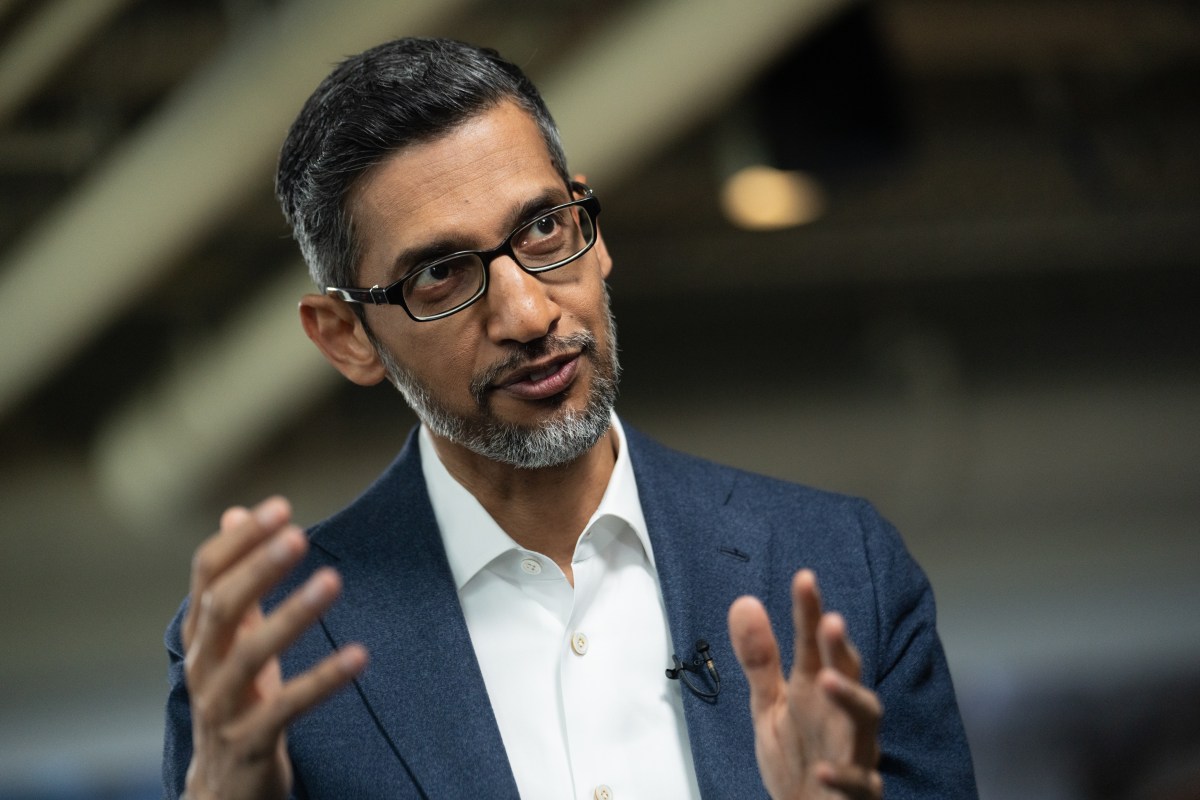
Google's cloud revenue surged 82% year-over-year to $24.8 billion(約4兆円) this quarter, driven primarily by enterprise adoption of AI solutions and infrastructure services. The company's backlog of unrecognized cloud contracts reached $514 billion(約82兆円), and overall profit jumped to $112.1 billion(約18兆円) from $28.1 billion(約4.5兆円) a year earlier. CEO Sundar Pichai pointed to the results as vindication of the company's $180–$190 billion(約30兆円) annual spending on data centers and chips, arguing that strong long-term enterprise deals justify the investments and that payoff from compute capacity will materialize in 2027.
Summaries like this, in your inbox every morning.
Sign up free →What happened
Google's cloud business generated $24.8 billion(約4兆円) in revenue this quarter, up 82% year-over-year and beating Wall Street's forecast of $22.46 billion(約3.6兆円). The company attributed the surge to enterprise AI adoption and infrastructure, and reported a backlog of $514 billion(約82兆円) in unrecognized cloud contracts. Alphabet's overall profit jumped to $112.1 billion(約18兆円) from $28.1 billion(約4.5兆円) a year ago.
Why it matters
The results directly address investor concerns about whether Google's massive AI spending justifies its cost. CEO Sundar Pichai framed the gains as proof that "AI investments are redefining what's possible across every part of our business," signaling that the company's infrastructure bets are beginning to generate concrete revenue rather than just burning capital.
What to watch
Google is planning capital expenditures between $180 billion(約29兆円) and $190 billion(約30兆円) for the year on data centers, chips, and infrastructure. Pichai indicated the payoff from compute capacity investments would arrive in 2027, and cited long-term enterprise deals and "strong demand indicators" as justification for the spending pace. Gemini, Google's AI chatbot, grew to 950 million monthly active users from 750 million in Q4 2025.
Alphabet delivered results this quarter that directly challenged the narrative that its massive AI spending was a financial misstep. Google Cloud revenue hit $24.8 billion(約4兆円), a jump of 82% from the same period last year and well above the $22.46 billion(約3.6兆円) that Wall Street analysts had projected. The growth was especially pronounced given that the prior quarter had already posted a strong 63% year-over-year increase to $20 billion(約3.2兆円). The company was explicit that the driver was enterprise AI: Google stated that cloud gains were "driven largely by enterprise AI solutions and enterprise AI infrastructure adoption." Equally significant was the size of the company's contracted but unrecognized backlog—$514 billion(約82兆円)—which represents work Google has already sold to customers but has not yet converted into revenue.
The profit impact was dramatic. Alphabet reported net profit of $112.1 billion(約18兆円) this quarter, a 299% increase from the $28.1 billion(約4.5兆円) earned in the same quarter a year prior. Overall company revenue grew 24% year-over-year to $119.8 billion(約19兆円), with Google Services revenue rising 15% to $94.5 billion(約15兆円). Crucially, this marks the company's 12th consecutive quarter of double-digit revenue growth, placing the current results in the context of sustained momentum rather than an anomaly.
During Wednesday's earnings call, CEO Sundar Pichai sought to cement the connection between spending and results. "Our AI investments are redefining what's possible across every part of our business," he said, adding that the company had "exciting momentum across the board." When pressed on the company's capital expenditure plans—which he estimated at between $180 billion(約29兆円) and $190 billion(約30兆円) for the year on data centers, chips, and infrastructure—Pichai tied the spending to customer demand. He pointed to "strong demand indicators" and "long-term deals" as evidence of health in the market, and indicated that the payoff from compute capacity investments would materialize in 2027. "The dynamics look healthier than where we were about a year ago," he said, characterizing the current investment climate as more confident than the prior year's environment.
On the consumer AI side, Google's Gemini chatbot continued to add users. The app reached 950 million monthly active users this quarter, up from 750 million in Q4 2025—a gain of 200 million users in one quarter. While this consumer metric does not directly drive the revenue story, it reinforces management's claim that AI is gaining traction across multiple parts of the business. The combination of enterprise cloud growth, record profit, and consumer adoption appears to have been sufficient to reassure at least some investors that the massive infrastructure spend is not a black hole.
Google's cloud business is now the company's most tangible response to skeptics questioning the return on its enormous AI infrastructure investment. The 82% year-over-year spike in cloud revenue—compared to 63% growth in the previous quarter—signals that enterprise customers are not just experimenting with AI but committing serious budget to it. The $514 billion(約82兆円) backlog of unrecognized cloud contracts is particularly telling: it represents future revenue already locked in, suggesting that the current quarter's growth is not a one-time spike but the beginning of a sustained cycle. This matters because it shifts the conversation around Alphabet's $180–$190 billion(約30兆円) annual capital spend from theoretical to empirical. When investors pressed CEO Sundar Pichai on the timing and magnitude of payoff, he grounded his confidence in "strong demand indicators" and "long-term deals"—concrete signals that customers believe in AI's value enough to sign multiyear commitments. His statement that compute capacity payoff will arrive in 2027 sets a measurable expectation. Against this backdrop, Gemini's growth to 950 million monthly active users from 750 million in Q4 2025 rounds out a picture of AI momentum across both consumer and enterprise fronts, though the enterprise side is driving the revenue that matters most to shareholders.
AI-summarized, only the topics you pick — one digest a day via Email, Slack, or Discord.
Free · takes 30 seconds · unsubscribe anytime
No discussion yet for this article
Get curated AI news from 200+ sources delivered daily to your inbox. Free to use.
Get Started FreeFree · takes 30 seconds · unsubscribe anytime
1 minute a day. The AI essentials.
200+ sources · Email / LINE / Slack
