AIToday

Shizuoka, JR Tokai sign maglev pact, construction to begin

Japan Times Tech8h ago
Shizuoka, JR Tokai sign maglev pact, construction to begin

Key takeaway

Shizuoka Prefecture and JR Tokai have signed an agreement to begin construction of the Shizuoka section of the Chuo Shinkansen maglev train line, resolving a nine-year dispute over environmental concerns. The pact includes 28 environmental conservation measures to protect the Oi River and a joint monitoring system between central and prefectural governments. Construction is expected to take more than 10 years.

Summaries like this, in your inbox every morning.

Sign up free →

3 Key Points

  • What happened

    Shizuoka Prefecture and JR Tokai signed an agreement on Saturday to begin construction of the Shizuoka section of the Chuo Shinkansen maglev line, ending a nine-year deadlock after Gov. Yasutomo Suzuki reversed his predecessor's rejection. The agreement includes 28 environmental conservation measures, chiefly to protect the Oi River's water flow and surrounding ecosystems.

  • Why it matters

    The maglev project has been stalled since a prior governor cited environmental concerns, particularly the risk of water-level drops in the Oi River. The new agreement—jointly monitored by central and prefectural governments, with a provision to suspend work if unforeseen impacts arise—allows construction to move forward while addressing resident anxiety about environmental damage.

  • What to watch

    Completion of the Shizuoka section is expected to take more than 10 years. JR Tokai will hold briefings for local residents before starting work. The prefectural government and JR Tokai also signed a separate regional economic development agreement aimed in part at promoting tourism via the existing Tokaido Shinkansen.

In Depth

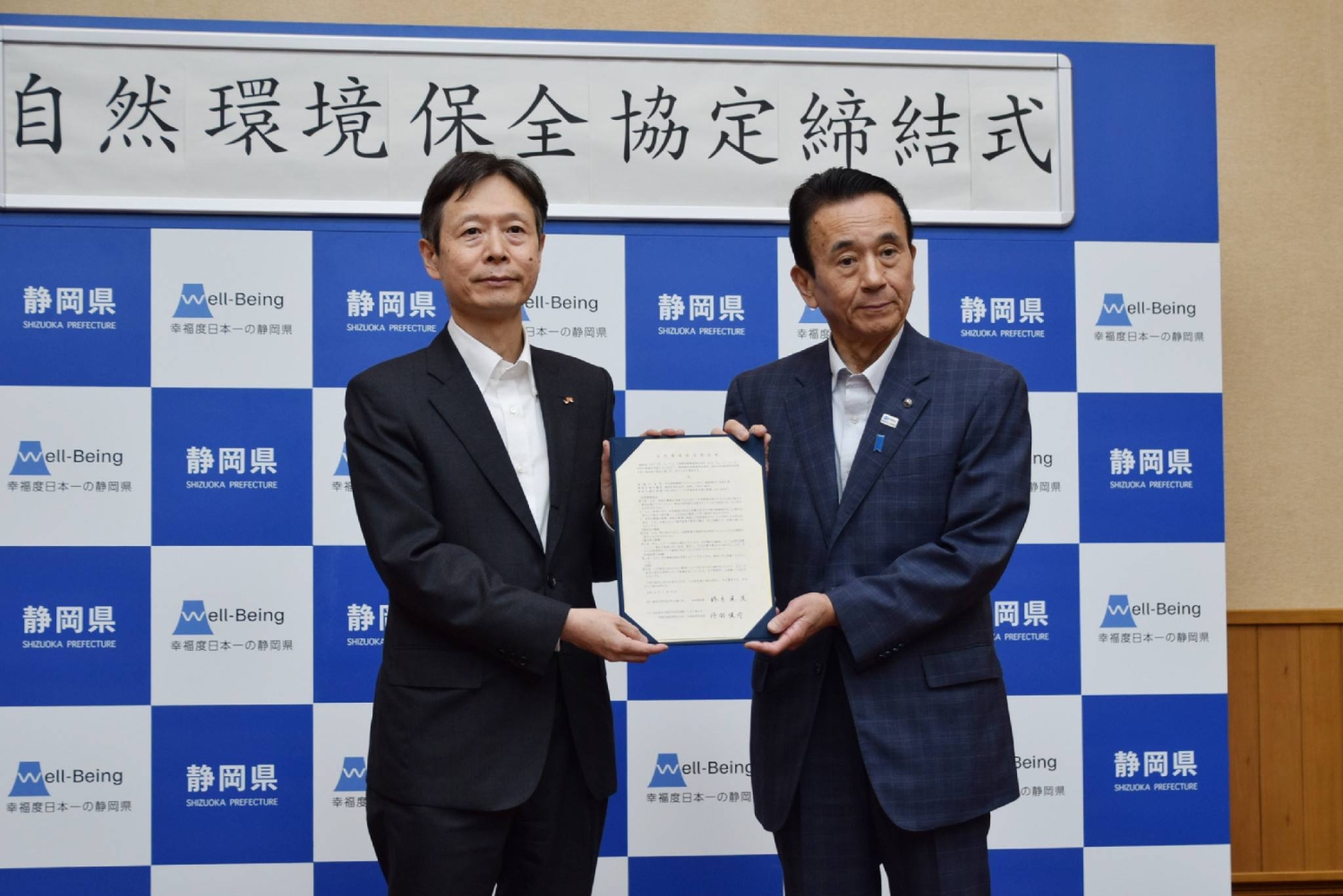
On Saturday, Shizuoka Prefecture and JR Tokai (Central Japan Railway Co.) signed two agreements that clear the way for construction of the Shizuoka section of the Chuo Shinkansen maglev train line to begin. The signing followed the conclusion of a natural environment preservation agreement based on prefectural ordinance—the final legal requirement to start work.

The nine-year deadlock stemmed from the previous governor's rejection of the project, which was grounded in environmental concerns, particularly the risk that construction would decrease water levels in the Oi River, which runs through the prefecture. In March, a prefectural government panel had approved 28 sets of environmental conservation measures proposed by JR Tokai. From May to June, JR Tokai held explanatory meetings for residents of Shizuoka city and 10 municipalities along and near the Oi River. On July 7, Gov. Yasutomo Suzuki announced his decision to reverse the prior rejection and approve construction. At Saturday's signing ceremony, Suzuki stated, "The real work begins now. We'll work to dispel the anxiety and concerns of prefectural residents through continuous and permanent monitoring." JR Tokai President Shunsuke Niwa said, "We'll proceed with preparations so that the construction can begin as soon as possible."

The agreement includes 28 environmental conservation measures focused on mitigating impact on water flow in the Oi River and the surrounding natural environment. It also establishes a monitoring system to be jointly operated by the central and prefectural governments once construction begins, and stipulates that work be suspended for investigations if an unforeseen situation occurs. JR Tokai plans to hold briefings for local residents before starting construction. The completion of the Shizuoka section is expected to take more than 10 years. On the same day, the prefectural government and JR Tokai signed a second agreement on regional economic development, aimed in part at promoting tourism through the Tokaido Shinkansen bullet train line that runs through the prefecture. JR Tokai also exchanged documents with the 10 municipalities to confirm the implementation of environmental protection measures.

Context & Analysis

The signing marks the resolution of a long-running environmental dispute that had blocked the maglev project in Shizuoka. The previous governor's nine-year rejection centered on fears that the line's construction would lower water levels in the Oi River—a critical resource for the prefecture and surrounding communities. Suzuki's reversal this year followed a methodical process: a prefectural panel approved JR Tokai's 28 mitigation measures in March, and after explanatory meetings held from May to June in Shizuoka city and 10 municipalities along the Oi River, he announced his approval on July 7. The signed agreement formalizes these measures and establishes a joint oversight structure with built-in safeguards: a monitoring system run by both central and prefectural authorities, and a clause to halt work for investigation if unexpected problems emerge. This architecture is designed to balance the economic benefits of the maglev—part of a larger effort to enhance regional tourism and development—against legitimate resident concerns about irreversible environmental change. The agreement's focus on the Oi River reflects that the water-flow issue was the crux of the original objection.

FAQ

What ended the nine-year deadlock?
Gov. Yasutomo Suzuki reversed the rejection of his predecessor, who had cited concerns over environmental impacts such as a possible decrease in water levels in the Oi River. In July, Suzuki announced his decision to approve the start of construction after a prefectural government panel approved 28 environmental conservation measures in March.
What environmental protections are included in the agreement?
The agreement includes 28 sets of environmental conservation measures, with emphasis on mitigating impact on water flow in the Oi River and the surrounding natural environment. A monitoring system will be jointly operated by the central and prefectural governments, and construction work will be suspended for investigations if an unforeseen situation occurs.
When will construction be complete?
The completion of the Shizuoka section is expected to take more than 10 years.

Get AI news like this every morning

AI-summarized, only the topics you pick — one digest a day via Email, Slack, or Discord.

Free · takes 30 seconds · unsubscribe anytime

Discussion

No discussion yet for this article

Stay ahead with AI news

Get curated AI news from 200+ sources delivered daily to your inbox. Free to use.

Get Started Free

Free · takes 30 seconds · unsubscribe anytime

1 minute a day. The AI essentials.

200+ sources · Email / LINE / Slack

Get it free →

