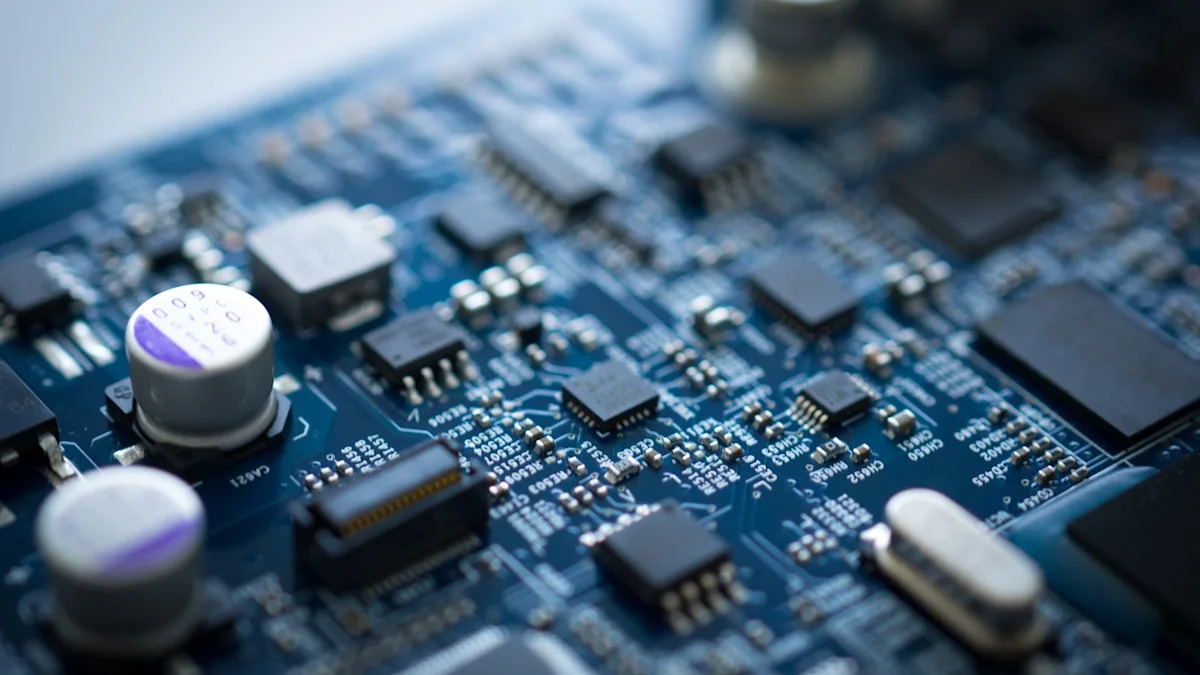
What happened
Nvidia CEO Jensen Huang now shapes how President Trump talks about regulation, export fees, and China trade, as AI hardware becomes a geopolitical bargaining chip.
Why it matters
Companies tied to AI chips and datacenter gear, such as Monolithic Power Systems and Marvell Technology, are exposed to these talks, so any breathing room on export rules can ripple straight into demand for their components.
What to watch
Whether that optimism holds hinges on a single unseen pressure on future profitability that could break the market's comfort with current expectations.
WHO IT HITSInvestors holding US-listed AI hardware stocks tied to AI chips and datacenter gear, such as Monolithic Power Systems and Marvell Technology, face portfolio exposure to how the Trump administration's China trade and export-fee decisions unfold.
Summaries like this, in your inbox every morning.
The article frames AI hardware as having shifted "almost overnight" from a tech niche to a geopolitical bargaining chip, with Nvidia CEO Jensen Huang now shaping how President Trump talks about regulation, export fees, and China trade. That power shift creates real ripple effects for companies exposed to these talks.
Monolithic Power Systems designs power management chips that feed AI servers and data centers, with heavy exposure to China-based hardware demand. Its power chips sit inside the very servers Nvidia is fighting to keep shipping, so any breathing room on export rules can ripple straight into demand for its components. The business generates about US$3.3b from semiconductors, with meaningful sales tied to China, Taiwan, South Korea and US customers, and a market cap of US$59.8b. Investor optimism appears anchored in MPS's exposure to accelerating AI adoption in data centers, including design wins with major ASIC-based AI platforms and anticipated industry-wide server transitions to 48V/800V architectures, which could drive sustained revenue outperformance even as end market growth normalizes and competition increases.
Marvell Technology sits right in the plumbing of the US-China AI hardware story, supplying custom silicon and networking gear that helps Nvidia-class accelerators talk to each other inside hyperscale data centers. It builds custom chips and high-speed connectivity hardware that help power AI data centers and cloud infrastructure worldwide, generates about US$9.5b from integrated circuits, with around US$3.9b tied to China and further exposure across Asia and the United States, and carries a market cap of US$214.2b. For both companies, the outcome appears to hinge on whether the optimism baked into current expectations can withstand an unseen pressure on future profitability, and on how the export-rule conversation Huang now influences actually unfolds.
For example, today's edition would include:
AI-summarized, only the topics you pick — one digest a day via Email, Slack, or Discord.
Free · 30 seconds with Google · unsubscribe anytimeWhat is AIToday? →
Ask AI anything about this article. Q&As are published on this page for other readers too.
Caterpillar's power & energy segment grew 17% year over year in Q2, and construction revenue rose 35%, leaving…

Zoom CEO Eric Yuan told The New York Times in a 2025 interview that AI will lead every company to support thre…
Trump posted on Truth Social that he wants to appoint an "AI czar" to lead a new "AI force," giving no timelin…
Contrarian Thinking founder and CEO Codie Sanchez said the most direct way small business owners should deploy…

Hilton received roughly 12,000 applications for 72 internship spots this year, with only 0.6% accepted, and ha…

AAA AI launched a multi-agent system connecting local runtimes like Ollama or cloud APIs under one orchestrati…