Alphabet is changing its business model to deliver TPUs to select customers in their own data centers, rather than renting them exclusively through Google Cloud. CEO Sundar Pichai cited growing demand from AI labs, capital markets firms, and high-performance computing applications.
TPUs are custom chips designed to accelerate AI workloads and are often more cost-efficient than Nvidia GPUs (general-purpose accelerators) for running machine learning applications, though they run fewer algorithms. Morgan Stanley analysts expect TPU sales to increase at 60% annually through 2028.
Nvidia retains a competitive advantage through its CUDA software ecosystem—a programming platform that millions of developers have been trained on over nearly two decades. Morgan Stanley estimates Nvidia will maintain 70% market share in AI accelerators by 2030, while custom chips like TPUs account for about 24% of sales.
Wall Street analysts expect Nvidia's earnings to grow 43% annually over the next three years (valuation: 32 times earnings), versus Alphabet's projected 16% annual growth (valuation: 29 times earnings). The median Nvidia price target implies 40% upside; Alphabet's implies 13% upside.
Ask the AI about this article →
For example, today's edition would include:
AI-summarized, only the topics you pick — one digest a day via Email, Slack, or Discord.
Free · takes 30 seconds · unsubscribe anytimeWhat is AIToday? →
Ask AI anything about this article. Q&As are published on this page for other readers too.
Aranya Inc., a startup founded last year, launched today with $11 million in funding

CBTS Technology Solutions LLC launched Forge Agents, a platform that turns a plain-language job description in…
Phonely Ltd. launched Alma, a large language AI model built for voice agents and trained on over 10 million re…

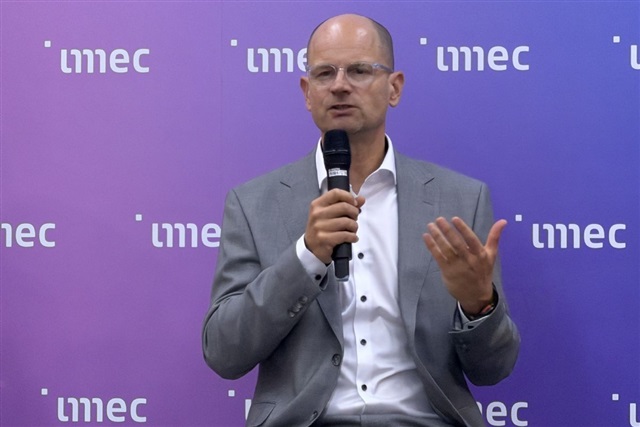
Imec CEO Patrick Vandenameele said at SEMICON Taiwan 2026 that the Belgian research center is broadening its c…
Alphabet's AI Overviews now reach over 2.5 billion monthly users through Google Search, and its ad business ge…

Sarah O’Connor's book 'We Are Not Machines' explores how mechanization and AI have transformed the workforce…