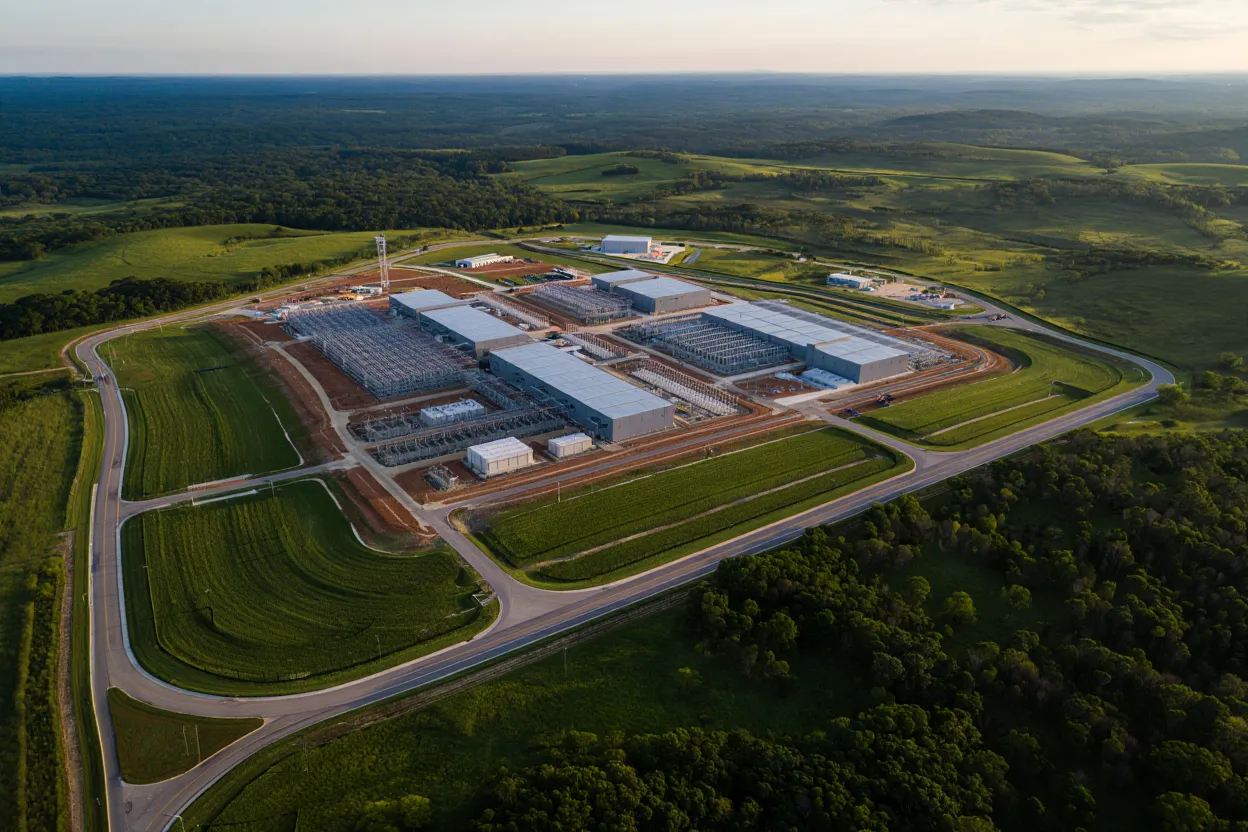
What happened
Meta increased funding for its Hyperion data center campus in Richland Parish, Louisiana, from the original $10B plan to $50B. The campus will eventually deliver 5 GW of computing capacity—more than double the original 2 GW plan—and is now Meta's largest AI-focused data center project.
Why it matters
The investment signals how hyperscalers (large cloud providers) are competing to build AI infrastructure, with Meta committing to a tenfold scale increase over many earlier campuses. The project has already generated $1.6B in contracts with Louisiana companies since December 2024 and is reshaping rural economies through jobs, tax revenue, and direct utility savings—Entergy Louisiana customers are projected to save $2.65B in electricity costs over 20 years.
What to watch
Meta expects the campus to reach 2 GW of computing capacity by 2030, but has not announced a timeline for the full 5 GW buildout. The project is expected to support 7,500 construction jobs at peak activity and create 1,000 permanent positions; however, regulatory scrutiny around large AI developments—including a wastewater discharge investigation at Meta's Cheyenne, Wyoming data center—may influence future approvals.
Summaries like this, in your inbox every morning.
Meta's $50B commitment to Hyperion reflects a fundamental shift in how hyperscalers prioritize AI infrastructure investment. The fivefold increase from the original $10B plan—announced as part of Meta's broader $600B pledge to US infrastructure by 2029—signals that competition among Amazon, Microsoft, Google, and Meta for computing power is intensifying. The body notes that hyperscalers need more electricity and capacity to support AI models and services, and Hyperion's 5 GW capacity (more than double the original 2 GW plan) far exceeds the scale of many earlier campuses, positioning it as a potential industry benchmark.
The project also demonstrates how rural site selection has become central to AI infrastructure strategy. Meta structured a unique agreement with Entergy Louisiana that projects $2.65B in electricity savings for local customers over 20 years—a direct economic incentive that extends the project's appeal beyond Meta's operational needs. The $1.6B in contracts already signed with Louisiana companies since December 2024, combined with the reported 400% increase in teacher bonuses in Richland Parish funded by new tax revenue, illustrates how hyperscaler projects are reshaping community economics. However, the body also notes growing regulatory scrutiny: Meta's Wyoming data center is under investigation for alleged contaminated wastewater discharge, suggesting that future AI infrastructure approvals may face heightened environmental and community oversight.
Pick your industry and the AI tools you use, and get news related to your work every day.
Free · 30 seconds with Google · unsubscribe anytimeWhat is AIToday? →
Ask AI anything about this article. The AI reads this article, earlier AIToday articles, and Wikipedia, and cites its sources. Q&As are published on this page for other readers too.

