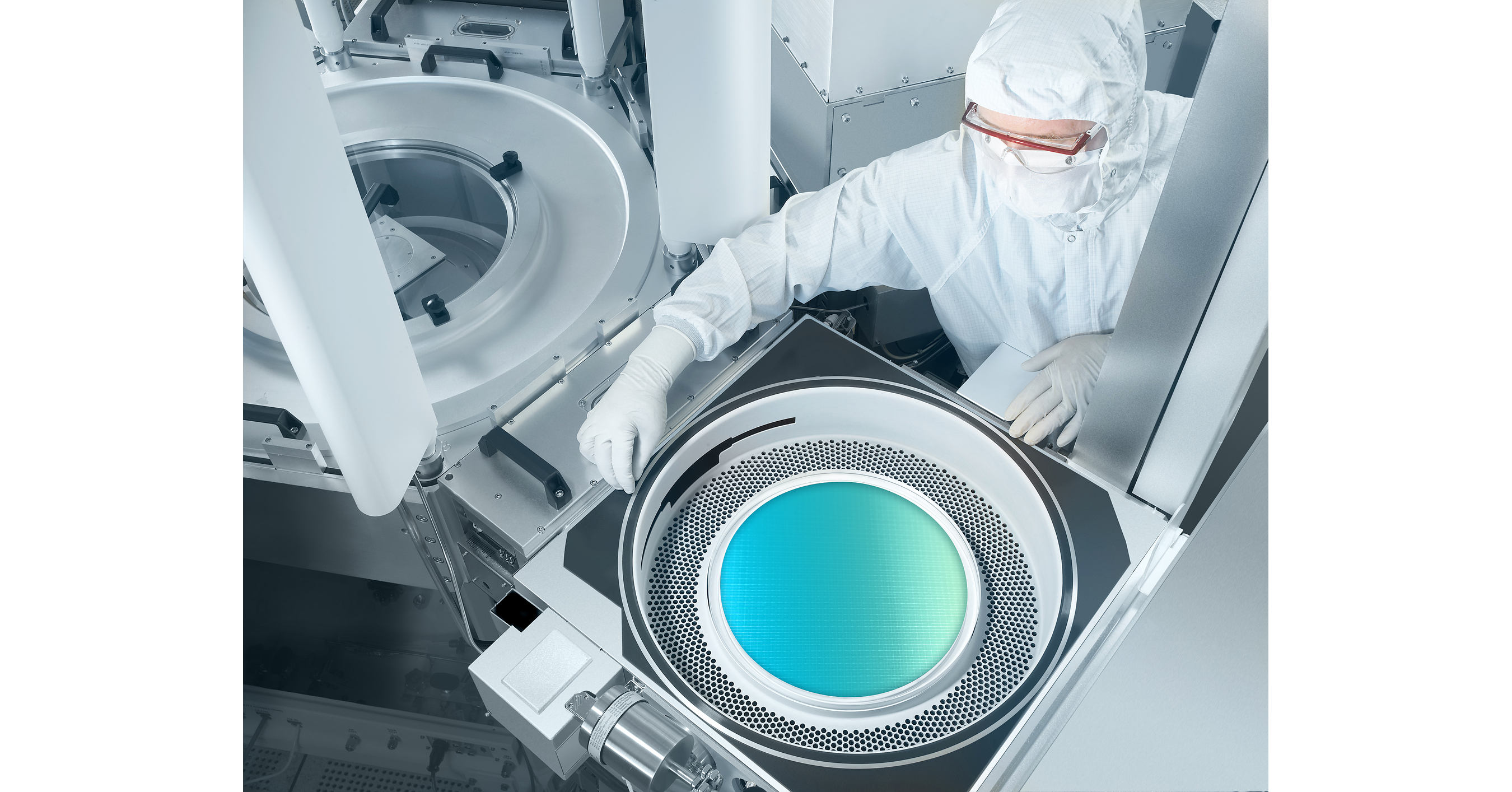
Lam Research, a major supplier of semiconductor equipment, is committing more than $3 billion over five years to expand its global network of research and development labs.
The expansion aims to boost experiment capacity by more than 50% and accelerate product development for customers building advanced AI chips.
The company's integrated lab network, which operates across the United States, Asia, and Europe, has already shown it can compress development timelines significantly—in some cases shortening process development up to 2.5 times.
What happened
Lam Research announced plans to invest more than $3 billion over the next five years to expand its global research and development lab network across the United States, Asia, and Europe, with the goal of increasing experiment capacity by more than 50%.
Why it matters
The semiconductor equipment maker's expansion is designed to accelerate product development cycles for customers in the AI era, where chip innovation requires new architectures, materials, and nanoscale precision. The company's integrated lab network, which runs 24/7 across time zones, has already demonstrated the ability to shorten process development up to 2.5 times in recent customer engagements.
What to watch
Lam plans to begin expanding the global lab network this year. The company's labs currently support more than one million experiments annually, with some facilities able to compress weeks of experimental work into as little as a few days.
Ask the AI about this article →
Lam Research's $3 billion R&D expansion reflects the semiconductor industry's acceleration in response to artificial intelligence demand. The company's CEO Tim Archer framed the investment explicitly around the AI era, where innovation velocity has become a competitive advantage. The planned 50% increase in experiment capacity and the integration of specialized labs across multiple continents—each purpose-built for distinct stages of the innovation cycle—suggests Lam is betting that sustained R&D capacity will be critical to keeping pace with customer demand for faster chip development.
The body highlights a particular operational advantage: Lam's labs operate as a 24/7 integrated network where discoveries in one location become knowledge accessible to all others. This model has already produced measurable results in customer engagements, where development timelines have been compressed by 2.5 times. The expansion aims to scale this capability further while maintaining the company's strategy of locating some facilities near customer sites to accelerate qualification and validation. For Lam's customers—particularly companies like Micron Technology, which is quoted in the release—faster development cycles reduce time-to-market for chips needed in the AI ecosystem.
For example, today's edition would include:
AI-summarized, only the topics you pick — one digest a day via Email, Slack, or Discord.
Free · takes 30 seconds · unsubscribe anytimeWhat is AIToday? →
Ask AI anything about this article. Q&As are published on this page for other readers too.
Visko raised $10 million in pre-seed funding from Llama Ventures and opened public access to its first foundat…

U.S. markets ended August higher, with the S&P 500 up 2.6% and the Nasdaq up 3.9%

Neurovia AI, an Abu Dhabi-based company, is pitching Saudi security agencies software that it says can compres…

AI company Runway has unveiled Solaris, the first model in a new category it calls "Interface World Models." I…

John Deere introduced JD, a conversational AI tool that lets farmers ask open-ended questions about their hist…

Nvidia CEO Jensen Huang said on Fox Business that AI is creating 'hundreds of thousands' of jobs, including in…