PDI Technologies built PDI Brew, an AI-powered platform that lets non-technical employees request internal tools in plain English and receive fully provisioned web applications running on AWS within seconds.
The system uses two AI agents—one to capture user intent as a structured manifest, another on AWS Lambda to orchestrate resource creation—eliminating the need for developers, backlog slots, or deployment pipelines for small tools.
Every app inherits enterprise security, single sign-on, and optional governed AI capabilities through Amazon Bedrock, addressing the common problem of small but numerous internal tools that rarely get built.
What happened
PDI Technologies created PDI Brew, a platform where non-technical employees describe tools in plain English and receive fully provisioned, multi-tenant web applications within seconds, secured with single sign-on and running on AWS. The system uses two AI agents: a planning agent that captures user intent as a structured JSON manifest, and a provisioning agent running on AWS Lambda that orchestrates the creation of all downstream AWS resources in one request.
Why it matters
Enterprise teams often have backlogs of small internal tools (calculators, intake forms, dashboards) that are too small to prioritize but too numerous to ignore. PDI Brew eliminates the traditional barrier by removing the need for Git, terminals, and DevOps knowledge—the person who needs the tool is the person who ships it. Every app inherits enterprise SSO, scoped security, HTTPS, and centralized observability by default, with optional governed AI capabilities (chat, summarize, classify) backed by Amazon Bedrock.
What to watch
The platform uses two interchangeable planning paths controlled by a single environment variable (PLANNER_MODE): the Vibe App Builder skill running inside an employee's existing AI assistant, or an Amazon Bedrock invocation inside the AWS trust boundary for teams with strict data-residency requirements. Both paths emit the identical JSON manifest, so the provisioning agent and per-app runtime remain unchanged regardless of which path is active.
Ask the AI about this article →
PDI Technologies identified a structural problem in enterprise software delivery: the transaction cost of building, securing, and deploying even a single-page tool (involving a repository, build pipeline, authentication, hosting, TLS, DNS, logging, and maintenance) is so high that small tools pile up in an indefinite backlog. PDI Brew solves this by collapsing that cost through automation and architectural consolidation. The platform separates intent capture from resource provisioning into two distinct agents with different trust models—the planning agent operates in the user's familiar AI assistant (or inside the AWS boundary for data-residency compliance), while the deterministic provisioning agent on Lambda handles all orchestration, logging, and reproducibility. This two-agent pattern is deliberate: it keeps the planning experience rich and conversational while ensuring that every provisioning decision is auditable and free of hallucination. By converging both planner paths on a single JSON manifest contract, PDI Brew ensures that adding new planning channels or swapping the underlying model requires no changes to the provisioning pipeline or per-app runtime—a clean forward path for future evolution.
For example, today's edition would include:
AI-summarized, only the topics you pick — one digest a day via Email, Slack, or Discord.
Free · takes 30 seconds · unsubscribe anytimeWhat is AIToday? →
Ask AI anything about this article. Q&As are published on this page for other readers too.
Israeli startup DataAgent Ltd
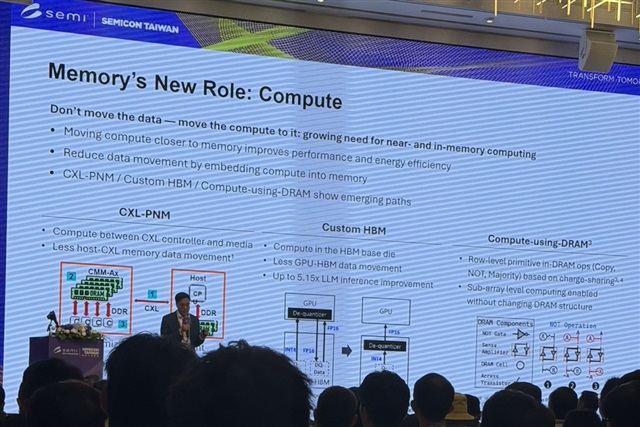
SK Hynix presented a custom HBM concept at SEMICON Taiwan 2026, where compute functions are placed in the base…
Taoyuan is positioning itself as a northern hub for AI data centers (AIDC), citing the Tatan area and an LNG c…
The U.S. Department of Defense announced on August 31 that it has deployed ChatGPT Mil, a customized version o…

Nvidia reported earnings that were both remarkable and boring, reflecting its focus on avoiding a consolidated…

Anthropic has agreed to a $35bn cloud-computing contract with Lambda, a Nvidia-backed cloud provider