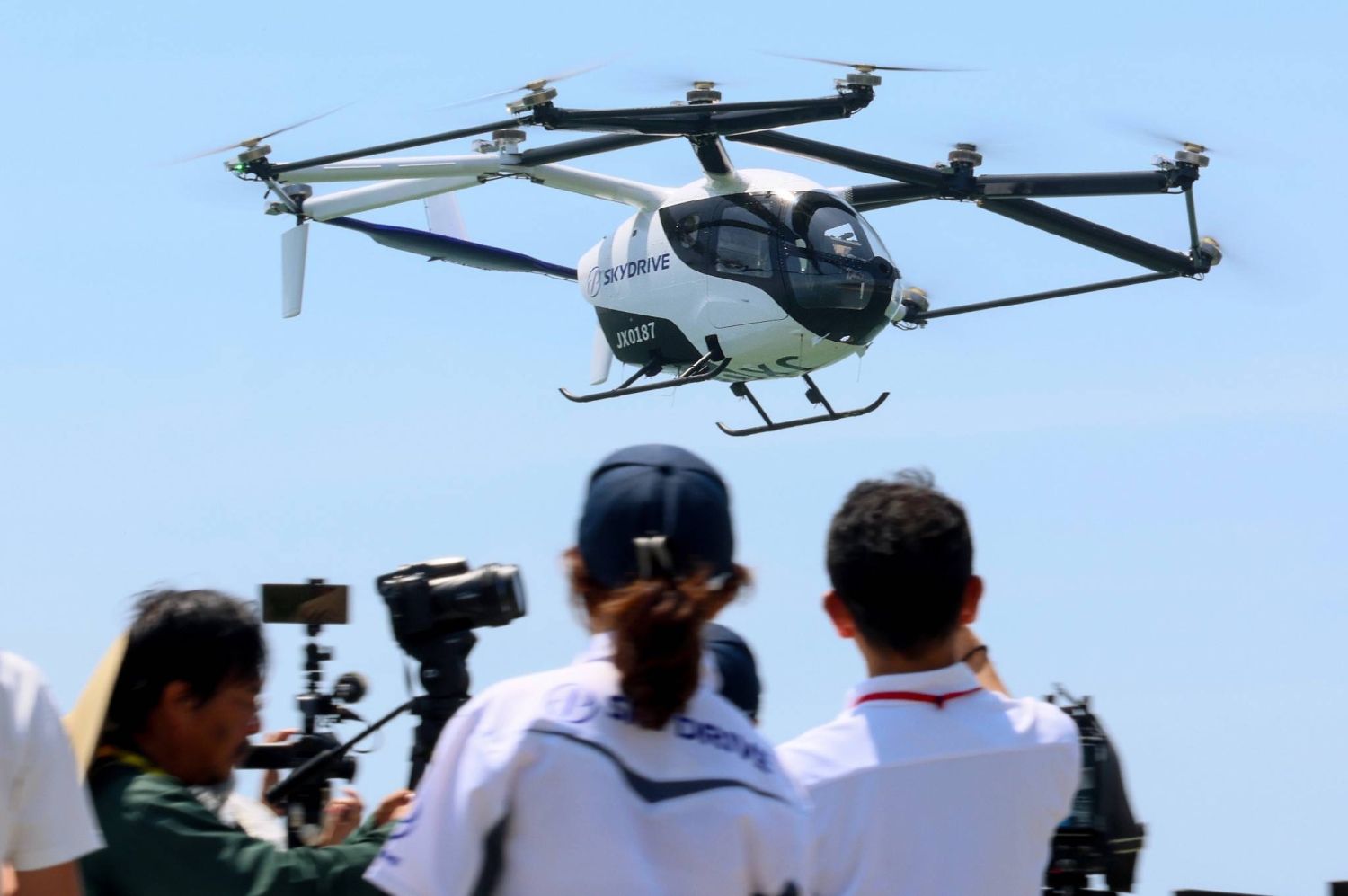
SkyDrive, a Japanese flying car developer, successfully demonstrated high-speed test flights reaching 86 kilometers per hour over the Seto Inland Sea on Monday. The three-seat electric aircraft, designed for vertical takeoff and landing, represents progress toward the company's goal of launching commercial sightseeing services in 2028, with plans to address tourism, disaster response, and transportation challenges across Asia.
Summaries like this, in your inbox every morning.
Sign up free →What happened
SkyDrive, a Japanese flying car developer based in Toyota, conducted high-speed test flights of its electric aircraft over the Seto Inland Sea in Yamaguchi on Monday, reaching speeds of up to 86 kilometers per hour across two roughly 2-kilometer flights. The three-seat aircraft is powered by 12 electric motors and rotors and can take off and land vertically.
Why it matters
The company is moving toward its goal of launching commercial sightseeing services in 2028, with the compact aircraft designed for urban transportation. SkyDrive's founder and CEO Tomohiro Fukuzawa stated the aircraft could serve tourism, disaster response, and address transportation challenges across Asia, suggesting the company sees a broader market beyond Japan.
What to watch
SkyDrive is pursuing type certification in Japan and the United States as it heads toward the 2028 commercial launch target. In June, the company achieved stable flight at 100 kilometers per hour, which it regards as its target operational cruising speed.
SkyDrive's test flight represents tangible progress in a long-standing goal. The company, based in Toyota, has been working toward a commercial flying car service, and Monday's demonstration—reaching 86 kilometers per hour in two separate flights—shows the aircraft is moving beyond early-stage testing. The June milestone of stable flight at 100 kilometers per hour, which SkyDrive designates as its target operational cruising speed, suggests the aircraft is approaching the performance envelope needed for commercial operations.
The regulatory path is now critical. SkyDrive is pursuing type certification in both Japan and the United States, a process that typically involves extensive safety and performance validation. The 2028 launch target is ambitious and hinges on these certifications being granted on schedule. The company's messaging around tourism, disaster response, and broader Asian transportation challenges indicates it is positioning the aircraft not as a niche novelty but as a tool with practical utility—though the business model for commercial sightseeing services and the regulatory landscape for urban air mobility remain largely undetermined.
No discussion yet for this article
Get curated AI news from 200+ sources delivered daily to your inbox. Free to use.
Get Started FreeFree · takes 30 seconds · unsubscribe anytime
1 minute a day. The AI essentials.
200+ sources · Email / LINE / Slack
