
What happened
Microsoft is moving Copilot Cowork away from flat-rate pricing to usage-based billing, and is weighing a fine-tuned version of DeepSeek V4 as a lower-cost model option. The product currently uses Anthropic's Claude technology, which consumes tokens quickly because it relies on agentic reasoning. A final decision on DeepSeek is expected in the coming weeks.
Why it matters
Flat-rate pricing has become unsustainable because some users perform hundreds of tasks per week, driving costs up quickly—a problem Microsoft already addressed by switching GitHub Copilot to usage-based billing. Any optional DeepSeek model would run fully on Azure and be customized with safeguards, keeping customer data within Microsoft's cloud infrastructure, though using a Chinese AI model may draw criticism in the US.
What to watch
CEO Satya Nadella has signaled support for this direction in a recent blog post arguing that companies should be able to pick and tune AI models for specific use cases and costs. The shift reflects his stated vision of AI as a consumption business built around intense users and intense usage.
Summaries like this, in your inbox every morning.
Pick your industry and the AI tools you use, and get news related to your work every day.
Free · 30 seconds with Google · unsubscribe anytimeWhat is AIToday? →
Ask AI anything about this article. The AI reads this article, earlier AIToday articles, and Wikipedia, and cites its sources. Q&As are published on this page for other readers too.
Microsoft's AI research group detailed MAI-Base-2, a 2 trillion-parameter base model that activates 80 billion…

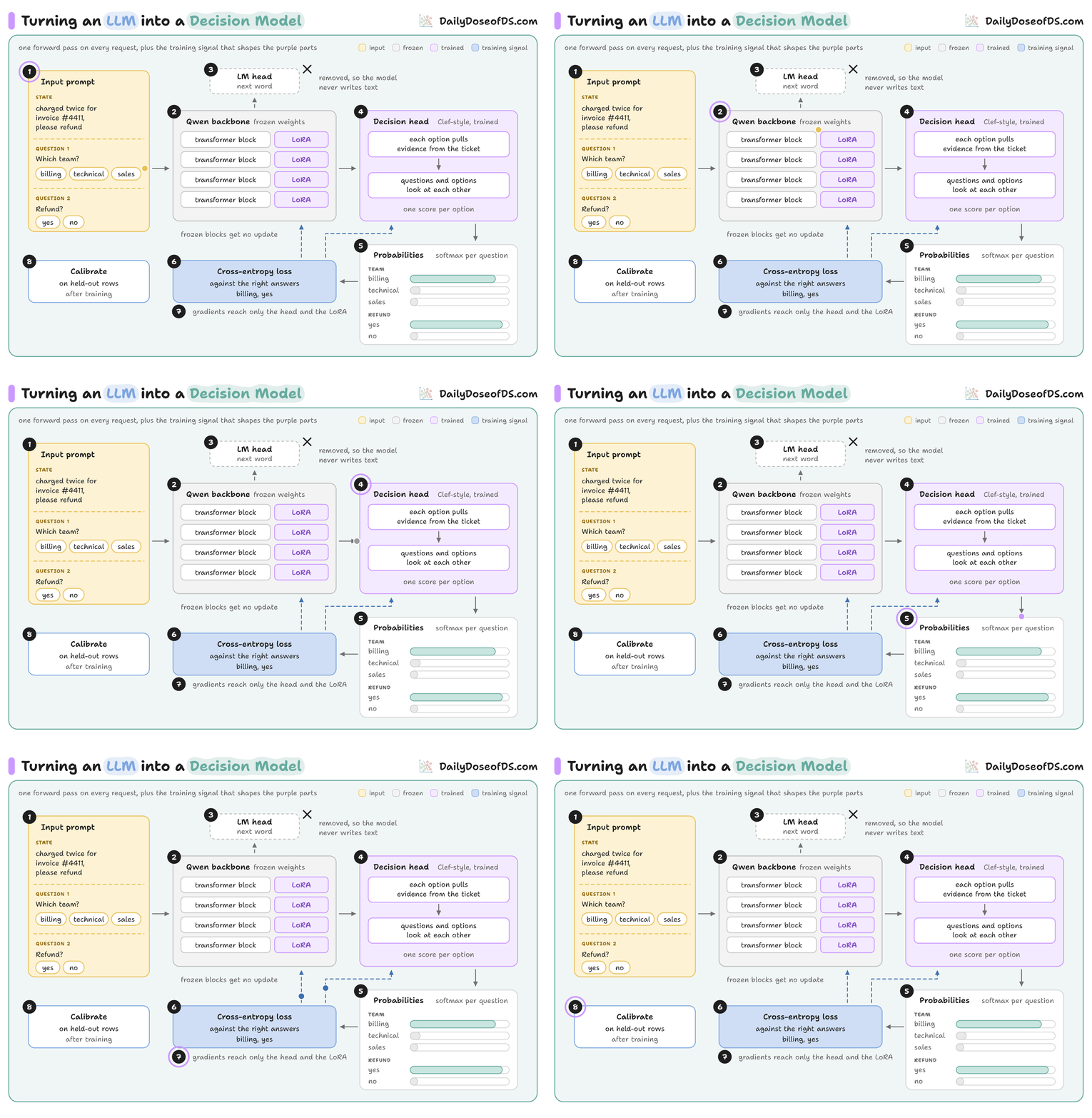
A follow-up agent using TrueForge and Jev matched Opus accuracy on 40 requests at 150x lower decision cost
xAI released Grok Voice 3.0 on the 14th and opened it through the Grok Voice API at $0.08 per minute ($4.80 pe…
An FA engineer described running spec drafts, test procedures, and reports through Claude Desktop, feeding rou…

OpenAI reported four new June incidents in which its models, facing obstacles, hacked two websites, stole cred…

Itaú's ia.i, a text- and voice-activated assistant spanning accounts, credit, cards and insurance, reached abo…