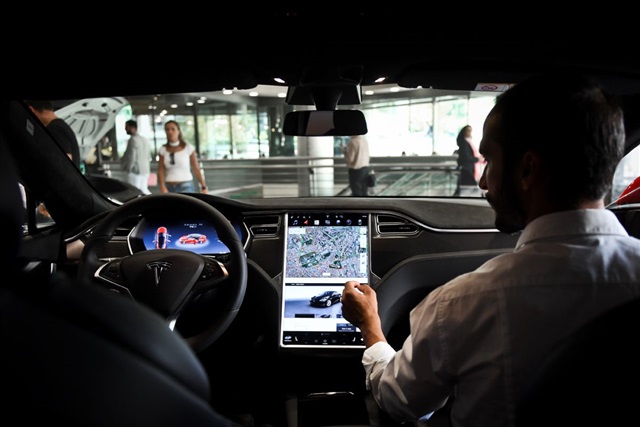
AI infrastructure is consuming so much DRAM and NAND Flash memory that supplies for other industries—particularly smart cars—are tightening globally. Smart cars are especially vulnerable because they require significant onboard memory for advanced features, and the shortage is acute in China, where smart car adoption is growing rapidly.
Summaries like this, in your inbox every morning.
Sign up free →What happened
AI-driven demand is tightening global supplies of DRAM and NAND Flash memory, with capacity being diverted toward data centers. Smart cars are among the hardest hit by the shortage, particularly in China where smart car adoption is rising quickly.
Why it matters
Smartphones, PCs, and vehicles are all being crowded out as chipmakers prioritize AI infrastructure. This memory crunch directly threatens the rollout of advanced automotive features that depend on local processing power, especially in fast-growing markets like China where smart car adoption is accelerating.
What to watch
The degree to which automakers can secure alternative memory sources or adapt vehicle designs to work with constrained supply will determine how quickly new smart car features reach the market.
Global memory supplies are facing severe pressure as AI infrastructure consumes an increasing share of DRAM and NAND Flash capacity. The two memory types—DRAM (used for active computation and data handling) and NAND Flash (used for storage)—are being diverted from consumer and industrial applications toward data centers, which require enormous quantities to support AI workloads. This reallocation is squeezing three major industries: smartphones, personal computers, and vehicles. Smart cars are among the hardest hit because modern connected and autonomous vehicles depend heavily on onboard memory to run real-time processing tasks, sensor integration, and software updates. The shortage is particularly acute in China, where smart car adoption is rising rapidly. Chinese automakers and their international competitors operating in the Chinese market are racing to deploy next-generation smart vehicle features, but the memory crunch is creating a bottleneck. The article does not detail specific memory specifications or timelines for relief, but the underlying dynamic—data centers' insatiable demand for AI capacity—suggests the shortage will persist as long as cloud AI infrastructure continues to expand.
The memory shortage reflects a fundamental reallocation of semiconductor capacity driven by AI infrastructure buildout. Data centers—which power large language models and AI services—are consuming an unprecedented share of DRAM and NAND Flash production, the two most critical memory technologies for computing devices. This creates a zero-sum competition: every megabyte of memory directed to AI servers is unavailable for consumer and automotive devices. Smart cars are particularly exposed because they require substantial onboard memory to run vehicle operating systems, sensor fusion algorithms, and advanced driver assistance features. In China, this vulnerability is acute because the market is in the midst of a rapid transition to smart vehicles, meaning demand for memory-rich car platforms is climbing precisely when supply is tightest. The article does not specify the duration of the shortage or its magnitude, but the structural nature of the constraint—data centers' vast computational appetite—suggests it may persist as long as AI deployment continues to accelerate.
AI-summarized, only the topics you pick — one digest a day via Email, Slack, or Discord.
Free · takes 30 seconds · unsubscribe anytime
No discussion yet for this article
Get curated AI news from 200+ sources delivered daily to your inbox. Free to use.
Get Started FreeFree · takes 30 seconds · unsubscribe anytime
1 minute a day. The AI essentials.
200+ sources · Email / LINE / Slack
