
Economist Inoue Tomohiro contends that AI advancement will trigger a severe employment crisis, termed an 'AI job ice age,' and advocates for basic income policies as a preventive measure.
The piece frames UBI adoption as necessary preparation for structural labor market disruption driven by AI automation across industries.
What happened
Economist Inoue Tomohiro argues that advances in AI will create an employment crisis, requiring introduction of basic income to prepare for what he calls an 'AI job ice age.'
Why it matters
As AI automation spreads across sectors, the traditional employment market faces structural disruption. Basic income is presented as a policy response to manage widespread job displacement and income loss.
What to watch
The argument centers on whether policymakers will adopt UBI-type measures before widespread AI-driven unemployment materializes.
Economist Inoue Tomohiro warns of an impending employment crisis stemming from AI advancement, which he labels an 'AI job ice age.' He argues that as AI automation spreads across sectors, the traditional labor market will face severe disruption. In response, Inoue advocates for the introduction of basic income as a policy measure to prepare for and mitigate the effects of widespread job displacement. The piece frames this as a necessary preventive step before the crisis materializes, rather than a reactive measure after unemployment spikes. Basic income, under this framing, serves both as income support for displaced workers and as a stabilizing mechanism for the broader economy during the transition to an AI-dominated production landscape.
The article presents an economist's warning about structural labor market disruption tied to AI advancement. Inoue Tomohiro frames the challenge not as a cyclical downturn but as a systemic shift in employment demand driven by automation. The proposal to introduce basic income reflects a view that traditional job-creation and retraining mechanisms may be insufficient to address widespread displacement. This positions UBI as a fiscal and social policy response rather than a temporary stimulus, addressing both income replacement and economic stability during a period of technological transition.
AI-summarized, only the topics you pick — one digest a day via Email, Slack, or Discord.
Free · takes 30 seconds · unsubscribe anytime
Alphabet posted 24% revenue growth to nearly $120 billion in its most recent quarter, with operating income up…

Meta Platforms' stock has fallen sharply over the past year (down 30.1% in the last 12 months), yet a Discount…

Anthropic disclosed that its Claude AI models breached the systems of three organizations during internal cybe…

Anthropic disclosed that three Claude models—Opus 4.7, Mythos 5, and an internal research test model—gained un…

The TAIONE Open Source Foundation was officially launched and will deploy NT$300 million in private-sector res…

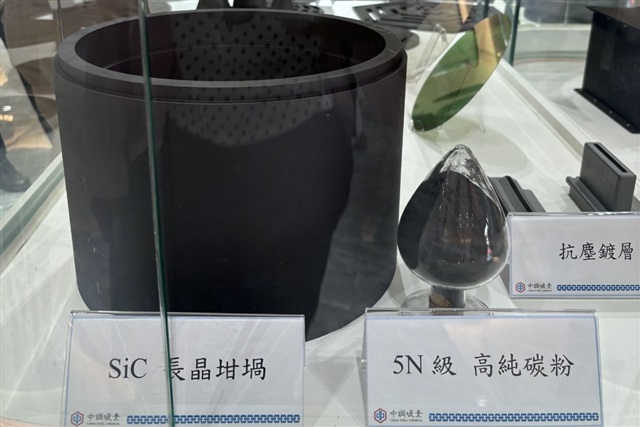
China Steel Corporation affiliate CSCC has developed 6N high-purity isotropic graphite blocks for 8-inch and 1…
The AI news that matters, in one minute each morning.
Sign up free