Axelera AI, a Dutch chipmaker, released Voyager Wingman, an AI-powered assistant that allows developers to build applications for its edge computing chips using natural-language requests rather than manual documentation review. The tool—available immediately as a web chat and standalone application—simplifies the traditionally complex task of model compilation, pipeline configuration, and performance tuning. This release marks Axelera's strategic shift from chip hardware into developer tools, and is designed to broaden access to edge AI development beyond specialists to any developer.
Summaries like this, in your inbox every morning.
Sign up free →What happened
Chipmaker Axelera AI B.V. publicly released Voyager Wingman, an AI assistant that lets developers build applications for its edge chips using plain-language requests instead of manual documentation review. The tool connects to Axelera's Voyager software development kit and documentation, helps assemble computer vision pipelines, suggests compiler settings, and diagnoses compilation errors. It is available now as a web-based chat and standalone application, with a plugin for AI coding frameworks due later.
Why it matters
Building software for AI hardware typically requires developers to juggle model compilation, pipeline configuration, performance tuning, and output visualization—steps that slow those new to the platform. Voyager Wingman is pitched as a shortcut that gives direct access to Axelera's SDK, documentation, and software repository through a chat interface, with knowledge that updates automatically as Axelera ships new Toolkit releases. This move reflects Axelera's expansion beyond silicon into developer tools, with the stated goal of putting edge AI development within reach of any developer, not only specialists.
What to watch
The chat runs on a freemium model with a free credit allowance for developers to try it at no cost; the standalone app is free for those who supply their own API key. Both are accessible through the Axelera Developer Community and Customer Portal. Axelera first showed the assistant at the Consumer Electronics Show in January and has since tested it with customers and internal teams. The company, which spun out of the Belgian research institute IMEC in 2021, says more than 500 customers in telecommunications, aerospace and enterprise use its hardware.
Axelera AI B.V., a Dutch chipmaker that emerged from the Belgian research institute IMEC in 2021, today publicly released Voyager Wingman, an AI assistant designed to simplify edge AI development. The tool allows developers to build and troubleshoot applications for Axelera's edge chips using plain-language requests—eliminating the need to dig through documentation.
Voyager Wingman connects to Axelera's Voyager software development kit and full documentation set. Developers can describe the computer vision pipeline they want, and Wingman helps assemble a working version, suggests compiler settings to optimize performance, and diagnoses errors that prevent models from compiling. The assistant also answers questions about supported operators, application programming interfaces, and configuration syntax, providing worked examples rather than directing users to reference pages. Because it runs as a hosted service, its knowledge updates automatically as Axelera releases new Toolkit versions, requiring no manual downloads from users.
The release addresses a core friction point in AI hardware development. Building software for specialized AI hardware typically requires juggling model compilation, pipeline configuration, performance tuning, and output visualization—steps that slow developers unfamiliar with a particular platform. Voyager Wingman is pitched as a shortcut that gives developers direct access to Axelera's SDK and software repository through a chat interface. Axelera first demonstrated the assistant at the Consumer Electronics Show in January and has since tested it with customers and internal teams.
Voyager Wingman is available immediately as a web-based chat and as a standalone application, with a plugin for AI coding frameworks due later. The chat operates on a freemium model, offering developers a credit allowance to try it at no cost; the standalone app is free for those who provide their own API key. Both are accessible through the Axelera Developer Community and Customer Portal. Bram Verhoef, vice president of customer engineering and success at Axelera, stated: "Voyager Wingman reflects how we want developers to experience our platform with fewer roadblocks, faster answers, and more time spent building," and emphasized the goal of putting edge AI development within reach of any developer, not only specialists.
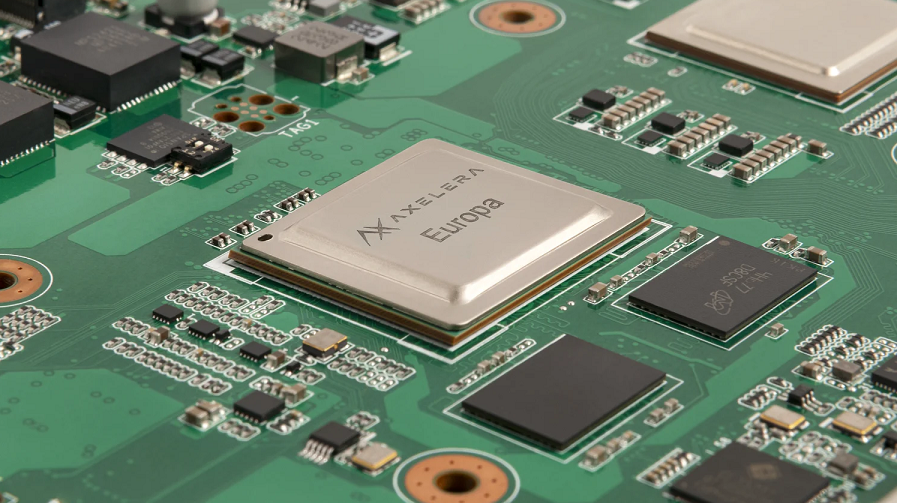
Axelera's processors—the Metis and Europa chips—perform AI inference at the edge without the power and cooling demands of larger chips. The company reports more than 500 customers in telecommunications, aerospace, and enterprise now use its hardware. Axelera has raised more than $450 million(約720億円) to date across equity, grants, and venture debt, including a round of more than $250 million(約400億円) in February—one of the largest AI semiconductor investments in Europe—led by Innovation Industries with backing from BlackRock Inc. and the Samsung Catalyst Fund. Voyager Wingman marks Axelera's strategic expansion beyond silicon into the developer tools ecosystem that runs on top of its hardware.
Axelera AI's release of Voyager Wingman represents a strategic pivot for the Dutch chipmaker beyond pure hardware into the software developer ecosystem. The company, which spun out of Belgian research institute IMEC in 2021, built its business on edge AI processors—its Metis and Europa chips—that perform inference without the power and cooling demands of larger processors. With more than 500 customers across telecommunications, aerospace, and enterprise already using its hardware, Axelera has a customer base ready to benefit from tools that reduce friction in developing applications.
The timing of this move aligns with the company's strong funding position. Axelera has raised more than $450 million(約720億円) across equity, grants, and venture debt, including a round of more than $250 million(約400億円) in February that was one of the largest AI semiconductor investments in Europe. By extending beyond silicon into developer tools, Axelera is addressing a well-known pain point: building software for specialized AI hardware requires expertise in model compilation, pipeline configuration, performance tuning, and output visualization—a barrier that traditionally limited adoption to specialists. Voyager Wingman, by encapsulating these workflows in a conversational interface powered by AI, signals an industry shift toward making edge AI development more accessible, potentially expanding Axelera's addressable market beyond the current specialist developer base.
AI-summarized, only the topics you pick — one digest a day via Email, Slack, or Discord.
Free · takes 30 seconds · unsubscribe anytime
No discussion yet for this article
Get curated AI news from 200+ sources delivered daily to your inbox. Free to use.
Get Started FreeFree · takes 30 seconds · unsubscribe anytime
1 minute a day. The AI essentials.
200+ sources · Email / LINE / Slack
