What happened
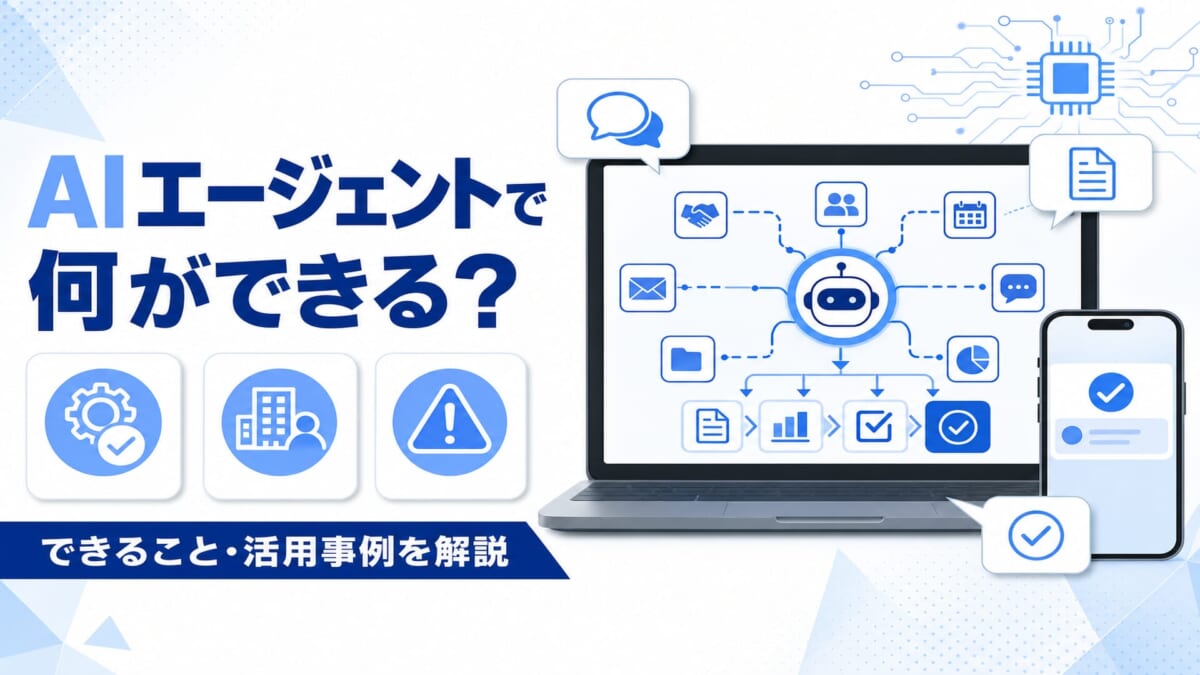
Japanese companies including Fujitsu, Kirin Holdings, and Toyota are deploying AI agents—AI systems that autonomously gather information, plan tasks, and execute them across multiple business systems—to automate customer support, hiring, sales, and knowledge work. Fujitsu's Agentforce deployment cut average response time by 71.5% versus chatbots in a January 2025 pilot; Algoage's sales agent generated roughly ¥110 million in annual revenue equivalent; Kirin's AI interviewer showed a correlation of 0.8 or higher with human evaluators in October 2024 trials.
Why it matters
Unlike standard generative AI (which responds once to a prompt) or RPA (which follows fixed rules), AI agents adapt to new situations and coordinate data across separate systems—meaning businesses can delegate multi-step workflows that previously required human oversight. Companies adopting them can shift staff from routine tasks (data entry, initial screening, first-line support) to higher-value work (strategy, complex problem-solving, relationship building). However, the technology cannot yet replace final judgment calls in ethics-sensitive domains like medical diagnosis or contract review, and it carries risks of generating false information and inheriting bias from training data.
What to watch
Fujitsu aims to handle 15% of support inquiries with AI agents; Toyota's O-Beya system is serving roughly 800 engineers with hundreds of monthly queries since January 2024 launch. The technology works best for information gathering, task sequencing, external system integration, and continuous learning—but requires human sign-off on high-stakes decisions and careful design to prevent downstream errors from cascading across automated workflows.
Summaries like this, in your inbox every morning.
AI agents represent a step beyond generative AI by automating not just text generation but entire workflows that span multiple business systems and require adaptive judgment. The body distinguishes three layers: generative AI (one-off answers), RPA (fixed-rule automation), and AI agents (adaptive multi-step orchestration). Japanese firms are now deploying them because they address a real operational bottleneck—tasks like customer inquiry triage, sales outreach, and information retrieval that are labor-intensive but not complex enough to require full human judgment on every instance.
The reported outcomes show meaningful efficiency gains. Fujitsu reduced support response time by 71.5%, Algoage attributed roughly ¥110 million in annual revenue to automated prospecting, and Kirin achieved 0.8+ correlation between AI and human hiring evaluators in trials. Toyota's O-Beya system, live since January 2024, is serving 800 engineers with hundreds of queries monthly, suggesting the technology is embedding into day-to-day technical work. These are not hypothetical benefits but measured results in production.
The body explicitly flags three limiting factors: AI agents cannot make final calls on ethically fraught decisions (medical diagnosis, contract approval, hiring decisions), they risk hallucinating false information that compounds across downstream tasks, and they can amplify biases present in historical training data. The recommended mitigation is to use AI agents for information gathering and execution while preserving human checkpoints for high-stakes choices. This design pattern—AI for execution, humans for judgment—appears in how Kirin structures hiring and how companies are reportedly vetting agent outputs before use.
Pick your industry and the AI tools you use, and get news related to your work every day.
Free · 30 seconds with Google · unsubscribe anytimeWhat is AIToday? →
Ask AI anything about this article. The AI reads this article, earlier AIToday articles, and Wikipedia, and cites its sources. Q&As are published on this page for other readers too.

