
Alphabet is moving beyond internal use of its custom Tensor Processing Units to offer them as a rental service, leveraging cost savings of up to 30% compared to competitors' chips.
This strategy, combined with similar moves by Amazon, Microsoft, and SpaceX, threatens Nvidia's dominance in the AI chip market and could compress its profit margins as tech giants reduce their reliance on Nvidia hardware.
What happened
Alphabet is scaling up its Tensor Processing Units (TPUs) as an alternative to Nvidia chips, announcing a joint venture with Blackstone to deploy 500 megawatts of TPU capacity by 2027 and plans to rent capacity to other tech companies.
Why it matters
Google's TPUs can handle AI workloads at an estimated 30% cost savings compared to other hyperscalers' chips, and the neocloud model (renting out a company's own processors and data center capacity) could take 20% of the AI cloud market by 2030. This threatens Nvidia's current ~86% market share in AI data centers and its ~74% gross profit margin.
What to watch
Google is spending up to $190 billion(約30兆円) in capital expenditures this year and has said it expects capital spending to significantly increase in 2027. Other tech giants—Amazon, Microsoft, and SpaceX—are also building custom AI processors, signaling a broader industry shift away from Nvidia dependency.
Ask the AI about this article →
Alphabet has been developing Tensor Processing Units for years, but only recently shifted its strategy from viewing them as an internal tool to treating them as a competitive alternative to Nvidia's dominance in AI chip supply. This pivot is now concrete: Google is investing heavily—up to $190 billion(約30兆円) in capital expenditures this year with plans for a significant increase in 2027—and is entering a joint venture with Blackstone to deploy substantial TPU capacity for external rental by 2027.
The strategic significance lies in the economics and the broader market trend. Google's TPUs achieve approximately 30% cost savings in AI compute compared to chips from other large cloud providers, a meaningful advantage for cost-conscious AI deployment. More importantly, Google is pioneering the "neocloud" business model—renting out its own processor and data center capacity to other companies—which research suggests could capture 20% of the AI cloud market by 2030. This is not Google alone; Amazon, Microsoft, and SpaceX are all developing custom AI processors simultaneously, suggesting a structural shift in how tech giants approach AI infrastructure.
For Nvidia, the threat is both direct and subtle. Nvidia currently commands roughly 86% of the AI data center chip market and enjoys a gross profit margin around 74%. As custom processors proliferate and the neocloud model gains traction, Nvidia may lose not only market share but also the pricing power it has enjoyed—a consequence that could reshape the financial returns of one of the market's most profitable companies. The scale of Google's capex commitment signals that this is not a speculative project but a sustained strategic reallocation of capital.
For example, today's edition would include:
AI-summarized, only the topics you pick — one digest a day via Email, Slack, or Discord.
Free · takes 30 seconds · unsubscribe anytimeWhat is AIToday? →
Ask AI anything about this article. Q&As are published on this page for other readers too.
Israeli startup DataAgent Ltd
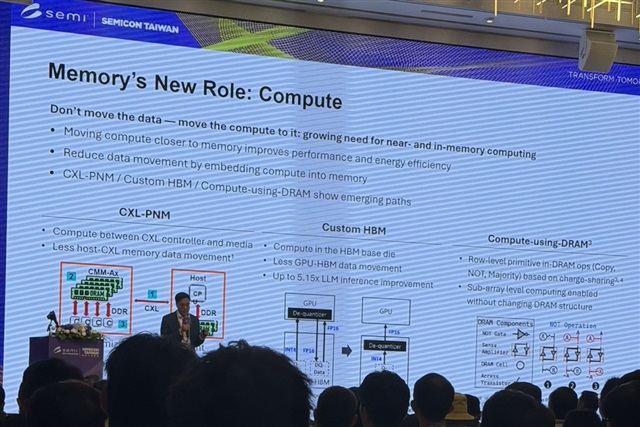
SK Hynix presented a custom HBM concept at SEMICON Taiwan 2026, where compute functions are placed in the base…
Taoyuan is positioning itself as a northern hub for AI data centers (AIDC), citing the Tatan area and an LNG c…
The U.S. Department of Defense announced on August 31 that it has deployed ChatGPT Mil, a customized version o…

Nvidia reported earnings that were both remarkable and boring, reflecting its focus on avoiding a consolidated…

Anthropic has agreed to a $35bn cloud-computing contract with Lambda, a Nvidia-backed cloud provider