What happened
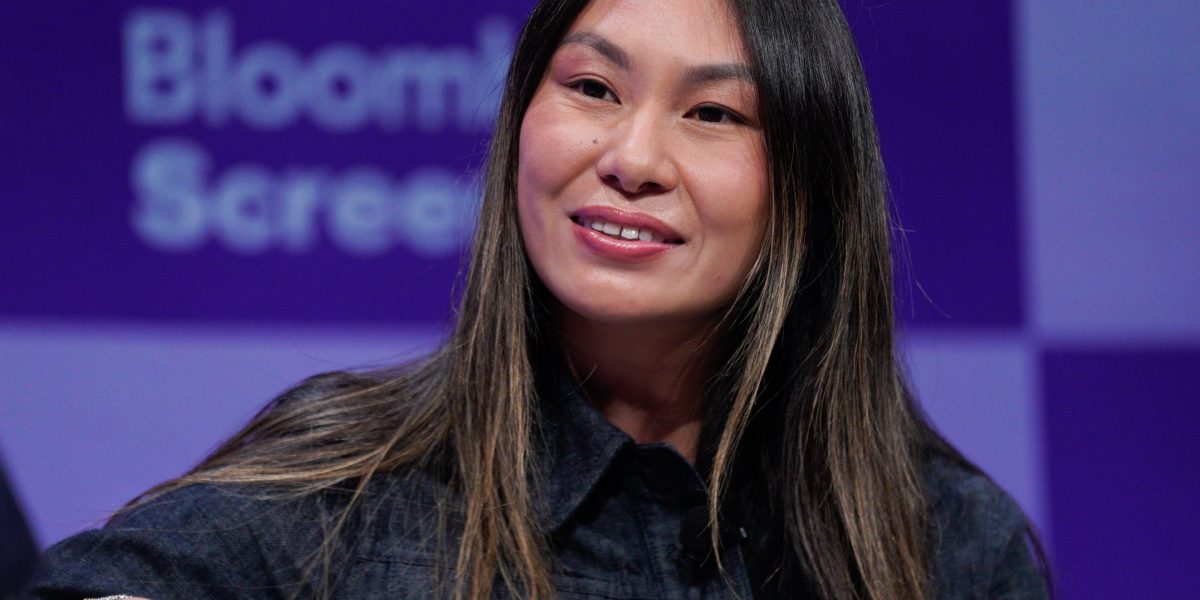
Lucy Guo, who became a billionaire from Scale AI's sale to Meta, said AI is making people work harder, and she worked a 26-hour day last week because she refused to sleep.
Why it matters
Guo's view suggests the promise of AI easing work may not hold for founders and workers who must stay awake for their agents, and early research points to a similar pattern.
What to watch
It hinges on whether faster AI-assisted work leads to quality output — the body notes questions remain on that — and whether workers keep absorbing broader tasks.
WHO IT HITSThis lands on startup founders and early-stage operators who use AI agents, as well as developers and other AI-assisted workers, who in early research took on broader tasks and extended work into more hours.
Summaries like this, in your inbox every morning.
Lucy Guo's career sits at the center of the AI boom. She cofounded Scale AI with Alexandr Wang in 2016, left in 2018, and kept equity that made her a billionaire after the company's sale to Meta. Since then she has invested through her venture firm Backend Capital, including in an unnamed company later acquired by Anthropic, which made her a "pretty large shareholder" of the AI company, and she started the creator monetization platform Passes in 2022. That background gives her firsthand experience with the always-on startup culture she describes.
Her comment about AI forcing harder work arrives as the tools are widely pitched as labor savers. The body points to a tension: some workers, including developers, complete tasks faster with AI, yet a UC Berkeley study of a 200-person U.S. technology company over eight months found employees worked at a faster pace, took on a broader scope of tasks, and extended work into more hours of the day, often without being asked. The open question is whether faster completion equals quality output, which the body says remains uncertain.
Guo also stresses that people remain central, saying the people in a company make the company, and that she has the baseline knowledge to spot strong engineers despite calling herself average during two years studying computer science at Carnegie Mellon University. She also said losing the title of world's youngest self-made woman billionaire — surpassed by Kalshi cofounder Luana Lopes Lara last year — didn't bother her, calling it a good sign for women. How broadly Guo's experience reflects typical AI-assisted work, rather than founder-level intensity, is likely the key question as more teams adopt agents.
For example, today's edition would include:
AI-summarized, only the topics you pick — one digest a day via Email, Slack, or Discord.
Free · 30 seconds with Google · unsubscribe anytimeWhat is AIToday? →
Ask AI anything about this article. Q&As are published on this page for other readers too.
Vals, a 2024-founded AI benchmarking startup, raised $40 million in a series A led by Andreessen Horowitz, aft…
Compal Electronics is buying out the shares of its listed networking arm, Compal Broadband Networks (CBN), in…

Citi says opposition to data centers has not materially weakened the construction pipeline, even as at least 1…

Pat Gelsinger and Naveen Rao argue in Fortune that AI is creating new jobs as fast as it eliminates old ones…

The Gates Foundation announced a $1 billion commitment to equitable AI tools, with 40% — about $400 million —…

Ventec International Group approved an NT$1.5 billion (approx