
What happened
Chicago Fed President Austan Goolsbee told Fortune that the U.S. economy is stable but 'inching toward dangers of overheat,' with inflation stalling after strong progress. He highlighted that consumer spending, not AI data centers, has kept the economy solid.
Why it matters
Goolsbee is concerned that data center buildouts are 'very hot' but 'shoving other parts of the economy down' by competing for resources like construction workers, which could turn into 'aggregate overheating.' He also warned that AI hype could cause 'old-fashioned overheating' before productivity gains arrive.
What to watch
Goolsbee identified a potential 'hiccup on consumer spending' as 'the biggest risk to continued stability and growth.' He also noted that current supply shocks are more persistent than 'one and done,' requiring the FOMC to balance transitory shocks against above-target inflation.
Summaries like this, every morning.
Goolsbee is pushing back against the dominant AI narrative by emphasizing traditional economic indicators. He contrasts the 'sparkling outlooks' from tech leaders like Nvidia's Jensen Huang, Tesla's Elon Musk, and Meta's Mark Zuckerberg with the Fed's 'grubby day job' of managing inflation and employment. His core argument is that the current economic expansion is driven by broad-based consumer spending, not AI investment, and that the AI boom carries risks of overheating.
He draws on the Solow Productivity Paradox, noting a July Fed study that found micro-level productivity gains from AI 'not adding up in aggregate.' This skepticism extends to past tech promises, mentioning autonomous vehicles and NFTs as examples that 'have not played out the way that they said.' However, he acknowledges that some sectors are 'feeling the pinch' from rapid AI adoption, but does not believe the low hiring rate is 'predominantly caused from AI.'
The main policy challenge, as Goolsbee frames it, is distinguishing between 'traaaaansitory' supply shocks and enduring inflation. He argues that since the pandemic, supply shocks are more persistent due to geopolitics and longer supply chain fixes. For the FOMC, this means balancing the risk of reacting to temporary shocks against the risk of allowing above-target inflation to persist, all while keeping a close watch on the consumer, who he sees as the backbone of economic stability.
Pick your industry and the AI tools you use, and get news related to your work every day.
Free · 30 seconds with Google · unsubscribe anytimeWhat is AIToday? →
Ask AI anything about this article. The AI reads this article, earlier AIToday articles, and Wikipedia, and cites its sources. Q&As are published on this page for other readers too.
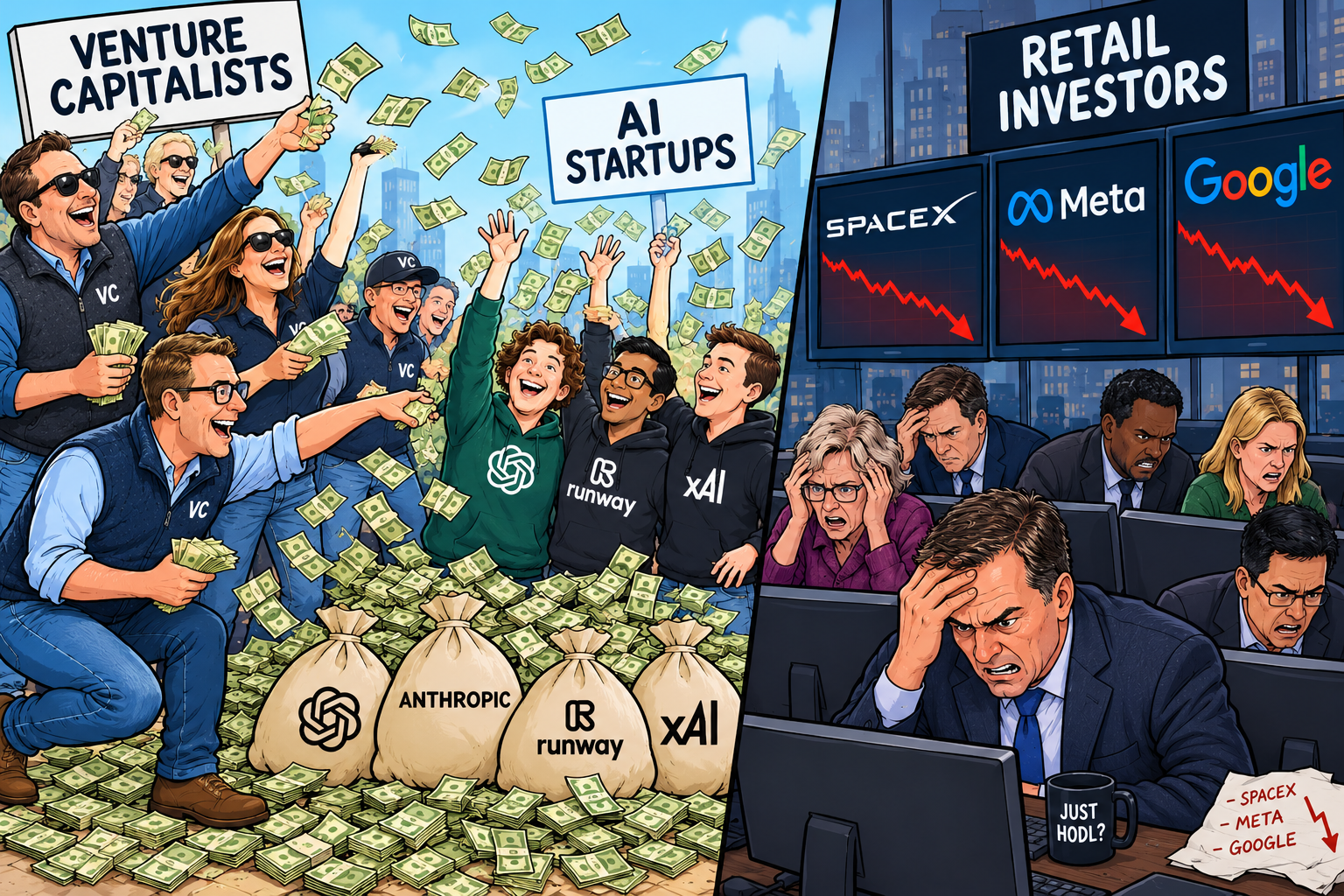
Big venture rounds continued for OpenAI and others, while CoreWeave and SpaceX shares fell Thursday on fears o…
Crystal Method, a Japanese AI company developing virtual humans, outlined its interview-support AI, designed s…

Over a 90-day run from July 6 to Oct 4, 2026, the creator published all 12 planned AI explainer videos but rea…

The author built a baseball news watcher, a web manga update checker, an AI news digest, and a Cloudflare poli…

Meta moved enforcement of its new business terms from October 30th to November 20th, with spokesperson Daniel…
The Council, with Germany's support, approved a text that generally permits AI companies to use any personal d…