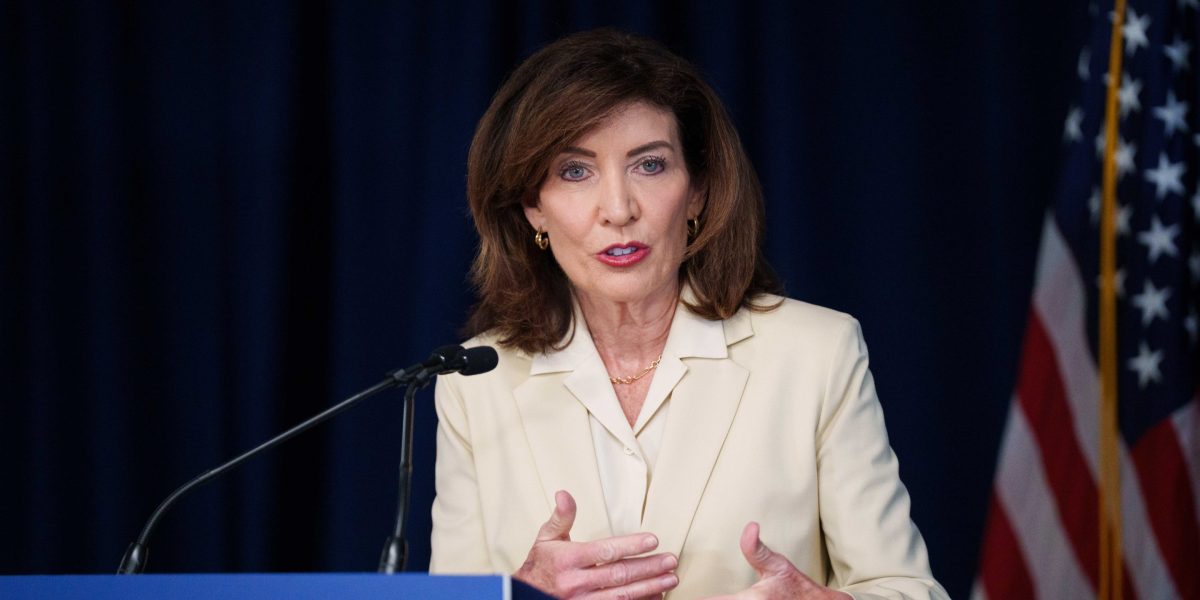
New York has become the first state to impose a statewide moratorium on new hyperscale data centers, freezing development until July 2027 to allow regulators to establish environmental and infrastructure standards. The order also creates a new funding model—the New York Grid Acceleration Fund—that would require data centers to invest in the state's aging electrical grid and clean energy supply, shifting some infrastructure costs from taxpayers to the companies building the facilities. This marks the most significant regulatory pushback against the AI infrastructure boom, though similar restrictions are being considered in more than a dozen other states.
Summaries like this, in your inbox every morning.
Sign up free →What happened
New York became the first state to enact a statewide moratorium on hyperscale data centers, halting new development until July 2027. Gov. Kathy Hochul signed the executive order Tuesday, applying to data centers requiring 50 megawatts or more of power while the state develops new regulatory standards. Already-permitted projects are exempt.
Why it matters
The moratorium responds to public concern over rising utility costs and strain on energy and water resources from data center expansion. Hochul also directed the Department of Public Service to create the New York Grid Acceleration Fund, requiring data centers to invest in the state's aging grid infrastructure and clean energy supply—a model that shifts infrastructure costs from residents to the companies driving demand.
What to watch
The state has one year (until July 2027) to create new statewide standards for data centers. Within 60 days, Empire State Development must issue a Community Investment Framework to help local governments negotiate benefits including infrastructure improvements, workforce development, and direct financial support. Maine's governor chose not to sign a similar moratorium bill last year because it lacked an exemption for a $550 million(約880億円) data center project.
On Tuesday morning, Gov. Kathy Hochul signed an executive order establishing the nation's first statewide moratorium on hyperscale data centers, halting new development until July 2027. The moratorium applies to data centers requiring 50 megawatts or more of power, giving state regulators a year to create new standards addressing environmental impacts and energy demands. Existing data center projects that have already received permits are exempt from the restriction.
In her statement, Hochul said: "New York will lead the way in creating the strongest standards in the nation for data center development, ensuring that when companies succeed because of New York, New Yorkers succeed too." The governor emphasized that the temporary pause responds to growing public concern over rising utility costs and the strain that data centers place on energy and water resources.
The executive order includes an innovative component: the proposed New York Grid Acceleration Fund, which would require data centers to invest in the state's aging grid infrastructure and energy needs. Hochul directed the Department of Public Service (DPS) to consider creating the fund to help support procurement of clean energy supply and establish an insurance pool to protect against large loads. Alongside this, DPS must launch the Energize NY proceeding, where data centers either pay higher rates for energy or supply their own, helping to keep energy more affordable for ordinary New Yorkers. DPS is also tasked with developing an Environmental Impact Statement to ensure data centers meet "consistent statewide standards" while their effects on water resources, electricity demand, land use, and pollution are evaluated.
Within 60 days of the order, Empire State Development must issue a Community Investment Framework to help local governments negotiate benefits from data center projects, including infrastructure improvements, workforce development, child care investments, and direct financial support. The framework will also provide a formula to help communities determine where to start investment negotiations.
New York's move arrives amid accelerating data center development nationwide, with lawmakers in more than a dozen states considering similar restrictions—though none have yet issued a moratorium on all construction. Maine Gov. Janet Mills agreed with a moratorium bill but ultimately did not sign it because it lacked an exemption for a $550 million(約880億円) data center redevelopment of a shuttered paper mill. Last month, Arizona Gov. Katie Hobbs signed a budget bill imposing a three-year moratorium on new data center sales tax exemptions. Smaller communities have already felt the effects: officials in Cheyenne, Wyoming, said Meta's data center construction was responsible for contamination of part of the town's recycled water system.
The timing of New York's order raises questions about federal and state regulatory authority. President Trump has warned states against regulating AI, while separately pushing for a federal sovereign wealth fund—an investment vehicle designed to build long-term national wealth. Sen. Bernie Sanders has also called for such a fund. Hochul's proposed New York Grid Acceleration Fund reflects a similar principle at the state level, requiring large data centers to help finance the infrastructure upgrades their operations necessitate. According to a recent Reuters/Ipsos poll, one-in-three Americans approve of the speed of data-center construction, but most oppose building one in their own community. Another recent poll showed Americans would overwhelmingly prefer to live near nuclear power plants rather than data centers. Together, these trends suggest that the AI infrastructure boom's expansion phase is entering a new era, where development comes with conditions and resistance is becoming policy.
New York's moratorium represents a watershed moment in the tension between AI infrastructure expansion and local environmental and fiscal impact. The order targets the hyperscale (large cloud computing) data centers that power AI services, which have become a major draw for states seeking economic development—yet simultaneously impose significant strain on aging electricity grids and water systems. Gov. Hochul framed the pause as necessary because "data center development threatens to hike up utility bills, deplete our natural resources, and create uncertainty for New Yorkers."
The New York Grid Acceleration Fund proposal is particularly notable because it attempts to solve a fundamental cost-allocation problem: data centers generate enormous electricity and water demand, but the cost of upgrading infrastructure to support that demand has traditionally fallen on existing residents and businesses through higher utility rates. By requiring data centers to invest in grid upgrades and clean energy procurement, the state shifts that burden to the operators. This model echoes broader policy conversations about who should bear the costs of AI infrastructure—President Trump has separately proposed a federal sovereign wealth fund to direct investment in national infrastructure, and Sen. Bernie Sanders has made a similar call.
The political pressure is real. According to a Reuters/Ipsos poll cited in the article, one-in-three Americans approve of the speed of data-center construction, while most oppose building one in their own community. Smaller communities like Cheyenne, Wyoming, have already experienced tangible harms—Meta's data center construction was responsible for contamination of part of the town's recycled water system. At least a dozen other states are considering similar restrictions, though none has yet issued a full moratorium on new construction. Maine's governor chose not to sign a comparable moratorium bill because it lacked an exemption for a $550 million(約880億円) data center redevelopment, and Arizona recently imposed a three-year moratorium on new data center sales tax exemptions. New York's move suggests that the infrastructure phase of the AI boom is entering a new era where expansion will come with conditions, environmental scrutiny, and local benefit requirements.
No discussion yet for this article
Get curated AI news from 200+ sources delivered daily to your inbox. Free to use.
Get Started FreeFree · takes 30 seconds · unsubscribe anytime
1 minute a day. The AI essentials.
200+ sources · Email / LINE / Slack
