What happened
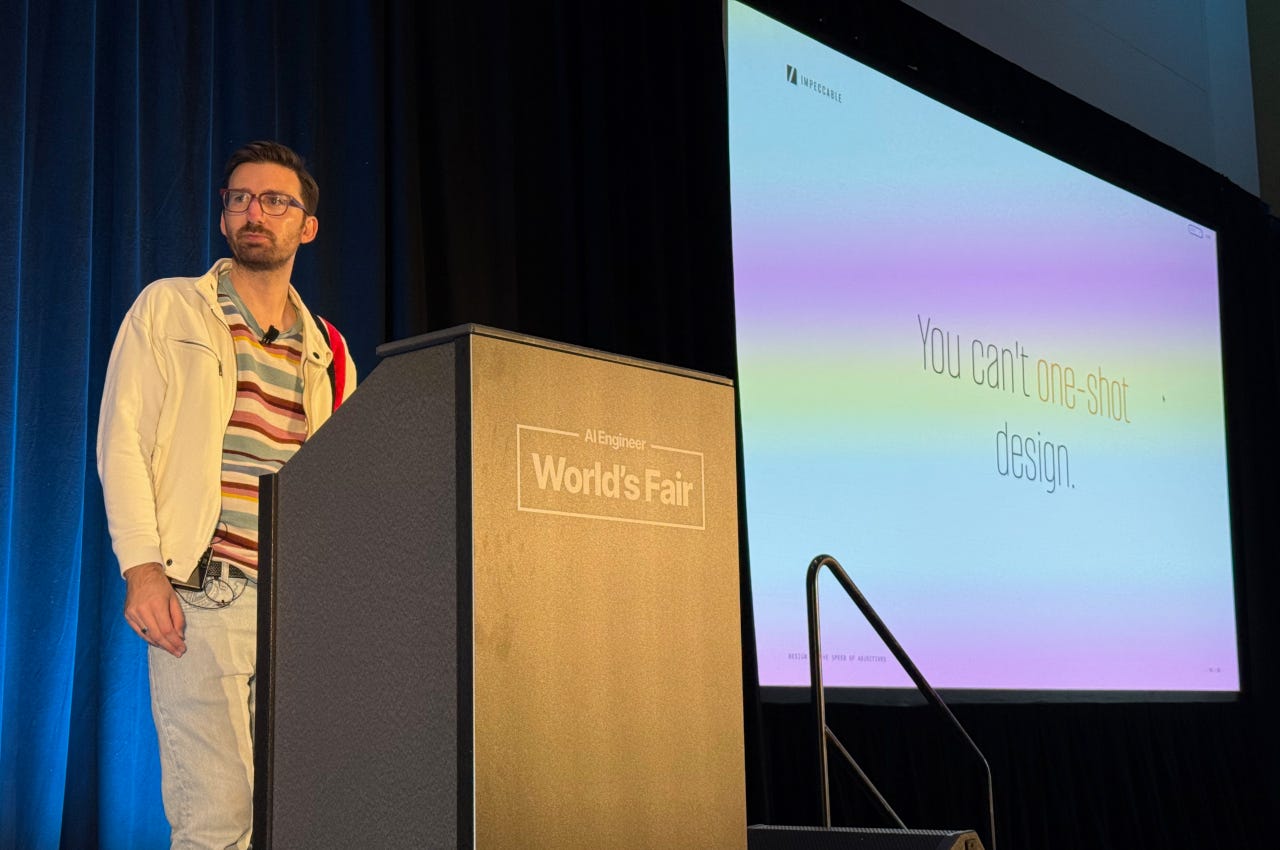
At the AI Engineer World Fair, speakers including Anthropic's Thariq Shihipar, former Google leader Addy Osmani, and designer Paul Bakaus debated whether AI agents should automate system maintenance and design. Osmani argued the outer loop should remain human—"agents can run much more of the inner execution loop, but that outer loop is still engineering." Bakaus rejected both full automation and full manual work, saying agents should handle the first 80% of design work while humans do the final 20% to add taste and unique perspective.
Why it matters
The tension reflects a broader question about authorship and human agency in an age of capable AI. Bakaus emphasized that people need purpose and ownership: "when you work with the agent, then you feel more ownership of the product." Google's Nicole Brichtova noted that generative media models have embedded aesthetic defaults—"it ends up being the modeling teams"—and suggested developers must work with domain experts to avoid generic outputs. Adobe's Carlos Sanchez warned that while agentic sites are now feasible, "it's hard to know what to build," and agents cannot simply generate entire sites without risking brand misalignment.
What to watch
Bakaus's design tool Impeccable embeds this philosophy as a permanent constraint: "there is no auto, and there will be no auto." The platform forces human involvement in every design decision rather than offering one-shot automation. This approach represents a deliberate rejection of the "software factory" metaphor that dominated earlier sessions at the conference, with Notion's Geoffrey Litt warning that those who understand their code will retain creative agency while those who delegate understanding may be replaced by agents.
Summaries like this, in your inbox every morning.
Pick your industry and the AI tools you use, and get news related to your work every day.
Free · 30 seconds with Google · unsubscribe anytimeWhat is AIToday? →
Ask AI anything about this article. The AI reads this article, earlier AIToday articles, and Wikipedia, and cites its sources. Q&As are published on this page for other readers too.

