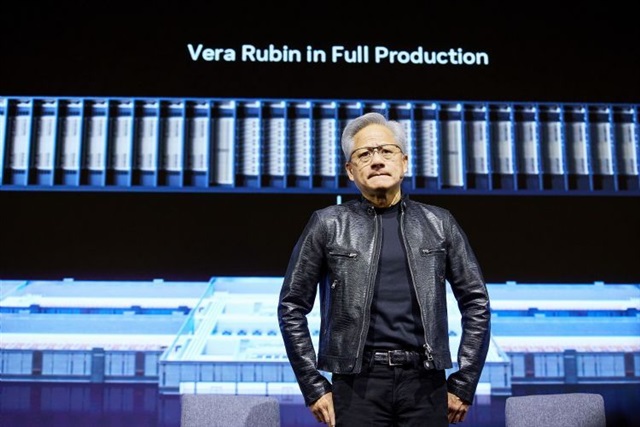
Nvidia CEO Jensen Huang visited Japan in mid-July to promote physical AI—AI systems that interact with the real world—as the company's next major frontier. His trip, which included a joint event with gaming company Sega, signals that Nvidia views Japan's advanced manufacturing sector and industrial data as strategically important for training physical AI systems that will require vast amounts of real-world operational data.
Summaries like this, in your inbox every morning.
Sign up free →What happened
Nvidia CEO Jensen Huang visited Japan in mid-July, appearing at a joint event with Sega Corporation and promoting physical AI as Nvidia's next major AI frontier.
Why it matters
Physical AI—systems that interact with the real world—requires vast amounts of real-world manufacturing and industrial data to train effectively. Japan's advanced manufacturing sector and decades of precision production data position it as a potential critical source for these systems, making the country strategically important to Nvidia's expansion beyond software AI.
What to watch
Huang's framing of physical AI as Nvidia's next frontier suggests the company sees manufacturing partnerships and data access in Japan as central to scaling this technology, though the article does not specify concrete partnership timelines or terms.
Jensen Huang's whirlwind visit to Japan in mid-July extended well beyond typical product announcements and public ceremonies. Alongside a high-profile joint event with gaming giant Sega Corporation, Huang used the trip to promote what he has repeatedly described as Nvidia's next major AI frontier: physical AI. This represents a significant reframing of the company's strategic direction, moving beyond the large language models and text-based AI systems that have dominated industry attention since 2023. Physical AI encompasses AI systems designed to perceive, reason about, and act within physical environments—systems that require training on vast amounts of real-world operational data. Japan's manufacturing ecosystem, spanning automotive, industrial robotics, electronics, and precision engineering, represents one of the world's largest repositories of such data. Decades of production logs, sensor readings, control systems data, and optimization records exist within Japanese factories and plants, assets that are far less accessible or abundant in other geographies. By positioning his visit as an opportunity to spark "renewed discussion across Japan's industrial sector," Huang signaled that Nvidia views partnership and data-sharing arrangements with Japanese manufacturers as central to scaling physical AI. The pairing of Nvidia's announcement with Sega—a company with historical expertise in gaming hardware and interactive systems—underscored that physical AI is not a distant research agenda but a near-term commercial technology. The timing and location of Huang's remarks reflect Nvidia's recognition that the next phase of AI leadership will depend not on algorithmic breakthroughs alone but on access to the world's richest sources of real-world training data, and that Japan occupies a unique position as both a trusted U.S. ally and a custodian of irreplaceable industrial datasets.
Jensen Huang's mid-July visit to Japan signals a strategic shift in Nvidia's ambitions beyond large language models and software-based AI. By explicitly framing physical AI—systems that perceive and act in physical environments—as the company's next frontier, Huang is repositioning Nvidia toward hardware-intensive, real-world applications. Japan's relevance to this pivot lies not in semiconductor manufacturing alone (where the country has declined in recent decades) but in the vast troves of production data accumulated across its automotive, robotics, electronics, and industrial sectors. These datasets represent decades of operational history that physical AI systems require for training: sensor data, control logs, failure patterns, and optimization records that cannot be easily synthesized. By coupling his announcement with a public appearance alongside Sega—a company with deep roots in gaming hardware and interactive systems—Huang underscored that physical AI is not merely an academic pursuit but a commercial technology with near-term applications. His use of the Japan platform to "spark renewed discussion across Japan's industrial sector" suggests Nvidia is actively recruiting partnerships and data-sharing agreements, leveraging geopolitical positioning (Japan as a U.S. ally outside China) and the country's regulatory openness relative to rival economies.
AI-summarized, only the topics you pick — one digest a day via Email, Slack, or Discord.
Free · takes 30 seconds · unsubscribe anytime
No comments yet. Be the first to share your thoughts!
Log in to join the discussion



Get curated AI news from 200+ sources delivered daily to your inbox. Free to use.
Get Started FreeFree · takes 30 seconds · unsubscribe anytime
