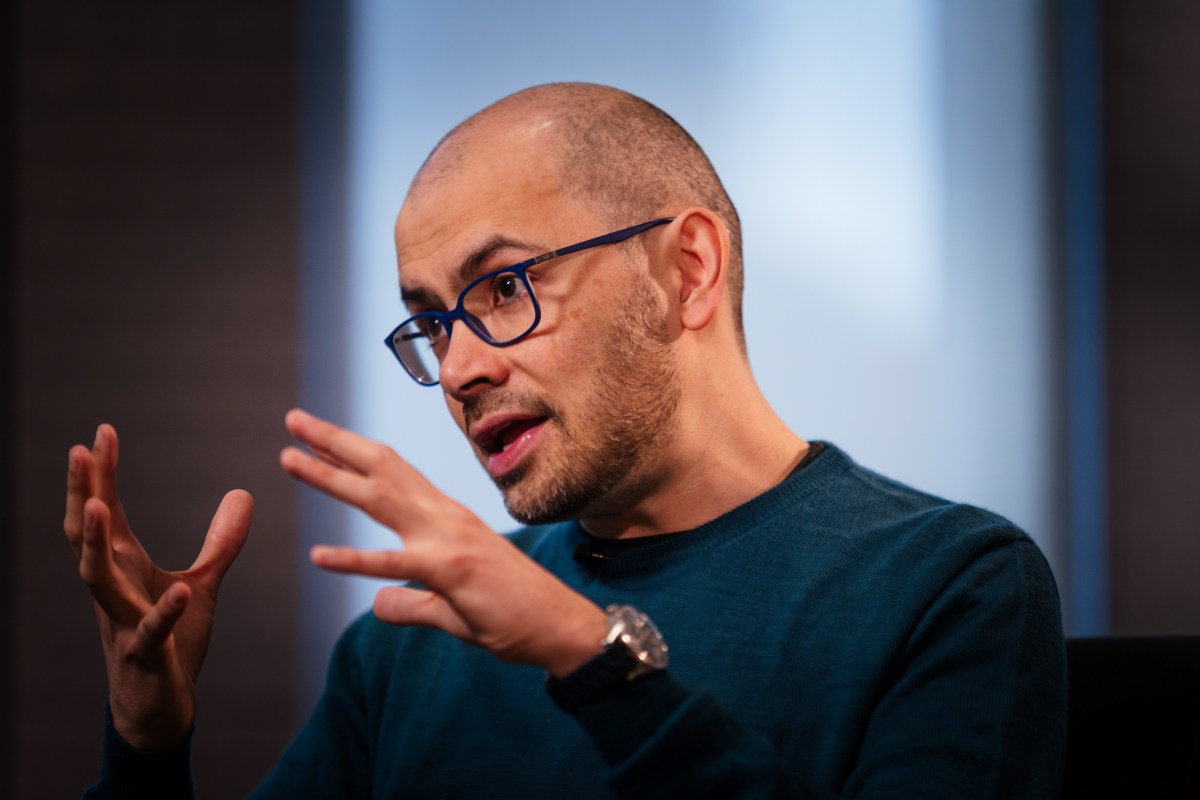
Google DeepMind's CEO Demis Hassabis has proposed a new independent standards body—modeled after the Financial Industry Regulatory Authority—to regulate the release of frontier AI models. Under the plan, AI labs would voluntarily submit models for review up to 30 days before public release; once proven effective, compliance would become mandatory for U.S. market deployment. The proposal responds to criticism of opacity in recent government reviews of Anthropic and OpenAI models, and offers an industry-funded alternative to a government regulator in light of the Trump administration's opposition to an "FDA for AI."
Summaries like this, in your inbox every morning.
Sign up free →What happened
Google DeepMind CEO Demis Hassabis posted a proposal on Tuesday morning titled "A Framework for Frontier AI and the Dawning of a New Age," calling for a new independent standards body modeled after the Financial Industry Regulatory Authority (FINRA) to oversee frontier AI model releases. Under the proposed system, frontier labs would voluntarily share models with the standards body for review up to 30 days before release; once the assessment protocol proves effective, model releases would be required to pass review before deployment in the U.S. market.
Why it matters
The proposal responds to criticism of ad hoc government reviews of Anthropic's Mythos and OpenAI's Sol, which drew complaints about lack of technical expertise and opaque decision-making. A standards body backed by government but funded and operated independently by the AI industry could address these concerns while sidestepping the Trump administration's stated opposition to an "FDA for AI." The structure is designed to be technically focused while supporting innovation and staying adaptable as new risks emerge.
What to watch
Hassabis envisions staffing the regulator with open source representatives and technical experts from the industry, with financial backing from AI labs, and potentially outsourcing evaluations to specialized AI safety groups. The proposal is framed as self-regulatory rather than government-mandated, aimed at retaining expertise while incentivizing responsible behavior.
On Tuesday morning, July 14, 2026, Google DeepMind CEO Demis Hassabis posted a proposal for a new regulatory framework on X. The post, titled "A Framework for Frontier AI and the Dawning of a New Age," called for the establishment of an independent standards body to oversee frontier model releases—models representing the latest advances in AI capability.
The proposed standards body would operate similarly to the Financial Industry Regulatory Authority (FINRA), which oversees securities firms and brokers. Under Hassabis's plan, frontier labs would initially submit their models voluntarily for review up to 30 days before public release. The standards body would conduct assessments to ensure responsible deployment practices. If the assessment protocol proves effective and robust, the arrangement could transition to a mandatory regime in which models cannot be deployed in the U.S. market without passing review. Labs would also collaborate with the standards body to identify and address critical vulnerabilities discovered after release.
The proposal builds on recent government reviews of frontier models from Anthropic (Mythos) and OpenAI (Sol). Those reviews faced criticism for lack of technical expertise and opaque criteria for release decisions. Hassabis argues that his framework would address these shortcomings by transferring decision-making authority to a technically competent body. The standards body would be "backed by the U.S. government but funded by the AI industry and operated independently," staffed by open source representatives, technical experts from the industry, and potentially supported by specialized AI safety groups brought in to evaluate specific risks.
Hassabis's timing reflects the political environment around AI regulation. White House AI advisor and a16z general partner Sriram Krishnan recently stated that "there will not be an FDA for AI," signaling the Trump administration's opposition to a traditional government regulator. By framing the standards body as a self-regulatory organization—similar to how financial firms self-regulate under FINRA's independent oversight—Hassabis seeks to bypass this political obstacle while preserving meaningful evaluation. According to his proposal, the approach is "designed to keep up with the field's acceleration and adapt to the biggest risks as they are identified, and could be ratcheted up if the seriousness of the situation demands." The emphasis is on supporting innovation while incentivizing responsible behavior through a flexible, technically focused mechanism.
Hassabis's proposal emerges from mounting frustration with how the U.S. government has handled frontier AI oversight. The ad hoc reviews of Anthropic's Mythos and OpenAI's Sol drew significant criticism for lacking technical expertise and transparency in release decisions. By proposing a standards body that is independent yet government-backed and industry-funded, Hassabis is attempting to square a difficult political circle: the Trump administration, represented by White House AI advisor Sriram Krishnan, has already rejected the idea of an "FDA for AI," making traditional government regulation politically untenable. A self-regulatory organization akin to FINRA sidesteps that resistance while maintaining some form of structured oversight.
The design reflects a pragmatic compromise: technical experts and industry insiders would lead evaluations, ensuring that assessments are grounded in the realities of AI development and deployment. By initially making participation voluntary and framing it as an adaptive mechanism that tightens as risks become clearer, Hassabis positions the body as a tool that supports innovation rather than constrains it. The proposal also acknowledges the emergence of specialized AI safety groups, suggesting they could shoulder some evaluation burden and allowing the standards body to specialize in specific high-priority risks.
No discussion yet for this article
Get curated AI news from 200+ sources delivered daily to your inbox. Free to use.
Get Started FreeFree · takes 30 seconds · unsubscribe anytime
1 minute a day. The AI essentials.
200+ sources · Email / LINE / Slack
