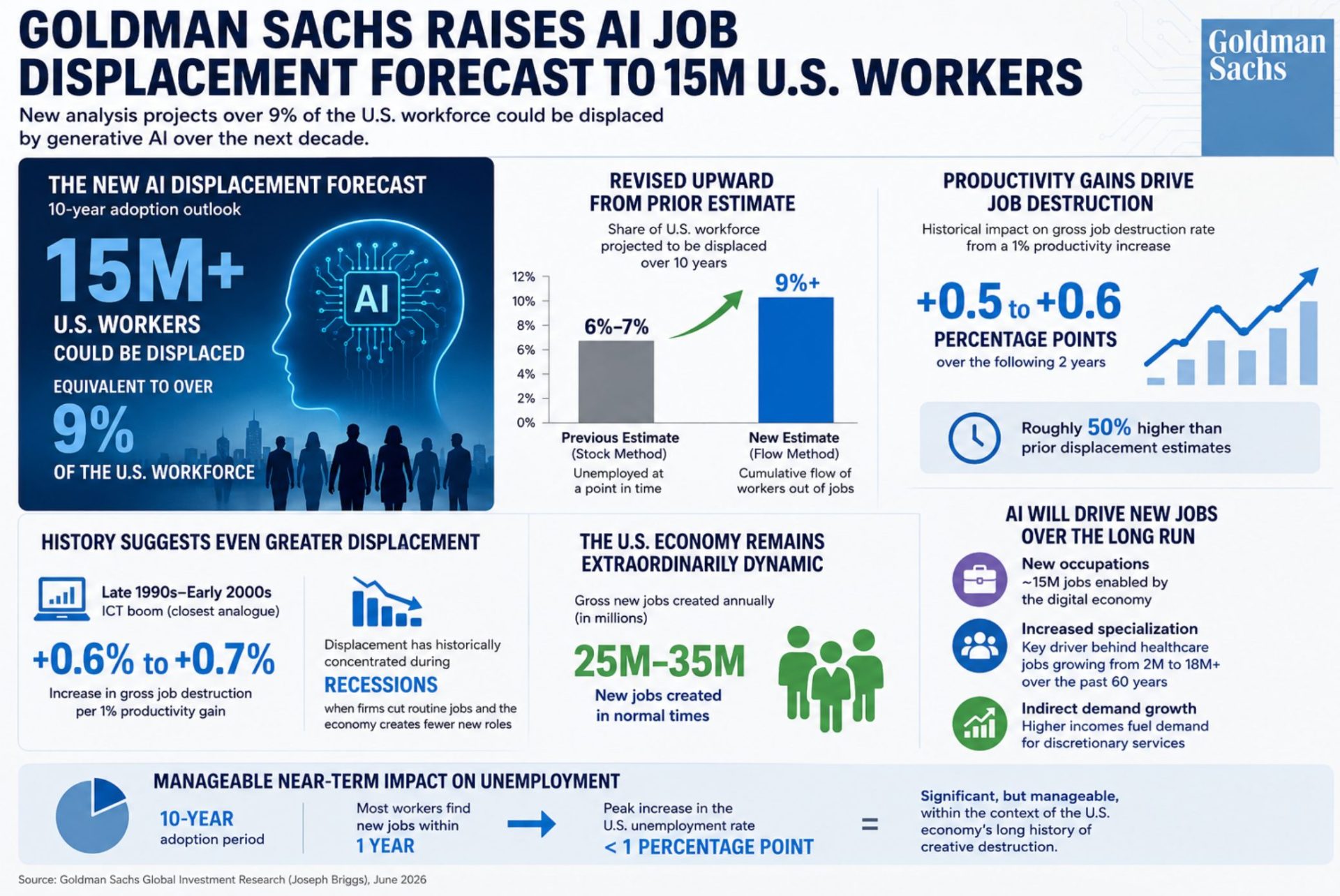
Goldman Sachs has raised its forecast for AI-driven U.S. job displacement to roughly 15 million workers over the next decade, up from an earlier 6–7% estimate. While the displacement is substantial, the bank maintains that long-term economic benefits should outweigh short-term disruption, since the U.S. economy typically creates 25–35 million jobs annually and AI is expected to generate new roles in emerging occupations and discretionary services.
Summaries like this, in your inbox every morning.
Sign up free →What happened
Goldman Sachs economist Joseph Briggs revised the firm's estimate upward, projecting that roughly 15 million U.S. workers—more than 9% of the workforce—could be displaced by AI over the next decade. This marks an increase from the earlier estimate of 6% to 7% displacement, based on a new methodology that measures total workers leaving jobs due to productivity gains rather than unemployment at a single point in time.
Why it matters
The shift reflects how rapidly AI adoption is unfolding. However, the firm notes that the U.S. economy typically creates between 25 million and 35 million new jobs annually, and expects AI to generate new employment through emerging occupations and higher demand for services. Assuming most displaced workers find new employment within a year, Goldman estimates AI would raise the unemployment rate by less than one percentage point at its peak—significant but manageable historically.
What to watch
The report points to the information and communications technology boom of the late 1990s and early 2000s as the closest historical parallel. Goldman notes that workforce reductions tied to technological change have historically intensified during economic downturns, when businesses are less able to absorb displaced employees into new roles.
No comments yet. Be the first to share your thoughts!
Log in to join the discussion


Get curated AI news from 200+ sources delivered daily to your inbox. Free to use.
Get Started FreeFree · takes 30 seconds · unsubscribe anytime
1 minute a day. The AI essentials.
200+ sources · Email / LINE / Slack
