What happened
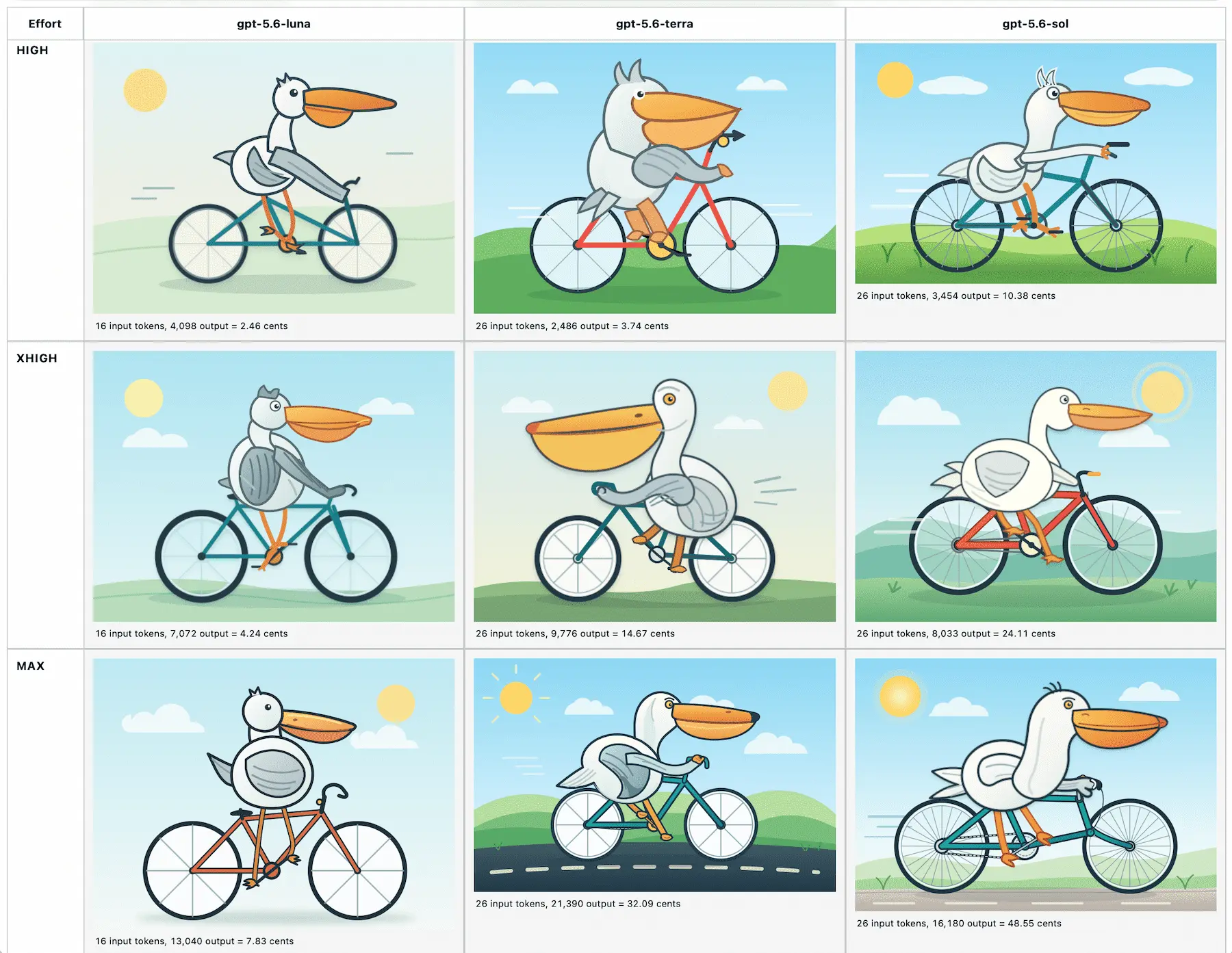
OpenAI released three models of its GPT-5.6 family—Luna, Terra, and Sol (smallest to largest)—with general availability starting today. On the Agents' Last Exam benchmark, GPT-5.6 Sol scored 53.6, beating Claude Fable 5's 53.6-point lead by 13.1 points, while Luna and Terra outperformed Fable 5 at around one-sixteenth the estimated cost.
Why it matters
The new models deliver agentic performance (long-running professional workflows) more efficiently than existing competitors. Smaller models like Terra and Luna achieving Fable 5-level results at a fraction of the cost may appeal to businesses looking to deploy AI agents in real-world applications without prohibitive spending.
What to watch
Pricing is Luna $1/$6, Terra $2.50/$15, and Sol $5/$30 (per 1M input/output tokens). New API features include Programmatic Tool Calling (for orchestrating tool calls), Multi-agent (spinning up subagents in parallel), and Prompt cache breakpoints (explicit cache control). OpenAI also published findings that approximately 30% of SWE-bench Pro tasks are broken, after Claude Fable 5 outperformed GPT-5.6 Sol on that benchmark (80% vs. 64.6%).
Summaries like this, in your inbox every morning.
OpenAI's release of GPT-5.6 marks a direct challenge to Claude's market position in agentic AI, the category of AI systems that autonomously execute long-running professional tasks. The benchmark results reveal a strategic focus: while Sol dominates on Agents' Last Exam (the company's flagship agentic benchmark), the real competitive advantage may lie in the smaller models. Terra and Luna achieving performance parity with Claude Fable 5 at dramatically lower cost—around one-sixteenth the expense—addresses a practical constraint that has limited AI deployment in production systems: operational expense. The cost-efficiency gain extends across reasoning levels, suggesting OpenAI has improved its token utilization broadly.
However, the story is more nuanced than a clean win. OpenAI's own audit of SWE-Bench Pro (a coding task benchmark) revealed that approximately 30% of tasks are broken, a finding that undermines the very benchmark where Claude Fable 5 substantially outperformed GPT-5.6 Sol. This suggests OpenAI is being transparent about benchmark quality even when the results favor competitors—though the timing of publishing this critique immediately before a product launch where an alternative benchmark favors the new model may be read as strategic framing.
The new API features—particularly Programmatic Tool Calling and Multi-agent—signal that OpenAI is embedding agentic patterns directly into the core platform rather than leaving them to third-party orchestration. This moves the competition away from raw model capability and toward the developer experience of building multi-step, parallel AI workflows, a shift that could accelerate production adoption if developers find the abstractions genuinely useful.
Pick your industry and the AI tools you use, and get news related to your work every day.
Free · 30 seconds with Google · unsubscribe anytimeWhat is AIToday? →
Ask AI anything about this article. The AI reads this article, earlier AIToday articles, and Wikipedia, and cites its sources. Q&As are published on this page for other readers too.
ElevenLabs completed a $300 million employee tender at a $22 billion valuation, and co-founder Mati Staniszews…
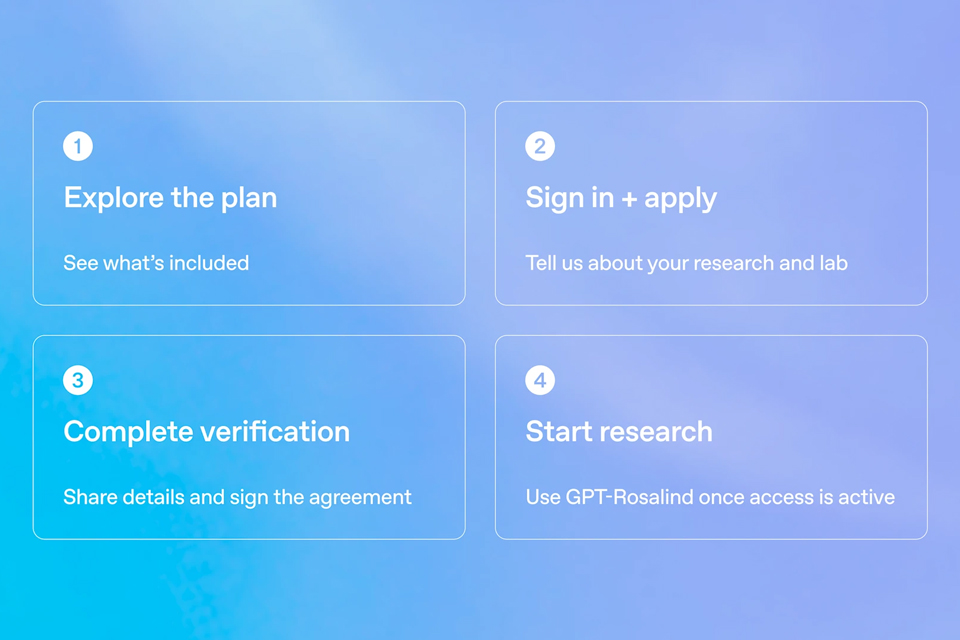
On October 15, OpenAI announced the Rosalind Academic Plan, giving approved US university labs free access to…
A Qiita article compared automated red-teaming methods for LLM apps — GCG, PAIR, and TAP — using mock implemen…

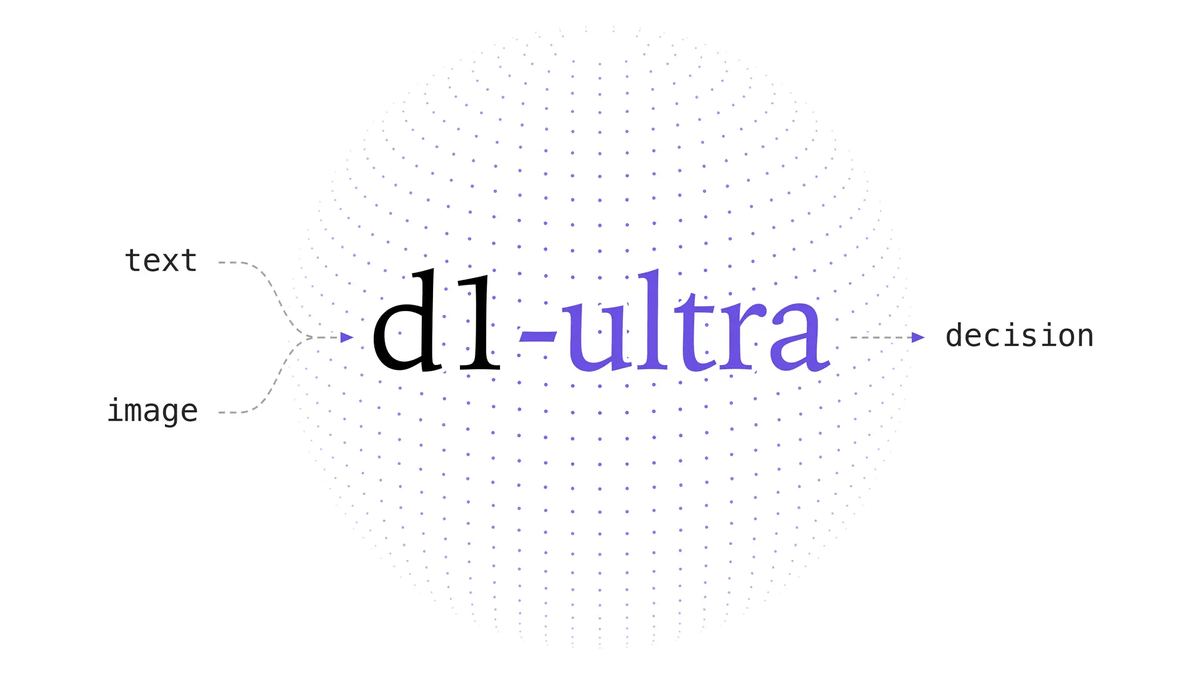
Liquid AI released d1-ultra on October 15, 2026, an upgraded open-weights decision model that averaged 76.7 ac…
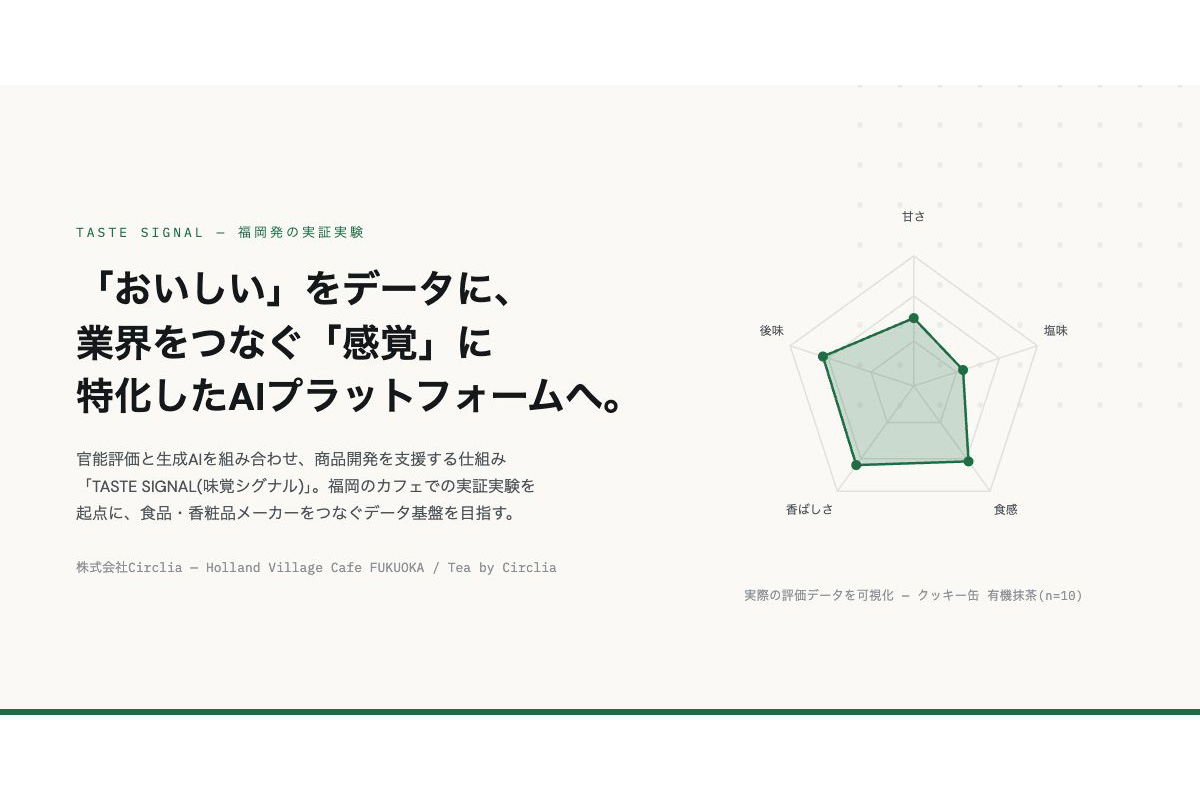
Circlia started a proof-of-concept for TASTE SIGNAL: visitors to Holland Village Cafe FUKUOKA taste cookies an…
In a webinar hosted by French Mathematical Society president Isabelle Gallagher, Fields Medal winner Hugo Dumi…

