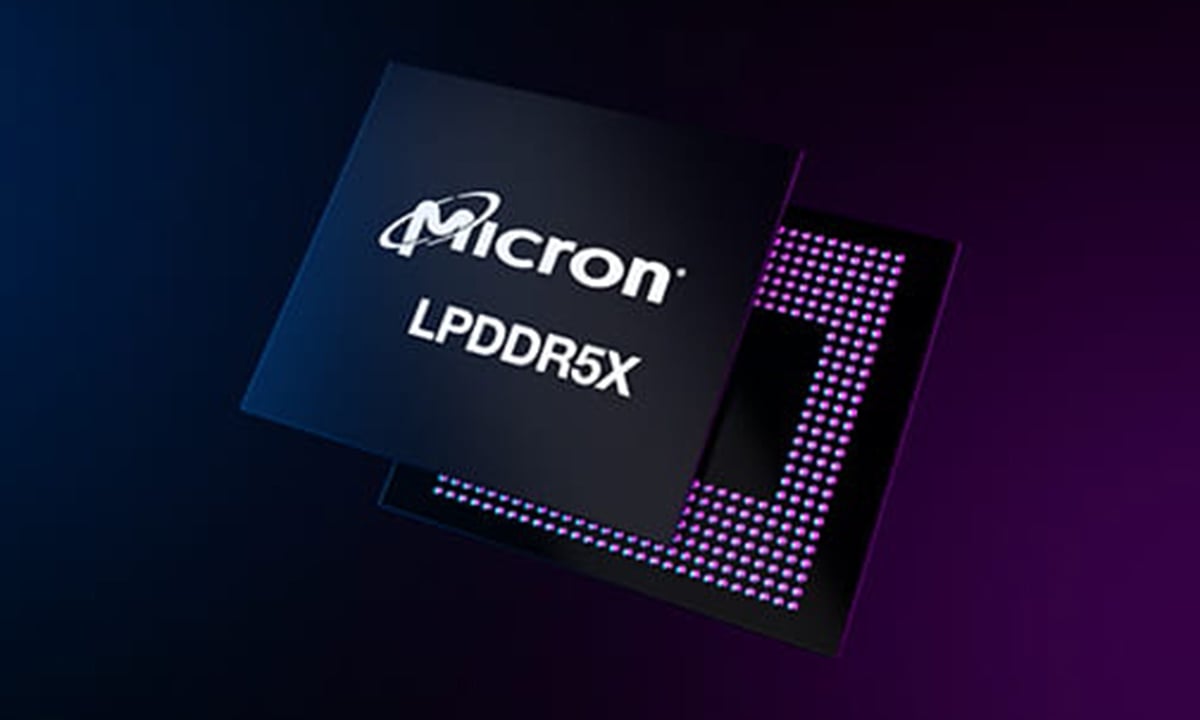
Micron Technology has plunged 30% from its 52-week high despite posting record fiscal Q3 results, with revenue quadrupling year-over-year to $41.5 billion(約6.6兆円) driven by AI data center demand. The sell-off reflects investor fears that memory chips are at a cyclical peak and that competitors will flood the market with supply, eroding the company's extraordinary 84.9% gross margin. The divergence between Micron's own upbeat guidance and the market's pessimism hinges on whether memory pricing can hold through 2027 as AI demand continues to outrun supply.
Summaries like this, in your inbox every morning.
Sign up free →What happened
Micron Technology shares have fallen approximately 30% from their 52-week high of $1,255, erasing more than $400 billion(約64兆円) in market value. The sell-off is part of a broader memory chip decline that has pulled global chip stocks down about $3.3 trillion(約530兆円) in roughly a month, with Samsung and SK Hynix also down more than 20% from their highs.
Why it matters
The decline is puzzling because Micron just reported extraordinary fiscal Q3 results (ended May 28): revenue quadrupled year-over-year to $41.5 billion(約6.6兆円), non-GAAP gross margin reached 84.9% (up from 39%), and adjusted free cash flow hit a record $18.3 billion(約2.9兆円). The sell-off reflects investor concern that memory's brutally cyclical business is at a peak — competitors will add supply, prices will crack, and today's record margins cannot last into 2027.
What to watch
Management is guiding for about $50 billion(約8兆円) in fiscal Q4 revenue (up roughly 21% sequentially) with gross margin near 86% and adjusted earnings per share of about $31. The stock's valuation — roughly 20 times earnings, or only about 7 times annualized earnings implied by Q4 guidance — signals the market is pricing in a sharp margin decline. If memory pricing holds as AI demand outpaces supply, the bear market in memory shares may prove an overreaction; if this is the cycle's peak, today's earnings may be a trap.
Micron Technology has suffered a sharp decline alongside the broader memory chip sector. The stock trades about 30% below its 52-week high of $1,255, wiping out more than $400 billion(約64兆円) of market value. This downturn is part of a wider memory chip selloff that has dragged global chip stocks down about $3.3 trillion(約530兆円) in roughly a month. Micron's Korean rivals Samsung and SK Hynix have also fallen more than 20% from their recent highs.
The sell-off is striking given the strength of Micron's underlying business. For fiscal Q3 (the period ended May 28), the company reported extraordinary results. Revenue more than quadrupled year-over-year to $41.5 billion(約6.6兆円), up from $9.3 billion(約1.5兆円), driven by surging memory demand from AI data centers. The company's two data-center-focused segments alone produced $25.3 billion(約4兆円) of that revenue, compared to about $4.9 billion(約7800億円) a year earlier. Non-GAAP (adjusted) gross margin surged to 84.9%, up from 39% a year earlier, and adjusted earnings per share came in at $25.11. Adjusted free cash flow reached a record $18.3 billion(約2.9兆円). Management is projecting continued strength, guiding for about $50 billion(約8兆円) of revenue in fiscal Q4, up roughly 21% sequentially, with gross margin near 86% and adjusted earnings per share of about $31.
Yet investors are treating these results and guidance with deep skepticism. The selloff is not a reaction to the numbers themselves, but rather a bet on cyclicality. Memory has always been a brutally cyclical business, and history shows that record margins invite competitors to add supply until prices collapse. The market appears to be betting that this quarter, or the next, marks the top of the cycle — and that today's extraordinary margins will not last. The valuation tells the story: at about $885 per share, Micron trades at roughly 20 times earnings and only about 7 times the annualized earnings implied by its own fiscal Q4 guidance. Multiples that low reflect the market's skepticism that these earnings will persist.
The resolution hinges on whether memory pricing can hold through 2027 as AI demand continues to outrun supply. If it does, Micron's stock is cheap, and the bear market in memory shares will likely prove an overreaction. If this is the cycle's peak quarter, today's earnings are the trap the market suspects. For now, however, the slowdown the market is trading on shows up nowhere in the company's own numbers.
Micron's collapse sits at the heart of a memory chip bear market that has wiped roughly $3.3 trillion(約530兆円) from global chip stocks in about a month. Yet the timing is jarring: the company just guided for the biggest quarter in its history, with fiscal Q4 revenue projected at about $50 billion(約8兆円) and gross margin near 86%. The divergence between Micron's operational momentum and the market's bearish repricing hinges on a single question: whether memory's infamous cyclicality is reasserting itself.
Memory has always invited a predictable boom-and-bust pattern. When margins are high, competitors rush to add supply until prices collapse. Micron's current gross margin of 84.9% — a historic peak — is precisely the kind of number that historically signals a cycle peak. Investors appear to be trading on the assumption that supply will flood in, eroding the extraordinary economics Micron is now enjoying. The stock's valuation, at only about 7 times annualized earnings from the company's own Q4 guidance, embodies profound skepticism: the market is saying it does not expect these earnings to persist.
The resolution depends entirely on whether AI data center demand continues to outpace memory supply through 2027. If it does, Micron's stock will likely look deeply undervalued in retrospect, and the bear market in memory shares will appear an overreaction to cyclical fears. If this quarter marks the cycle's peak, however, today's extraordinary margins are a trap — and the market's pessimism is warranted.
AI-summarized, only the topics you pick — one digest a day via Email, Slack, or Discord.
Free · takes 30 seconds · unsubscribe anytime
No discussion yet for this article
Get curated AI news from 200+ sources delivered daily to your inbox. Free to use.
Get Started FreeFree · takes 30 seconds · unsubscribe anytime
1 minute a day. The AI essentials.
200+ sources · Email / LINE / Slack
